
How to Use AI for Keyword Research Without Making a Mess of It
AI can make keyword research much faster, but it can also make it noisier. If you use it the wrong way, you end up with a spreadsheet full of bloated keyword ideas, weird intent mixing, and content topics that look clever on paper but feel useless once you start writing. If you use it well, AI becomes a very practical assistant for expansion, clustering, angle-finding, and prioritization.

This article is built for the second path. The goal is not to hand AI the whole job and hope for magic. The goal is to use AI to widen the field, then bring human judgment back in at the exact points where strategy matters most.
What this page helps you do
- Use AI to generate better keyword ideas without drowning in noise
- Separate real search intent from fake keyword abundance
- Turn AI keyword outputs into clusters, outlines, and publishable plans
- Choose the right tools for research, grouping, validation, and follow-up writing
Jump links
- Quick answer
- Why AI helps with keyword research
- Where people go wrong
- A practical AI keyword research workflow
- Which tools fit which part of the workflow
- What good output looks like
- Mistakes to avoid
- FAQ
Quick answer: how should you use AI for keyword research?
Use AI for breadth first, then use judgment for depth. In practice, that means letting AI help you expand seed ideas, uncover modifiers, group related queries, and spot content angles you might miss. Then step back and validate the output against search intent, topic fit, business relevance, and what your site can realistically publish better than everyone else.
The shortest useful rule is this: AI should help you explore and organize keyword possibilities, not decide what deserves to become content without review.
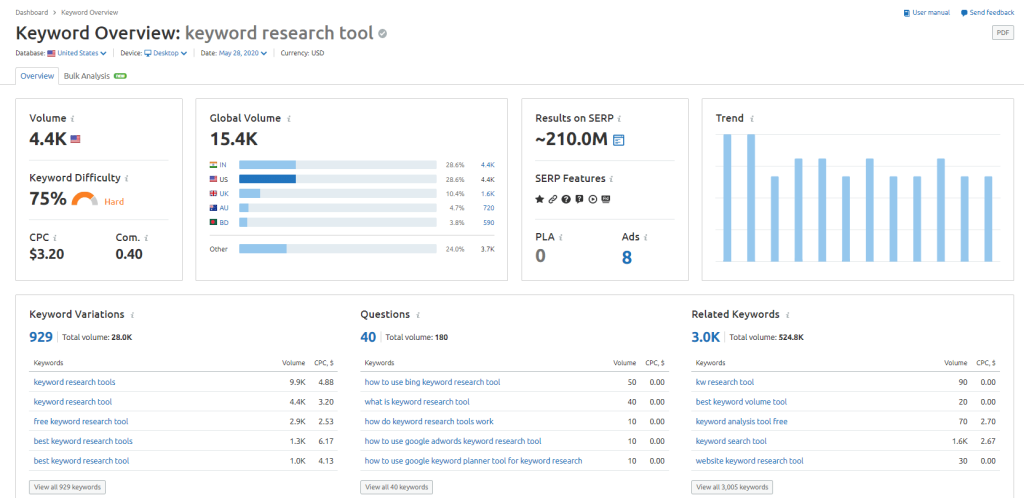
Why AI helps with keyword research in the first place
Traditional keyword research often gets slow for a simple reason: once you find the first obvious terms, the next useful layer takes a lot of mental repetition. You start asking the same questions over and over. What are the long-tail variants? What related questions would a buyer ask? Which modifiers reveal real buying intent? What adjacent problems belong in the same content cluster? What should be a standalone article and what should stay a subsection?
AI is surprisingly good at that expansion layer. It can generate variations faster, surface related questions, suggest different user angles, and help you cluster large lists into something more workable. That is why tools like Keyword.com, aiseo.ai, Outranking.io, Rank Math, and SEObot all end up touching the keyword research conversation from different sides.
But this is also where people get fooled. AI is good at possibility generation. It is not naturally good at saying, “this looks interesting but does not deserve a page on your site.” That is still your job.
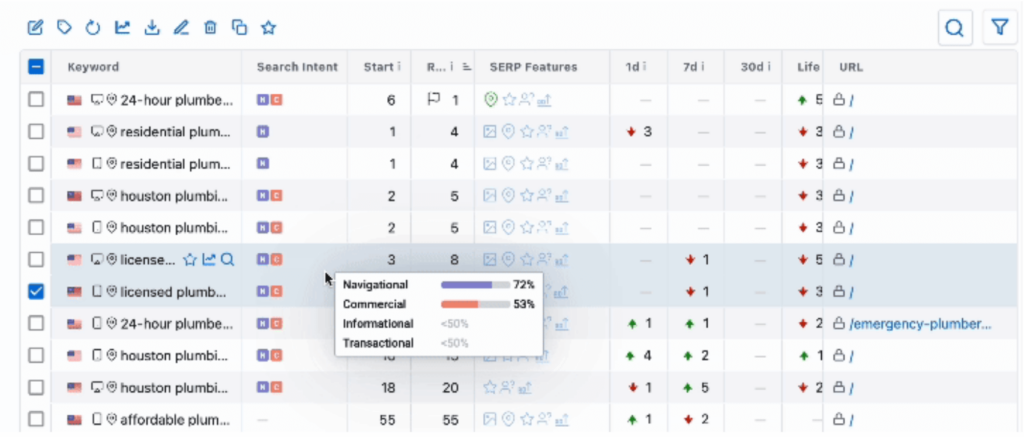
Where people go wrong with AI keyword research
- They treat every generated keyword like a content opportunity.
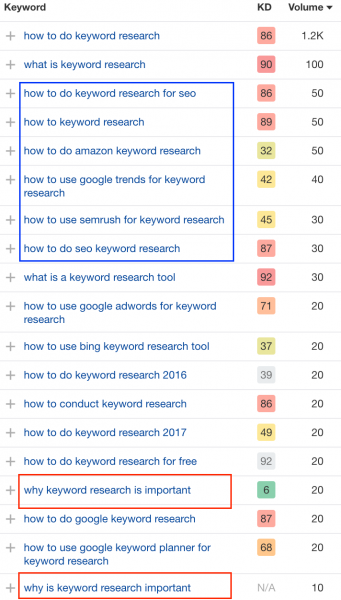
- They confuse semantic variations with genuinely different search intents.
- They create massive clusters that feel organized but are too broad to publish cleanly.
- They let AI suggest angles without checking whether the topic matches the site’s real audience.
- They forget that keyword research is not just about what people search — it is also about what your site can credibly answer.
I think this is the quiet trap in the whole topic. AI makes it so easy to expand a keyword set that people start feeling productive long before they start getting selective. The result looks like “research,” but it is often just fast accumulation.
A practical AI keyword research workflow that actually holds up
1) Start with one clear seed topic, not a vague niche blob
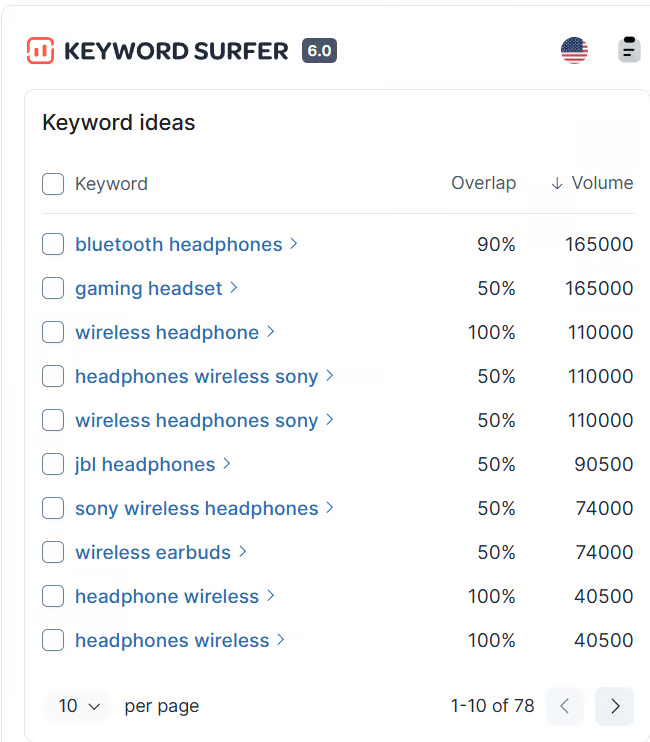
Do not begin with something like “AI tools” or “SEO software” and expect magic. Start with a narrow seed. For this cluster, a better seed is something like AI keyword research, AI SEO writing, or AI visibility tracking. The tighter the starting point, the more useful the AI expansion becomes.
2) Use AI to expand modifiers, questions, and user situations
This is where AI shines. Ask it to generate:
- problem-based queries
- comparison queries
- beginner queries
- tool-intent queries
- workflow queries
- buyer-intent and budget-intent variations
For example, instead of stopping at “AI keyword research,” expand into:
- how to use AI for keyword research
- best AI tools for keyword research
- AI keyword research for blog posts
- AI keyword clustering workflow
- AI keyword research for affiliate sites
- AI keyword research for low-competition topics
3) Cluster by intent before you care about volume
This is the step many people skip because volume feels more “serious.” But intent comes first. AI can help you cluster keywords into buckets like:
Informational
People want to understand the concept, process, or framework.
Commercial investigation
People are comparing tools, alternatives, or approaches.
Workflow intent
People are trying to complete a task with a repeatable method.
Bottom-funnel intent
People are close to choosing a tool, service, or solution.
Once the keywords are grouped by intent, you stop mistaking “same topic” for “same page.” That one fix alone makes AI keyword research much more useful.
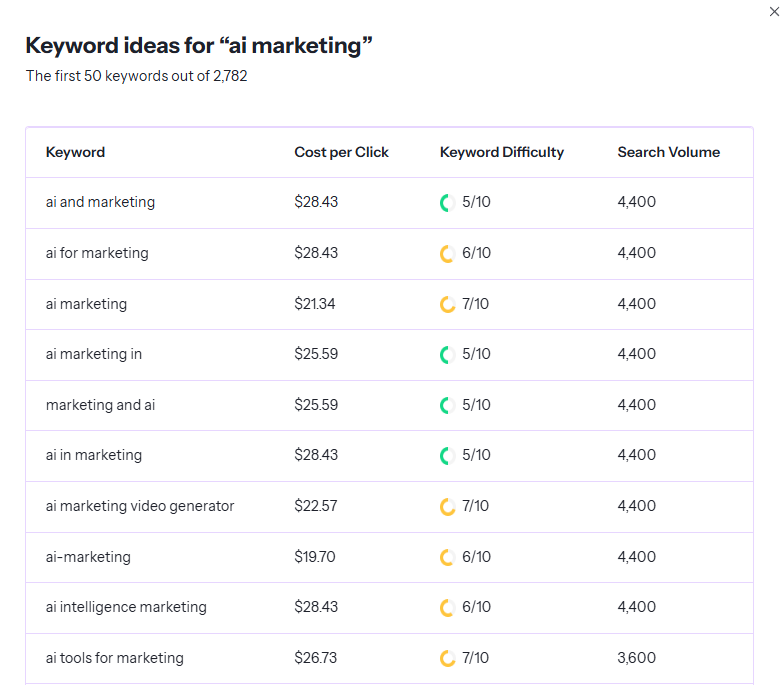
4) Validate with SERP reality and site fit
AI can suggest clusters, but you still have to ask the harder questions:
- Would this really deserve a standalone article?
- Is the SERP showing guides, lists, tool pages, or comparisons?
- Can your site add something more useful than what is already ranking?
- Does this topic belong on your site, or is it just adjacent noise?
This is the point where the research becomes strategic rather than merely creative.
5) Turn clusters into content map decisions
Once AI has helped you expand and organize, convert the output into actual publishing choices:
| Keyword cluster | Best page type | Intent | Suggested use |
|---|---|---|---|
| how to use ai for keyword research | workflow guide | informational / practical | teaching article |
| best ai tools for keyword research | toplist | commercial investigation | comparison article |
| ai keyword research for bloggers | use-case guide | workflow / niche intent | cluster support article |
| ai keyword clustering | how-to or glossary-style guide | informational | supporting article |
6) Use AI again after the keyword decision, not just before it
This part matters. Once you choose the winning keyword and page angle, use AI a second time to help with:
- outline expansion
- subtopic coverage
- question harvesting
- cluster-to-cluster internal link suggestions
- brief generation
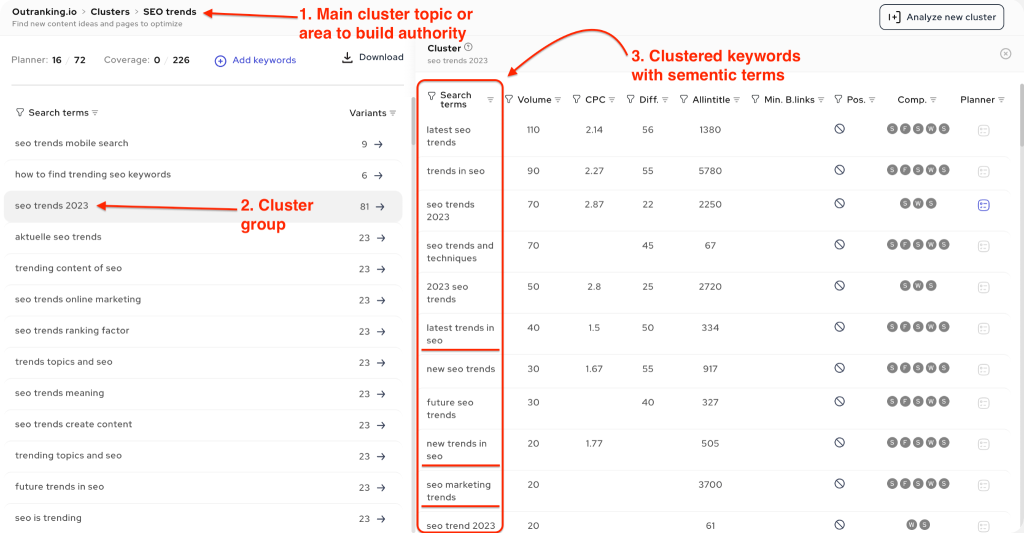
That is where tools like Outranking.io and Frase become more useful than a plain prompt box. They help bridge the gap between research and actual page construction.
Which tools fit which part of the workflow?
Keyword.com
Best when research needs to stay connected to rank tracking and AI visibility, not just brainstorming.
AISEO
Useful when you want AI-assisted keyword and competitor exploration inside a broader AI SEO mindset.
Outranking.io
Useful when the real need is turning researched keywords into structured briefs and stronger first drafts.
Rank Math Content AI
Useful for WordPress-first teams that want keyword research help inside the publishing workflow.
SEObot
Useful if you want to automate parts of the expansion, clustering, and publishing chain.
SEO keyword tool
Useful as a direct research layer when you want keyword generation more than full workflow depth.
The bigger lesson is that AI keyword research does not live in one “keyword tool” anymore. It sits across research, organization, optimization, and publishing layers. That is why blindly buying one tool and expecting it to handle the whole chain usually disappoints people.
What good AI keyword research output actually looks like
Good output is not “500 keywords exported.” Good output is something closer to this:
- a clean list of seed themes
- clear intent clusters
- a shortlist of publishable page angles
- priority order based on site fit
- supporting questions for each article
- internal link relationships across the cluster
If the output does not help you decide what to publish, what to skip, what to combine, and what to link together, it is still too raw.
Mistakes I would avoid
- Using AI to generate keywords but never checking the actual SERP behavior.
- Publishing multiple pages that are really one topic with slightly different wording.
- Letting AI define your site’s topical boundaries for you.
- Skipping internal link planning after clustering the keywords.
- Treating “more keyword ideas” as progress when the site still lacks clear priorities.
If I had to reduce the whole article to one sentence, it would be this: use AI to widen the map, then use judgment to decide which roads are worth building.
Final takeaway
AI makes keyword research more powerful when it helps you explore faster, cluster better, and move from raw search ideas to real content decisions. It becomes dangerous when it tricks you into thinking research is finished because a long list exists. The sites that get real value from AI keyword research are usually the ones that stay selective, keep intent at the center, and turn AI output into clean publishing decisions instead of content sprawl.
After this page, the best next reads are Best AI SEO Tools for 2026, Best AI SEO Writing Tools, and How to Track AI Search Visibility.
Related reading
- AI & Software hub
- AI SEO hub
- Best AI SEO Tools for 2026
- Best AI SEO Writing Tools
- Best AI Content Optimization Tools
- How to Track AI Search Visibility
- How to Optimize for Google AI Overviews
FAQ about using AI for keyword research
Can AI replace keyword research tools completely?
No. AI is strong at expansion, clustering, and idea generation, but you still need reliable search data, SERP interpretation, and judgment about site fit and content value.
What is the best use of AI in keyword research?
The best use is usually idea expansion and intent grouping. AI helps you widen the field and organize it faster, but the final content decisions still need human review.
Should I use AI for keyword clustering?
Yes, if you treat clustering as a draft, not a verdict. AI can group related queries quickly, but you still need to check whether those groups match real search intent and deserve distinct pages.
How do I know if an AI-generated keyword idea is worth keeping?
Ask whether the keyword has clear intent, fits your site, matches the SERP pattern, and leads to a page you can create better than what already exists.
What is the biggest mistake with AI keyword research?
The biggest mistake is treating every AI-generated keyword as a publishing opportunity. Good research gets narrower as it improves, not just bigger.
PromoCodeRadar helps users find cleaner coupon codes, official deals, annual billing savings, free trials, and better ways to save on software, AI tools, and online services.
If you found a broken code or outdated listing, contact us at contact@promocoderadar.com.