
AI & Software / AI SEO / Best AI SEO Tools
AI SEO roundup • updated April 9, 2026
Best AI SEO Tools for 2026
Best AI SEO tools are no longer just AI writers. The strongest options now help with content optimization, AI visibility tracking, internal linking, content refreshes, and faster publishing workflows. This guide compares the mapped AI SEO tools on PromoCodeRadar in a practical way, so you can choose by bottleneck instead of hype.
What this page helps you do
- Compare AI SEO tools by workflow
- Find the best fit for bloggers, affiliates, agencies, or SaaS teams
- Spot the difference between writing, optimization, tracking, and structure tools
- Open the right store page without wading through a generic listicle
Jump links
Quick answer: what are the best AI SEO tools right now?
If you want a short list instead of a long scroll, the strongest starting points here are Frase for content optimization, Keyword.com for AI search visibility, LinkBoss for internal linking, SEOWritingAI for fast drafting, SEOTesting.com for iteration, and Rankability if your main bottleneck is refinement rather than blank-page writing.
Best overall starting point
Frase if your workflow needs research, briefs, optimization, and content refreshes in one place.
Best for AI search visibility
Keyword.com if you care more about visibility, citations, and tracking than writing one more draft.
Best for structure and scale
LinkBoss if your site already has content and your real problem is internal linking, silos, and orphan pages.
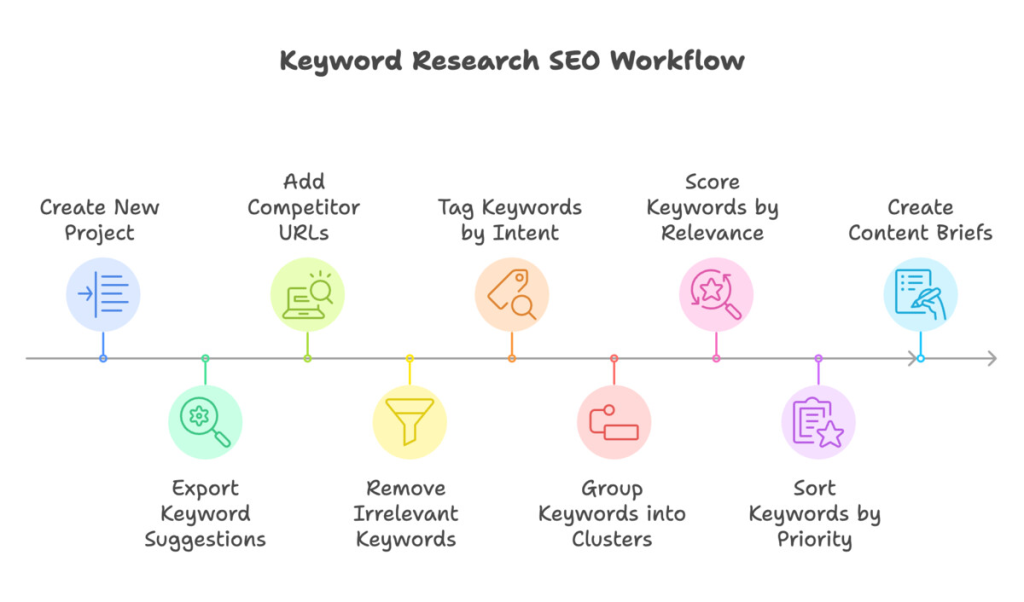
Why AI SEO tools matter more in 2026
A year or two ago, a lot of people used “AI SEO” as shorthand for an AI writer. That feels too narrow now. The harder part of SEO for many sites is not getting words on the page. It is deciding what to publish, tightening weak pages, building cleaner internal links, figuring out whether you are actually showing up in AI-driven search experiences, and fixing pages that already exist but are underperforming.
That is why this page treats AI SEO tools as a broader working stack. Some tools are strongest when you need better content briefs and optimization. Some are better for internal structure. Some are more useful when your team needs visibility data and not another headline generator. And a few are more about speed, automation, or distribution than classic on-page work.
The practical takeaway: choose an AI SEO tool by the job you are trying to fix first. If you already have hundreds of posts, a writing tool may not move the needle nearly as much as a linking or refresh workflow. If you publish regularly but cannot tell whether your brand is appearing in AI-driven search surfaces, a visibility tool may be more valuable than another optimizer.
How we chose the tools in this roundup
- Workflow fit: what job the tool clearly solves in a real SEO process.
- Ease of use: whether the tool feels realistic for a solo operator or a small team.
- Decision value: whether it helps you make better choices, not just produce more output.
- Structure support: whether it improves organization, refreshes, tracking, or internal links.
- Practical limits: where the tool feels narrow, redundant, or easy to overbuy.
This is why you will not see a fake “winner” here that magically beats every other option. A strong AI SEO stack usually mixes two or three complementary jobs: writing or optimization, visibility or testing, and structure or linking.
Best AI SEO tools at a glance
| Tool | Best for | Strongest angle | Best fit |
|---|---|---|---|
| Frase | Content optimization | Research, briefs, refresh workflows | Content-heavy sites |
| Rankability | Refinement | Sharper scoring and tuning | Optimization-focused teams |
| Outranking.io | Deep optimization workflow | Structured planning and improvement | Users who want a fuller process |
| PageOptimizer Pro | Precision tuning | Detailed on-page adjustment | Advanced SEOs |
| Keyword.com | AI visibility tracking | Monitoring search presence and citations | Agencies, SaaS, reporting-minded teams |
| LinkBoss | Internal linking | Silos, orphan pages, structure | Sites with existing content depth |
| SEOWritingAI | Fast drafting | Quick first drafts and SEO-led writing | Bloggers and affiliates |
| aiseo.ai | Light all-rounder | Broader drafting plus SEO support | Small teams |
| SEObot AI | Automation | More autonomous publishing workflows | System-minded operators |
| Rank Math | WordPress support | Cleaner in-CMS SEO workflow | WordPress-heavy sites |
| SEOTesting.com | Testing | Iteration and decision feedback | Sites that already publish consistently |
| ListingBott | Citation support | Distribution and discoverability support | SaaS and startup-style growth use cases |
Best AI SEO tools by use case
The easier way to read this section is simple: do not ask which tool is “best” in the abstract. Ask which tool fits the one part of SEO that is actually slowing you down right now.
Frase
Best for: content optimization and refresh workflows.
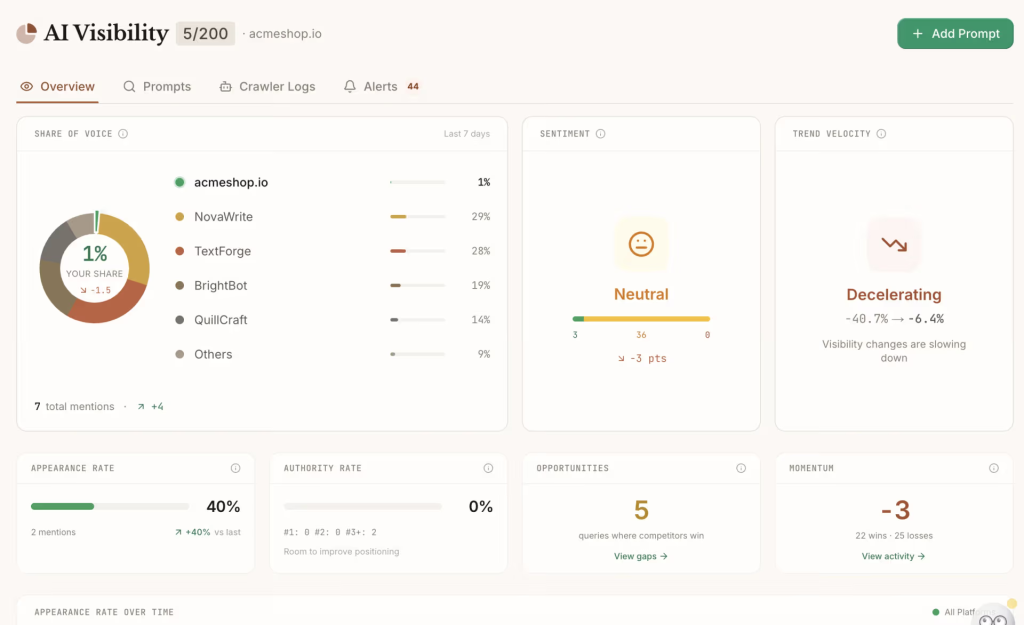
Frase makes the most sense if your team needs one place to move from research to briefs to optimization. It feels especially useful for content-heavy sites that already publish and need help tightening weak pages instead of endlessly creating new ones.
- Strongest point: balanced workflow support
- Use it if: you refresh and optimize often
- Skip it if: you only need a bare-bones writer
Rankability
Best for: content scoring and refinement.
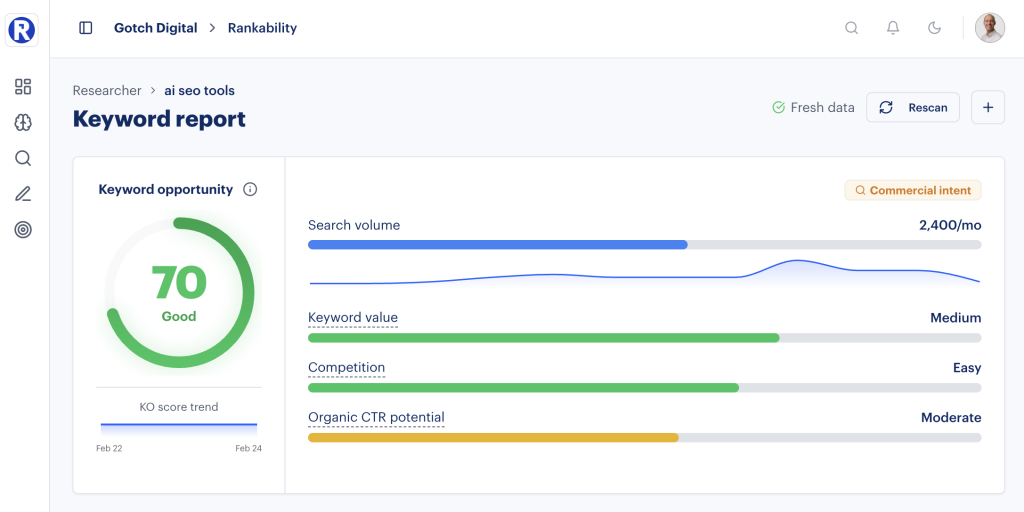
Rankability fits better when your issue is not the blank page. It shines more when you already have copy on the screen and need a clearer path to improve, tighten, and prioritize what matters next.
- Strongest point: refinement mindset
- Use it if: optimization matters more than drafting
- Skip it if: you want a lightweight beginner stack
Outranking.io
Best for: deeper optimization workflows.
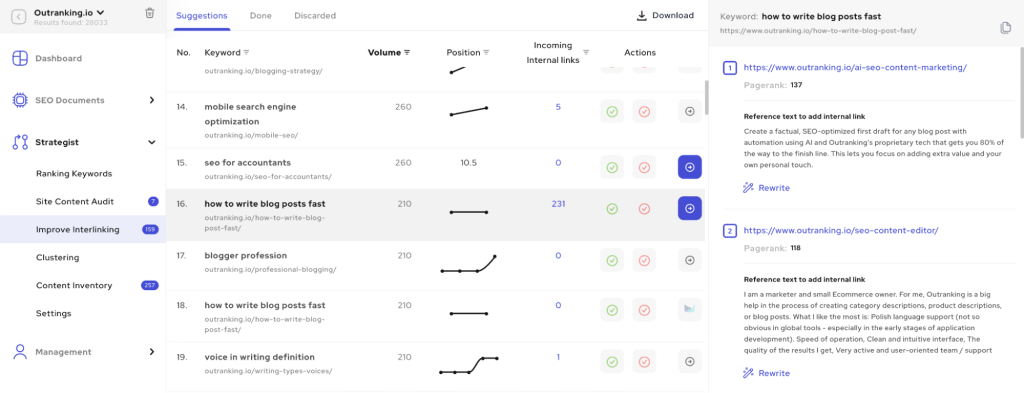
Outranking.io feels better suited to users who want a fuller content process and a bit more structure around how pages are planned and improved. It makes sense when you do not want a one-click tool that hides too much thinking.
- Strongest point: fuller process feel
- Use it if: you like structure and planning
- Skip it if: you need a very simple writer first
PageOptimizer Pro
Best for: precision-focused on-page tuning.
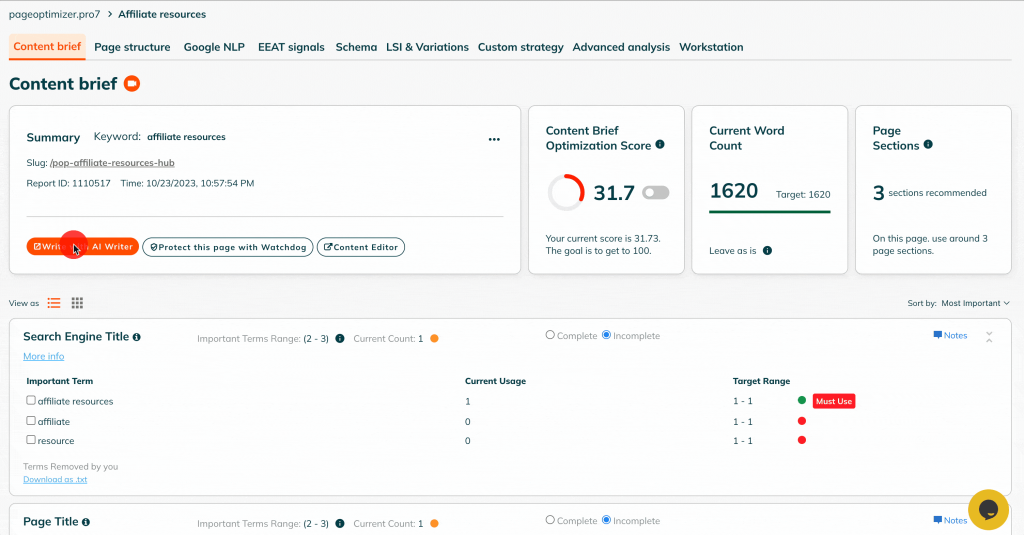
PageOptimizer Pro is easier to appreciate when you like detail and deliberate tuning. It is not the most “relaxed” option in this list, but it can be attractive if you want more exact control than a casual AI drafting workflow gives you.
- Strongest point: precision
- Use it if: you enjoy hands-on optimization
- Skip it if: you want something more plug-and-play
Keyword.com
Best for: AI search visibility tracking.
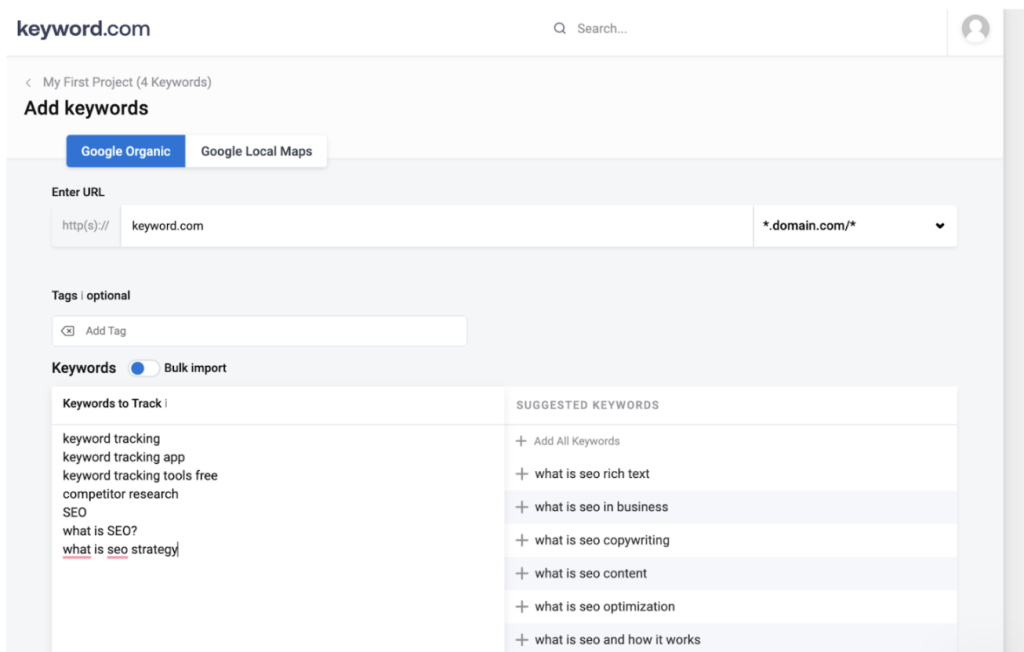
If your team is asking, “Are we even showing up in AI-driven search surfaces?” Keyword.com is much closer to that question than a standard content writer. It belongs in the stack when measurement and visibility are the real pain points.
- Strongest point: visibility-focused thinking
- Use it if: reporting and AI search presence matter
- Skip it if: you still have not fixed basic content quality
LinkBoss
Best for: internal linking and topical structure.
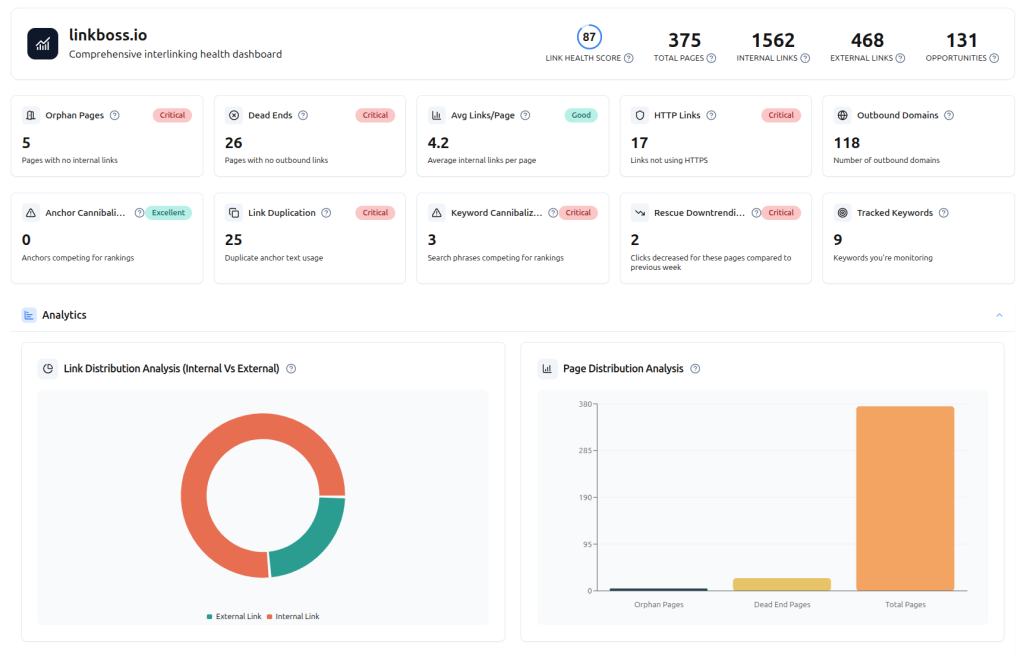
LinkBoss is the easiest recommendation in this list for sites that already have depth but feel messy. If your real issue is silo structure, orphan pages, and weak link architecture, this kind of tool can matter more than another writing assistant.
- Strongest point: structure at scale
- Use it if: you have enough content to organize
- Skip it if: your site is still very small
SEOWritingAI
Best for: fast AI SEO drafting.
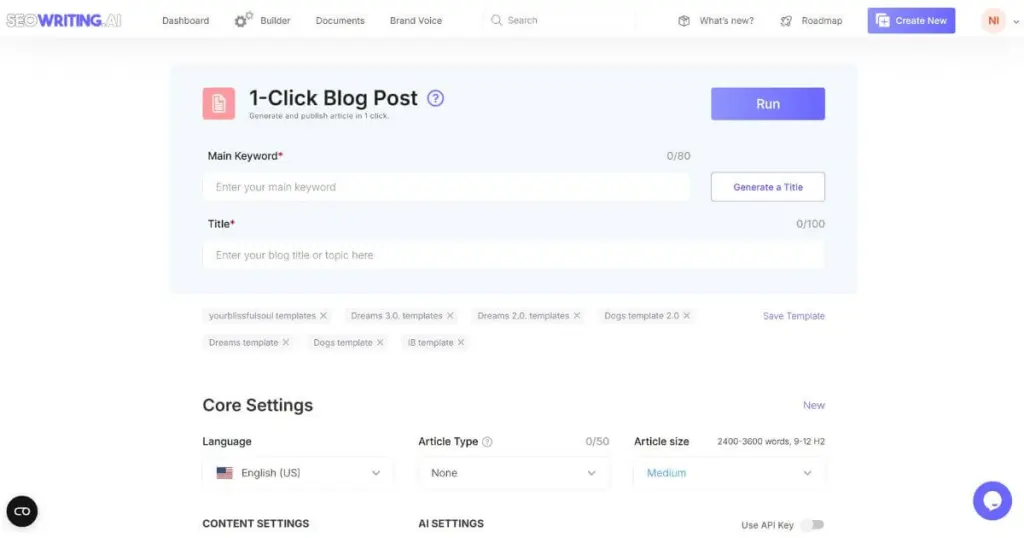
SEOWritingAI is the kind of tool that makes sense when speed is genuinely useful. It works better as a first-draft accelerator than as a full strategy replacement, which is exactly how most teams should think about this category anyway.
- Strongest point: speed
- Use it if: publishing velocity matters
- Skip it if: you expect the tool to supply point of view by itself

aiseo.ai
Best for: a lighter all-round AI SEO workflow.
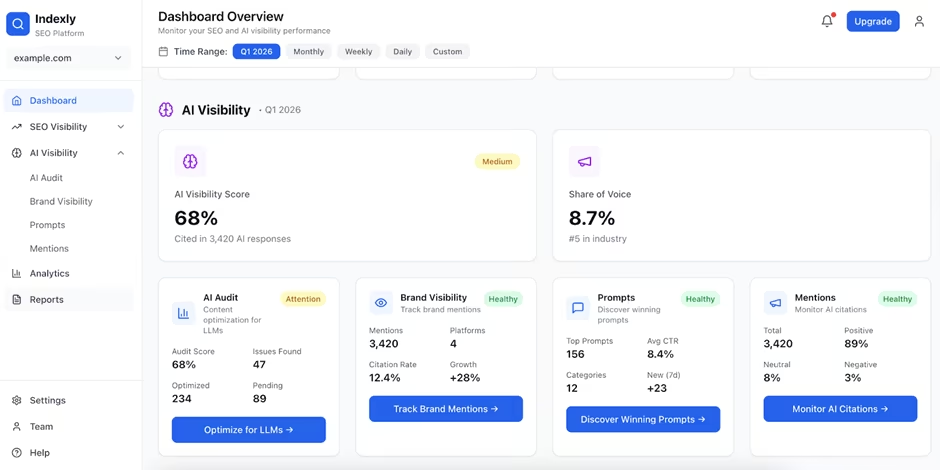
aiseo.ai fits better if you want a broader AI-assisted workflow without building a more specialized stack immediately. It is the kind of option that can feel convenient for small teams that do not want to manage too many tools at once.
- Strongest point: convenience
- Use it if: you prefer a lighter stack
- Skip it if: you need best-in-class depth in one narrow area
SEObot AI
Best for: autonomous publishing workflows.
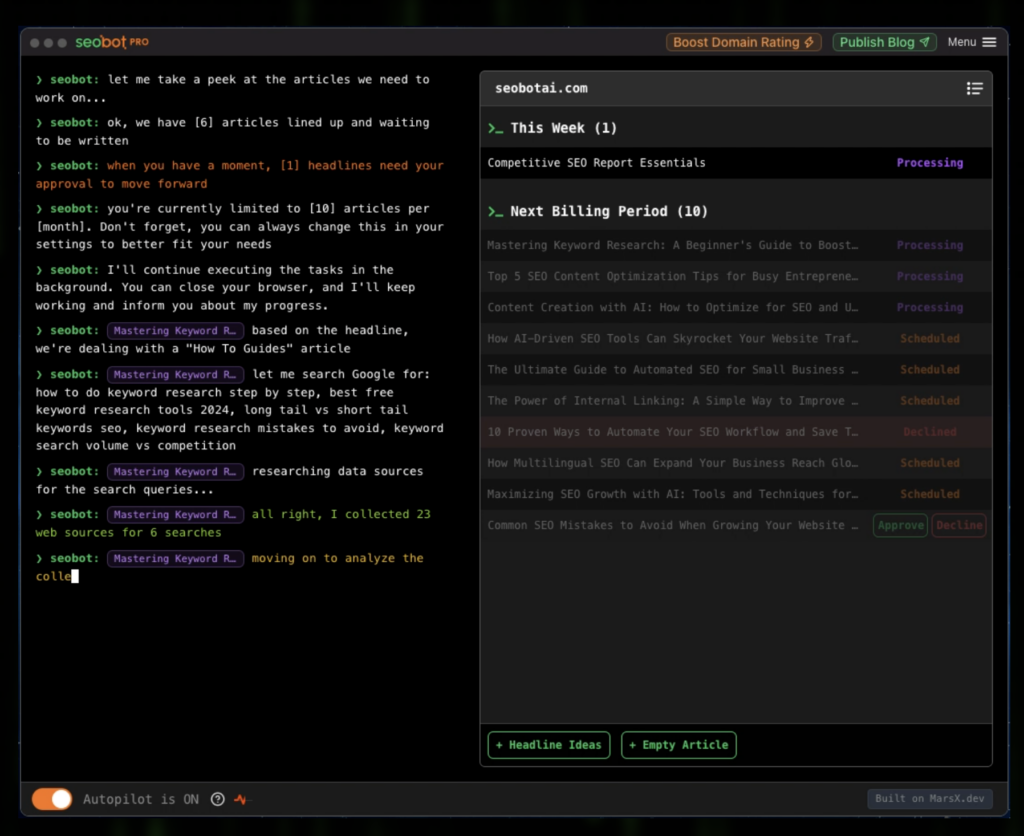
SEObot AI is more interesting when you think in systems. If your goal is to reduce manual steps and let a workflow handle more of the routine publishing motion, this is a more natural fit than a traditional optimizer.
- Strongest point: automation mindset
- Use it if: you value systems and repeatability
- Skip it if: you want tight editorial control over every step
Rank Math
Best for: WordPress users who want lighter in-CMS SEO support.
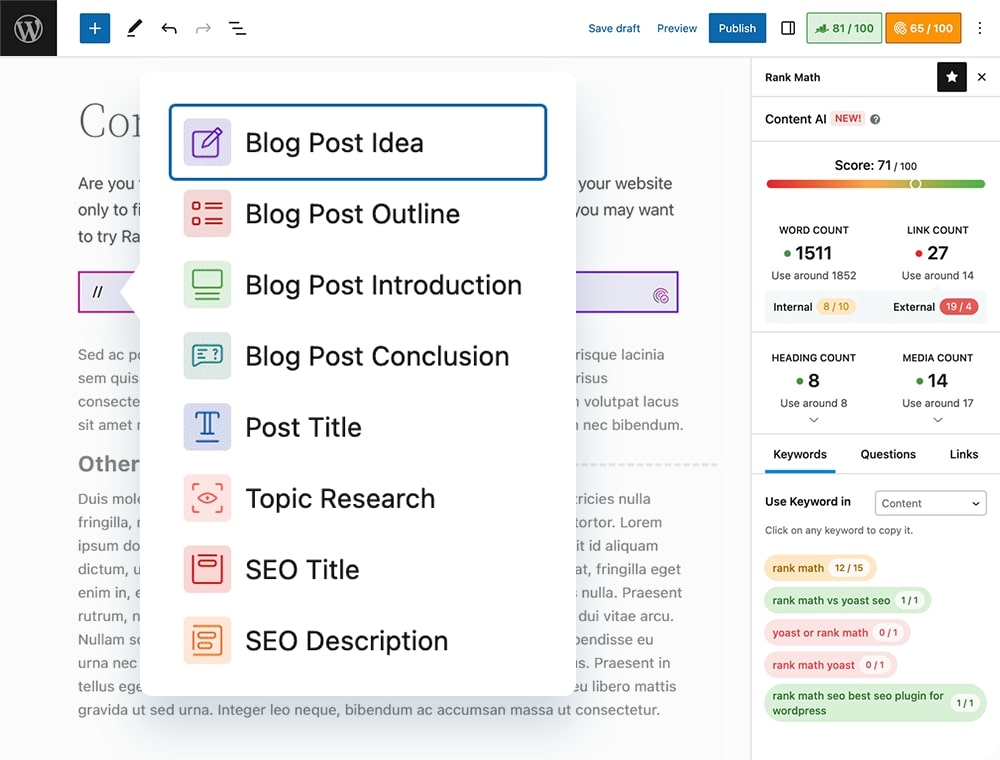
Rank Math is easiest to appreciate when your site lives inside WordPress and you want smoother day-to-day execution without spinning up a more complex SEO toolset for everything. It is best thought of as support, not a full replacement for deeper visibility or optimization tools.
- Strongest point: CMS convenience
- Use it if: WordPress is your main working environment
- Skip it if: you need stronger research, testing, or tracking depth
SEOTesting.com
Best for: testing and iteration.
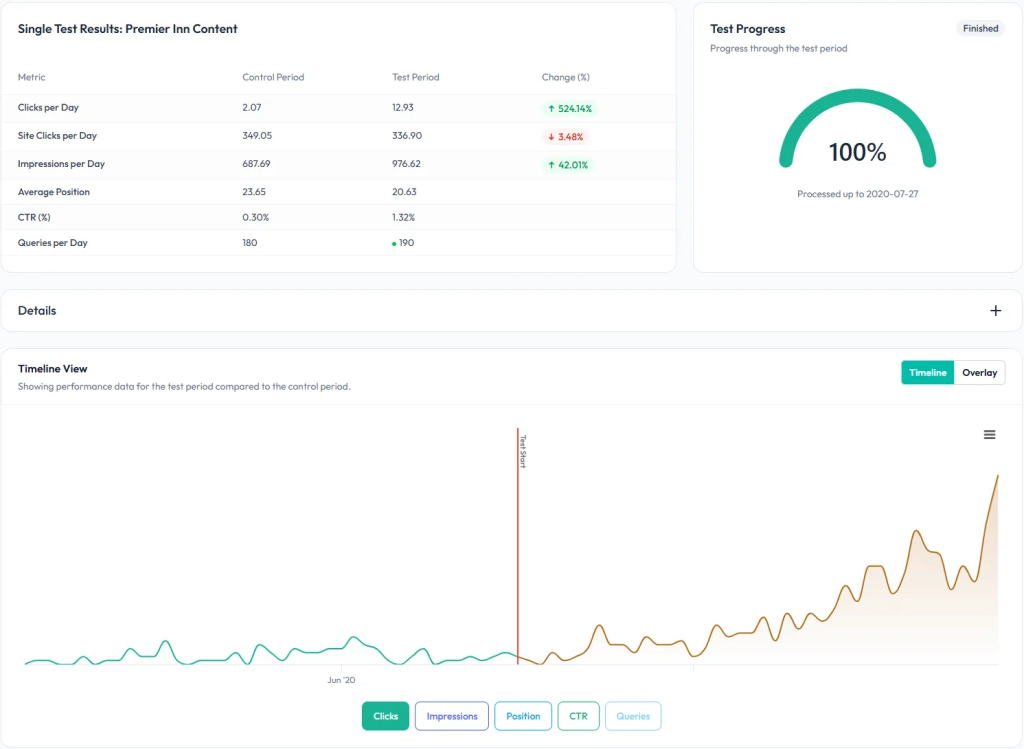
SEOTesting.com becomes more useful after a site is already publishing consistently. That is why it feels more like a performance and decision tool than a creation tool. If your team keeps making changes but never learns what actually helped, this category is worth more attention.
- Strongest point: learning from changes
- Use it if: your site already has publishing momentum
- Skip it if: you still need to build basic content operations first
ListingBott
Best for: citation and distribution support.
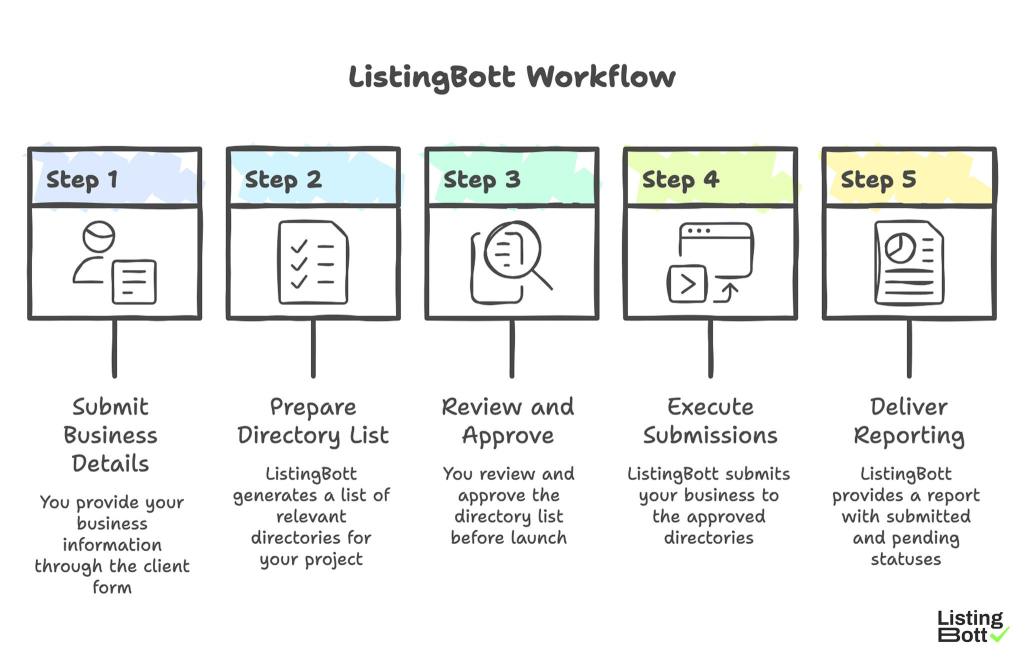
ListingBott makes more sense when discoverability and distribution are part of the conversation. It is not a classic content optimizer, so it should sit in your stack as support for broader visibility rather than as your main SEO engine.
- Strongest point: supporting discoverability
- Use it if: you care about broader citation signals
- Skip it if: your core on-page process is still weak
Which AI SEO tool is best for your situation?
Solo bloggers: start with SEOWritingAI if speed is the issue, or Frase if you publish enough to benefit from optimization and refreshes.
Affiliate sites: LinkBoss, Frase, and SEOTesting.com often make more strategic sense than stacking multiple writers.
Agencies: Keyword.com is easier to justify when reporting, measurement, and visibility questions keep coming up from clients.
SaaS teams: Keyword.com, ListingBott, and Frase can work better together than a writing-only stack.
A practical AI SEO stack for most sites
Lean stack
Best if you need to publish faster without building a larger stack too early.
Growth stack
Frase + Keyword.com + LinkBoss
Best if your site already has content and needs stronger structure plus better visibility feedback.
Agency stack
Rankability + Keyword.com + LinkBoss + SEOTesting.com
Best if reporting, iteration, and repeatable process matter as much as raw output.
What AI SEO tools still do poorly
- They do not replace judgment, positioning, or editorial taste.
- They can make content look more productive without making it more useful.
- They can tempt teams into buying overlapping tools that solve the same narrow job.
- They often feel strongest when used to improve an existing process, not invent one from scratch.
- They are easy to misuse if your team still confuses speed with quality.
That last point matters. A fast draft is not the same thing as a strong page. A useful stack usually has one tool that helps you create or optimize, one that helps you measure, and one that helps you organize. Past that, more subscriptions can start to look impressive while adding very little.
Mapped entries worth treating as adjacent, not central
Three mapped entries in this AI SEO set make more sense as adjacent tools than as the center of a “best AI SEO tools” article: ProxyEmpire, ProxyScrape, and SellerMate.AI. They may matter in more specialized workflows, but they are not the clearest starting point for a reader trying to understand the core AI SEO stack for most content-driven sites.
Final verdict
If you want one balanced place to start, Frase is the easiest overall recommendation in this list. If your real problem is AI search presence and reporting, Keyword.com makes more sense. If your site already has depth but poor structure, LinkBoss is the more strategic buy. And if you just need faster output, SEOWritingAI is a cleaner entry point than overcomplicating your stack too early.
The best choice is the one that fixes your biggest bottleneck first, not the one with the longest feature page.
FAQ about AI SEO tools
What is an AI SEO tool?
An AI SEO tool is software that helps with one or more SEO tasks using automation or AI assistance. That can mean writing, optimization, internal linking, visibility tracking, testing, or workflow support. The useful question is not whether the tool uses AI, but whether it improves a real part of your process.
Are AI SEO tools worth paying for?
They are worth paying for when the tool solves a bottleneck that is already costing you time, clarity, or missed performance. They are not worth it when you buy several overlapping tools just because the category feels hot. One tool that fixes a real workflow is usually more valuable than three that do roughly the same thing.
What is the difference between AI SEO and AI visibility tracking?
AI SEO is a broader umbrella. It can include writing, optimization, site structure, testing, and other tasks. AI visibility tracking is narrower. It focuses on whether your brand or pages are appearing in AI-driven search experiences and how that presence changes over time.
Can AI SEO tools help with Google AI Overviews?
They can help indirectly by improving the things that usually matter first: content clarity, structure, topical organization, freshness, and visibility measurement. No tool can guarantee placement, but the right mix can make your workflow more intentional and easier to evaluate.
Which AI SEO tool is best for WordPress?
For lighter support inside the CMS, Rank Math is the cleanest fit in this list. But if you want stronger gains, it often works better as part of a stack with a deeper optimization tool like Frase or a structure-focused tool like LinkBoss.
Which AI SEO tool is best for internal linking?
LinkBoss is the clearest internal linking recommendation in this mapped set. It makes the most sense for sites that already have enough content to benefit from better structure, link distribution, and cleanup of orphan pages.
Do AI SEO tools replace human editors?
No. They can reduce routine work, speed up drafting, and help organize decisions, but they do not replace editorial judgment, original framing, or the ability to decide what actually deserves to be published.
PromoCodeRadar helps users find cleaner coupon codes, official deals, annual billing savings, free trials, and better ways to save on software, AI tools, and online services.
If you found a broken code or outdated listing, contact us at contact@promocoderadar.com.