
AI SEO guide • updated April 10, 2026
AI SEO vs Traditional SEO vs GEO: What Actually Matters in 2026?
AI SEO, traditional SEO, and GEO sound like three different worlds, but in practice they overlap a lot more than people admit. The real challenge is not memorizing new acronyms. It is understanding which mindset helps you get found, clicked, cited, or remembered in the kind of search experience your audience is actually using now.
My honest take is simple: traditional SEO still matters, AI SEO is becoming the operating layer around modern search, and GEO is the part that reminds you AI tools do not always behave like ten blue links. If you treat these as enemies, your strategy gets messy. If you treat them as layers, the whole picture gets clearer.
What this page helps you figure out
- What traditional SEO still does best
- Why AI SEO is more than “use AI to write articles”
- Where GEO changes the emphasis
- Which layer should matter most for your site right now
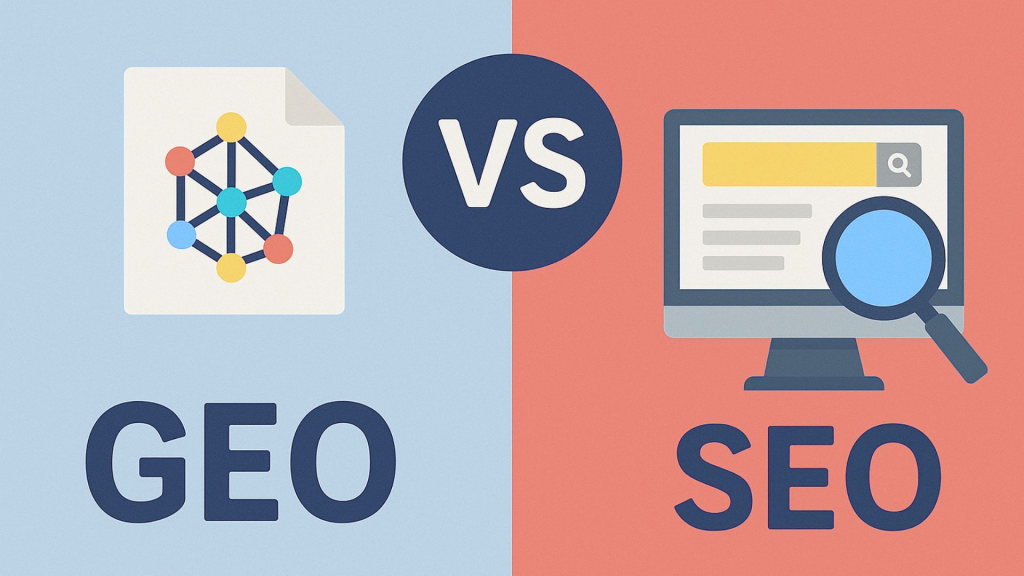
Quick answer: do you need SEO, AI SEO, or GEO?
You still need all three, but not in the same proportion. Traditional SEO still matters because search engines still crawl, index, rank, and rely on strong pages. AI SEO matters because search behavior is changing and AI-driven experiences are now part of how people discover answers. GEO matters because getting cited, summarized, or recommended inside AI responses is not always the same thing as winning a classic ranking.
If I had to simplify it for a friend, I would say it like this: traditional SEO helps you rank pages, AI SEO helps you adapt your workflow to modern search, and GEO helps you think about being surfaced and cited inside answer engines and AI-powered search experiences.

Why people keep confusing these terms
The confusion usually starts with the labels. People hear “AI SEO” and assume it means using AI to write blog posts. Then they hear “GEO” and assume traditional SEO is dead. A week later someone says “good GEO is just good SEO,” and now the whole conversation feels like branding more than strategy.
The cleaner way to see it is this. Google still treats AI features like AI Overviews and AI Mode as part of Search, not as a separate universe. At the same time, marketers and tool makers are using GEO to describe the extra work involved in getting cited, summarized, or recommended inside AI-generated answers across Google and other answer engines. That is why these terms overlap without being identical.
The practical takeaway: traditional SEO is still the base layer. AI SEO is the broader modern workflow layer. GEO is the visibility-and-citation layer inside generative experiences.
AI SEO vs traditional SEO vs GEO at a glance
| Layer | Main goal | Primary focus | Best way to think about it |
|---|---|---|---|
| Traditional SEO | Rank pages in classic search results | Crawlability, relevance, links, content quality, technical basics | The foundation |
| AI SEO | Adapt SEO workflow to AI-shaped search behavior | Content systems, AI features, visibility, optimization, workflow changes | The operating layer |
| GEO | Increase mentions, citations, and inclusion in AI answers | Entity clarity, structured information, citation-worthiness, AI visibility | The generative visibility layer |
The short version I would actually use in real life
- Traditional SEO: “Can my page rank and earn clicks?”
- AI SEO: “Is my overall search workflow adapting to AI-shaped discovery?”
- GEO: “Can my brand or content be cited, summarized, and surfaced in AI answers?”

What traditional SEO still does best
Traditional SEO still wins whenever the goal is straightforward: get a page crawled, indexed, understood, ranked, and clicked. That means page quality, topic relevance, internal links, crawlability, titles, supporting entities, and technical cleanliness still matter. Anyone telling you those things no longer matter is usually trying to sell a shortcut.
This is also where I think a lot of site owners overcorrect. They panic when they hear terms like AI search and GEO, then start acting like classic SEO belongs to another era. But if your site still has weak pages, thin category structure, poor internal links, slow improvement cycles, and vague topic coverage, AI-flavored language will not save you. The base still has to work.
- Strong page-level intent matching
- Clear internal links and supporting architecture
- Technical foundations that make content accessible and understandable
- Enough depth and originality to deserve ranking in the first place
What AI SEO changes in the real world
AI SEO is not just “SEO, but with ChatGPT.” The more useful definition is broader: it is the way your SEO workflow changes when AI features become part of search behavior. That includes how people ask questions, how they discover brands, how they compare options, and how teams produce, improve, and measure content.
This is why AI SEO has become such a messy term. One person uses it to mean AI writing. Another uses it to mean AI visibility tracking. Someone else uses it for AI Overviews optimization. In practice, all of these belong under the umbrella, but they are not the same job. That is why a smarter AI SEO strategy starts with one uncomfortable question: what is actually broken in my workflow right now?
AI SEO usually includes
- AI-assisted briefs and optimization
- AI Overviews and AI Mode awareness
- AI visibility tracking and mention monitoring
- Faster refresh and publishing workflows
AI SEO does not automatically mean
- Publish more pages with less thinking
- Replace editorial judgment
- Ignore technical SEO or site structure
- Treat every AI feature like a separate traffic channel
Where GEO adds a genuinely new layer
GEO, or generative engine optimization, is the term people use when they want to emphasize AI answer engines, AI-generated summaries, citations, recommendations, and brand mentions. In plain language, GEO is less obsessed with whether one specific URL ranked at position three and more interested in whether your brand or content becomes part of the answer itself.
That shift matters because AI-driven search often feels less like “show me a list of pages” and more like “give me a useful answer and maybe tell me who to trust.” This pushes strategy toward entity clarity, structured information, strong explanations, cleaner source signals, and content that is easy to extract, summarize, and cite.
This is also why I do not think GEO should replace SEO in your mind. It is more useful as a lens that makes you ask different questions: is my brand easy to understand as an entity, are my pages clear enough to quote, and am I trackable inside AI answers beyond the classic SERP?
So which one matters most for your site?
This is the part where I think most site owners need honesty more than theory. If your site is still weak at the fundamentals, traditional SEO deserves the most attention first. If your content workflow is messy and your team is struggling to adapt to changing search behavior, AI SEO deserves attention next. If your brand is strong enough to compete but invisible in AI-generated discovery, GEO becomes much more relevant.
Prioritize traditional SEO first if…
- Your site architecture is weak
- Your pages still miss clear search intent
- You have thin supporting content
- Your internal links are sloppy
Prioritize AI SEO next if…
- Your team needs better optimization workflows
- You want to adapt to AI Overviews and AI Mode behavior
- You need faster, cleaner refresh cycles
- You are using AI but without a clear process
Prioritize GEO harder if…
- You care about AI answer inclusion and citations
- You want brand mentions beyond blue-link rankings
- You are already strong in search but weak in AI visibility
- You need entity clarity across the web
The mistake I would avoid
Do not let the newest acronym bully you into ignoring the layer your site still needs most. I have seen too many strategies become weirdly fashionable and strangely unhelpful at the same time. A site with poor fundamentals does not become sophisticated because it starts saying “GEO.” A site with no measurement discipline does not become modern just because it uses AI to generate more drafts.
The order still matters: build a clean SEO base, modernize the workflow with AI SEO thinking, and then push harder into GEO when you are ready to care about citations, inclusion, and brand presence across AI-driven answers.
Useful tools for each layer
This article is concept-first, but if you want a practical bridge between theory and action, these mapped tools fit different layers of the conversation.
- For AI SEO workflow and content optimization: Frase, aiseo.ai
- For AI visibility and citation tracking: Keyword.com
- For broader generative visibility support: ListingBott
- For classic optimization support inside a broader stack: Rankability, SEOWritingAI
If you want a cleaner reading path after this page, start with Best AI SEO Tools, then move to How to Optimize for Google AI Overviews, and then read How to Track AI Search Visibility. That sequence usually makes the whole topic feel much less abstract.
Final verdict
Traditional SEO is not dead. GEO is not fake. AI SEO is not just a fancy name for AI writing. The best way to think about the whole topic is layered: traditional SEO is the base, AI SEO is the modern workflow layer, and GEO is the part that pushes you to care about citations, mentions, and answer-engine visibility.
If your site is still messy, fix the basics. If your workflow is outdated, modernize with AI SEO. If your brand needs to show up inside AI answers, lean harder into GEO. That is the calm, useful version of the story.
FAQ about AI SEO, traditional SEO, and GEO
Is GEO replacing SEO?
No. GEO is better understood as an additional visibility layer for AI-generated answers and answer engines. Traditional SEO still matters because pages still need to be crawlable, understandable, and strong enough to deserve visibility in the first place.
Is AI SEO just using AI to write content?
No. That is only one narrow slice of it. AI SEO is a broader way of adapting your SEO workflow to AI-shaped search behavior, including optimization, visibility tracking, workflow changes, and search experiences like AI Overviews and AI Mode.
What is the biggest difference between SEO and GEO?
SEO is still more page-and-ranking oriented. GEO is more answer-and-citation oriented. In other words, SEO asks how a page can rank well, while GEO asks how a brand or piece of content can be included and referenced inside AI-generated answers.
Should small sites care about GEO yet?
Yes, but not at the expense of the fundamentals. A small site should still care about being understandable, citable, and clear. But if the basics are weak, fixing classic SEO issues usually deserves more immediate attention than chasing every new GEO tactic.
What should I focus on first if I run an affiliate or content site?
Start with the layer that is most obviously weak. For many affiliate sites, that still means page quality, topical structure, internal linking, and cleaner refresh workflows. Once those are stronger, AI visibility and GEO become more useful strategic layers.
Do I need separate teams for SEO and GEO?
Usually no. Most smaller teams are better off building one stronger search strategy that keeps the fundamentals of SEO, modernizes workflows through AI SEO, and adds GEO thinking where citation, entity clarity, and AI answer visibility start to matter.
PromoCodeRadar helps users find cleaner coupon codes, official deals, annual billing savings, free trials, and better ways to save on software, AI tools, and online services.
If you found a broken code or outdated listing, contact us at contact@promocoderadar.com.