

How to Improve AI Citations for Your SaaS Site
If you run a SaaS site, AI citations are becoming one of those signals that feel small at first and suddenly start mattering everywhere. A user asks an AI-powered search system for the best tool in your category, the fastest way to solve a workflow, or the easiest software for a specific use case. The answer shows a shortlist, maybe a few explanations, and a couple of cited sources. That is the moment you either exist in the conversation or you do not.
What makes this tricky is that AI citations do not behave exactly like classic rankings. A page can rank decently and still get overlooked in AI answers. Another page can be cited because it is clearer, more extractable, or more obviously useful for the exact question being asked. That is why improving AI citations for a SaaS site is not just about “more SEO.” It is about making your site easier to understand, easier to quote, and easier to trust.
This guide is written for that job.
Table of Contents
Quick answer
If you want the shortest useful version, improve AI citations for your SaaS site by making your pages easier to understand, extract, trust, and connect. In practice, that means:
- clear entity and product positioning
- answer-first page structure
- use-case pages that solve specific jobs
- clean comparison and alternative pages
- help docs and FAQs written in plain text, not vague marketing language
- internal links that connect product, feature, use case, pricing, and support content
- structured data that matches what the page actually says
- tracking cited URLs and brand mentions so you know what is being pulled into AI answers
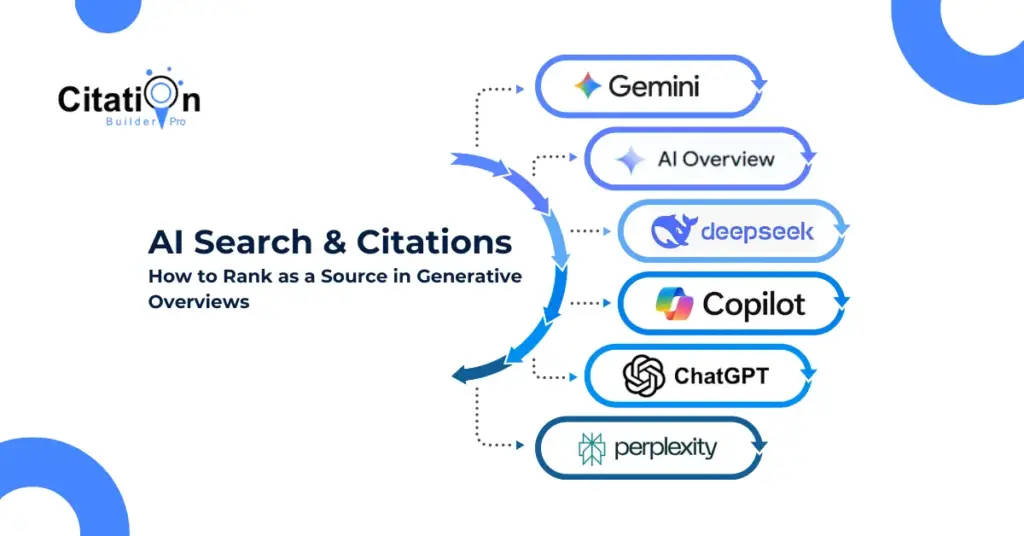
The simplest rule is this: AI systems cite pages that are easy to use as evidence. If your page is too vague, too buried in design fluff, or too weakly connected to the rest of your site, it becomes harder to surface even if the product itself is good.
What AI citations actually are
AI citations are the links, mentions, or source attributions that appear when AI-powered search systems generate an answer and point users toward pages on the web. Sometimes the citation is a direct URL. Sometimes it is a brand mention tied to a page. Sometimes the AI answer clearly reflects your content even when the click path is less obvious.

For SaaS brands, this matters because AI-led search often shows up at the exact stage where buyers are comparing tools, trying to understand features, or narrowing down the best fit for a specific workflow. That means the pages getting cited are often not the flashiest pages on the site. They are the pages that explain something clearly and match the question tightly.
In other words, a page becomes citable when it is useful as evidence, not just persuasive as marketing.
Why SaaS sites actually have an advantage here
The good news is that SaaS sites are naturally positioned to win citations more often than many other site types. They usually have something AI systems like:
- defined products and feature sets
- repeatable use cases
- clear alternatives and competitors
- documentation, setup content, and help articles
- pricing pages and plan differences
- feature-focused landing pages
That is already a strong raw material set. The problem is that many SaaS sites bury the useful information under generic positioning, thin feature blurbs, or design-heavy layouts that feel polished but say very little in straightforward text. When that happens, the site is harder to extract and harder to cite.

What makes a SaaS page citable in AI answers?
1) Clear entity definition
The site should make it obvious what the product is, who it is for, and what job it helps with. If your homepage, feature pages, and use-case pages all describe the tool in different fuzzy ways, the AI layer has less stable material to work with.
2) Answer-first text structure
Pages that state the answer early tend to be more usable in AI summaries than pages that spend six paragraphs sounding impressive before explaining anything. For SaaS sites, this usually means feature pages, docs, and use-case pages should answer the real question near the top.
3) Feature + use-case alignment
One of the easiest ways to improve citations is to stop treating features as isolated modules. A citable SaaS site connects each feature to real user intent. For example:
- what this feature does
- who uses it
- what problem it solves
- what kind of workflow it supports
- what the expected outcome is
4) Comparison and alternative pages
AI answers love comparison intent because users ask for it constantly. If your site has honest, well-structured comparison pages, alternative pages, and “best for” use-case pages, you create more citation entry points than a site that only talks about itself in product language.
5) Docs, FAQs, and support content in plain language
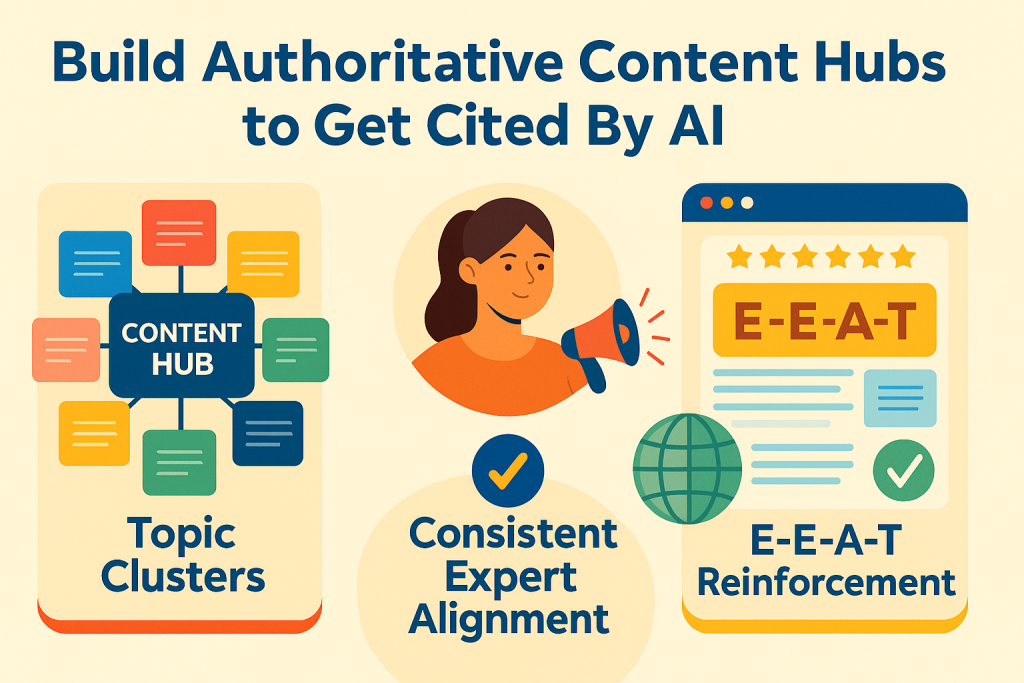
Many AI-citable pages are not glamorous marketing pages. They are the pages that explain setup steps, integrations, product behavior, limits, and pricing details clearly enough to be quoted or paraphrased. That is one reason well-written documentation can quietly outperform broader marketing copy in AI surfaces.
6) Strong internal link paths
A page is easier to trust and easier to understand when it sits inside a coherent site structure. If the feature page links to relevant use cases, the use case links to the pricing page, the docs page links to setup content, and the comparison page links back into the core product pages, the site becomes much easier to interpret as a connected system instead of a pile of isolated pages.
A practical framework for improving AI citations on a SaaS site
Step 1: define your citation surfaces
Start by listing the page types that should logically earn citations:
- homepage
- feature pages
- use-case pages
- industry pages
- comparison pages
- pricing page
- FAQ pages
- docs and help pages
If you do not know which parts of the site are meant to answer which type of question, citation improvement work gets messy fast.
Step 2: rewrite the top of key pages for clarity
The top of the page matters a lot. Rewrite the first section so it quickly answers:
- what the product or feature is
- who it is for
- what job it solves
- why someone would choose it over a weaker alternative
This is not about making the page shorter. It is about making it easier to extract.
Step 3: build more use-case pages than you think you need
This is one of the highest-leverage moves for SaaS. AI answers often map to narrow user intent, not just broad product categories. A page like “best AI meeting assistant” is useful, but a page like “AI meeting assistant for remote sales teams” is often more citable for a specific prompt. SaaS sites that map product features to real user scenarios create far more citation opportunities.
Step 4: create comparison and alternative content honestly
Comparison content is one of the strongest citation surfaces for SaaS, especially when it is structured clearly. The key is to make the comparison genuinely useful instead of turning it into a page of disguised chest-thumping. Good comparison pages tend to include:
- who each product fits
- where each product feels stronger
- trade-offs
- pricing logic
- workflow fit
- when not to choose your own product
Step 5: tighten docs and FAQ content
Support content is often where citable clarity lives. If your docs read like developer shorthand or your FAQ reads like marketing in disguise, the content is less useful as an answer source. The best docs and FAQs feel boring in the best possible way: precise, direct, and easy to quote.
Step 6: improve internal links across the commercial + educational layer
A lot of SaaS sites separate marketing pages from docs and blog content so aggressively that the site stops feeling like one knowledge system. Fix that. The feature page should connect to relevant use cases. The use case page should connect to docs and pricing. The docs should link to feature pages when relevant. Comparison pages should send users deeper into the right product and evidence pages.
Step 7: keep structured data accurate and useful
Structured data does not magically create AI citations, but it helps search systems understand content more clearly when used honestly. The key point is simple: the schema should match what is visibly on the page. If your markup says more than the content does, you are not clarifying anything — you are just creating mismatch.
Step 8: do not accidentally suppress the content you want surfaced
This one is easy to miss. If you use snippet controls too aggressively, you may be reducing how much of your content can be shown or extracted in search experiences. That does not mean “never use controls.” It means be careful with them, especially on the pages you want cited most.
How to track whether your SaaS site is earning more AI citations
This part matters because citation work is easy to romanticize if you never measure it. The most useful signals to track are:
- brand mentions in AI answers
- which exact URLs are being cited
- which prompts or topic clusters produce those citations
- which competitors keep appearing where you do not
- what happens after the click when the page does get traffic
That last one matters because not all citations are equal. A weakly aligned citation that sends the wrong users is less valuable than a smaller number of citations tied to the right use cases and comparison prompts.
Helpful tools for this workflow
- Keyword.com — useful for tracking AI visibility, brand mentions, cited URLs, and prompt-level coverage so you can see whether your SaaS site is actually getting surfaced in the right places.
- Frase — useful for tightening feature pages, comparison pages, use-case pages, and support content so they become clearer citation candidates.
- AISEO — useful if your SaaS team is already thinking in terms of GEO and AI search presence, not just classic SEO alone.
- ListingBott — useful if broader discoverability and distribution matter to your SaaS growth loop beyond your own site structure.
- Rank Math — useful if your SaaS marketing site runs on WordPress and you want cleaner structured content, clearer internal optimization, and less friction in publishing and markup basics.
A practical way to think about it is simple: use one layer to make the content more citable, and another layer to verify whether the right pages are actually being cited.
Mistakes to avoid
- Treating AI citations like a separate magic channel instead of an extension of good content structure and search clarity.
- Writing feature pages that sound impressive but never answer what the feature actually does.
- Skipping use-case and comparison content because the team only wants product-led pages.
- Ignoring docs and FAQs because they feel less glamorous than landing pages.
- Breaking the site into disconnected content silos with weak internal links.
- Tracking brand mentions without tracking which pages actually earn the citations.
- Overusing snippet controls on the very pages you want surfaced.
The biggest mistake, though, is thinking AI citations are mostly about clever optimization tricks. They are usually about making your SaaS site easier to use as a trustworthy answer source.
Final takeaway
If you want better AI citations for your SaaS site, the safest path is not mysterious. Clarify the product entity. Build more use-case pages. Write better comparison content. Tighten docs and FAQs. Connect the site with stronger internal links. Keep important information in clean text. Then measure which prompts and URLs are actually producing citations.
That approach is less exciting than “secret GEO hacks,” but it is much more durable. And for SaaS, durable usually wins.
After this page, the most natural next reads are How to Track AI Search Visibility, How to Optimize for Google AI Overviews, and AI SEO vs Traditional SEO vs GEO.
FAQ about improving AI citations for SaaS sites
What is an AI citation for a SaaS site?
An AI citation is a link, mention, or attributed source used in an AI-generated answer. For SaaS sites, citations often appear around product comparisons, use cases, features, pricing, and workflow questions.
Do AI citations depend only on rankings?
No. Rankings still matter, but citations also depend on how clearly a page answers the question, how extractable the information is, and how useful the page is as evidence for the prompt.
Which SaaS pages are most likely to earn AI citations?
Feature pages, use-case pages, comparison pages, alternative pages, FAQ pages, pricing pages, and clear documentation pages often have the strongest citation potential because they answer concrete user questions directly.
Should SaaS sites invest more in docs or blog content for citations?
Usually both, but for different reasons. Blog content can capture discovery and education, while docs and help content often provide the precise, quotable material that AI systems use for answer support.
What is the biggest mistake when trying to improve AI citations?
The biggest mistake is making the site sound polished but not clear. Pages that are vague, fluffy, or weakly connected often lose citation opportunities even when the product itself is strong.
PromoCodeRadar helps users find cleaner coupon codes, official deals, annual billing savings, free trials, and better ways to save on software, AI tools, and online services.
If you found a broken code or outdated listing, contact us at contact@promocoderadar.com.