
SEO Testing with AI: What to Test First
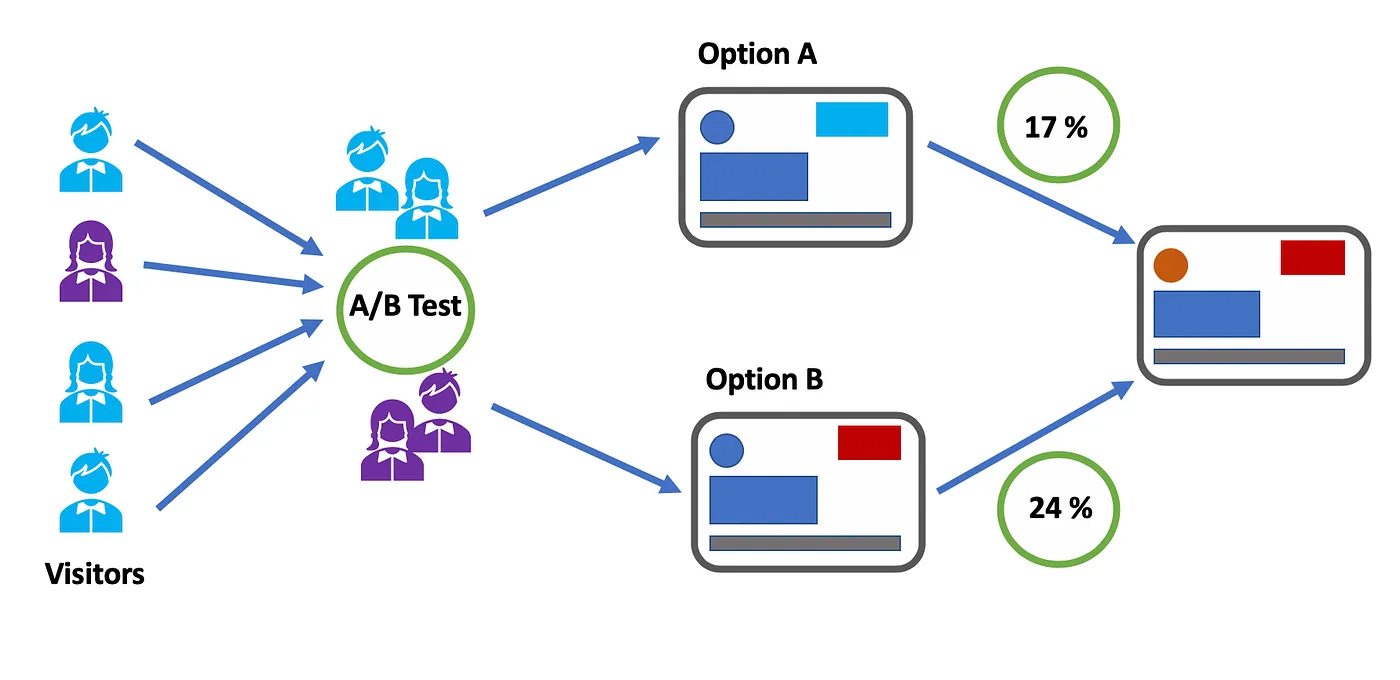
AI makes SEO testing easier in one very specific way: it helps you generate more hypotheses faster. That sounds great until you realize it also makes it easier to test too many things at once, draw messy conclusions, and convince yourself a page improved when you actually changed three variables at the same time.
Table of Contents
So this article is not about “AI will test SEO for you automatically.” It is about something more useful: how to use AI to generate smarter test ideas, prioritize them, and run cleaner experiments without turning your site into a pile of untraceable edits.
If I had to say the whole thing in one line, it would be this: AI can help you think of better SEO tests, but you still need human discipline to make the test worth trusting.
Quick answer
If you want the shortest practical answer, test the changes that are easiest to isolate and most likely to influence performance without changing the whole page at once. In most cases, that means starting with:
- title and meta description changes
- intro rewrites that clarify intent faster
- heading and section order improvements
- missing-topic additions
- internal linking changes
- content refresh updates on already-relevant pages
I would not start with a full AI rewrite of the page. That usually changes too much at once and makes the result harder to trust.
Why SEO testing matters more now than people think
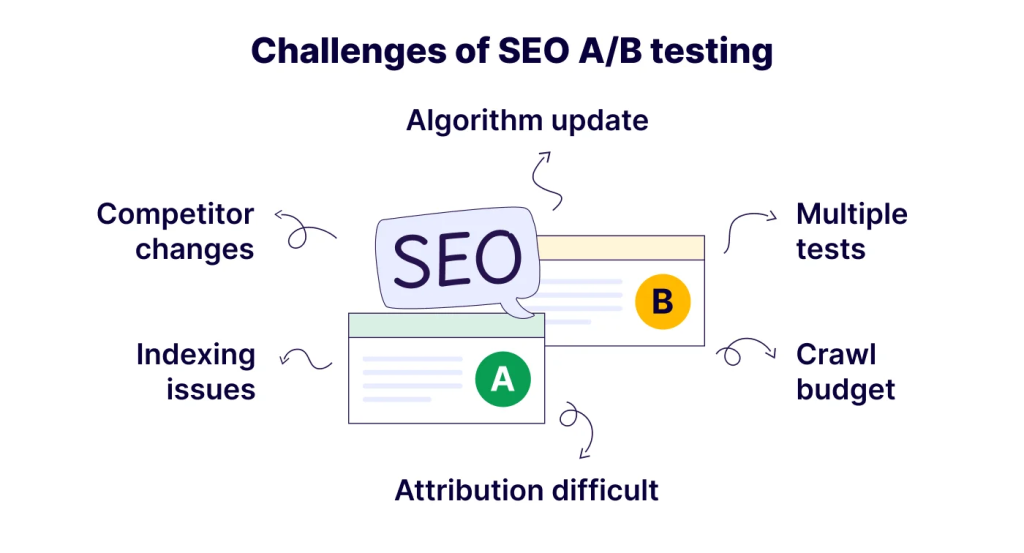
SEO has always involved experimentation, but many site owners still treat it like a series of permanent guesses. They update a page, move on, and hope the graph goes up. That works sometimes, but it leaves a lot of learning on the table.
AI search, AI Overviews, and more complex SERP behavior make testing even more useful because the environment is getting less predictable, not more. When the search landscape shifts, the sites that win are often the ones with a cleaner feedback loop. They notice what changed, they test intelligently, and they build a body of internal knowledge instead of repeating vague SEO rituals.
That is why I think “SEO testing with AI” is a much better idea than “AI does SEO for me.” The first one still respects judgment. The second one usually ends in confusion.
What to test first if you want cleaner results
1) Title and meta description changes
This is usually the easiest place to start because the change is small, visible, and closely tied to click behavior. If a page gets impressions but weak CTR, AI can help generate stronger title angles or tighter meta descriptions. The key is to test a meaningful change, not a tiny variation that says almost the same thing.
2) Intro clarity and answer-first structure
A surprising number of pages underperform because they spend too long warming up. AI can help rewrite the opening so the user gets the answer faster. This is especially useful on pages targeting practical queries where the first screen matters a lot.
3) Heading structure and section order
If the page has the right ingredients but a weak reading flow, reorganizing the structure is often a smarter test than rewriting everything. AI is very good at suggesting alternate section order, clearer H2s, and missing subsections.
4) Missing subtopics and supporting questions
This is one of the strongest AI-assisted tests because AI can surface adjacent questions or subtopics quickly. If a page ranks but feels thin, adding the right missing angles can be more powerful than generating a whole new article.
5) Internal linking changes
Internal links are often easier to test than people realize. Adding better links from stronger pages, updating anchors, or improving how the page sits inside the topical cluster can produce useful movement without rewriting the whole asset.
6) Refreshes on aging but still relevant pages
Pages with clear content decay are often excellent testing grounds because they already have history. You are not guessing from zero. You are trying to improve something that already has a baseline.
The one thing I would not test first
I would not start by asking AI to rewrite the entire article.
That sounds efficient, but it usually changes too many variables at once: tone, structure, length, keyword coverage, phrasing, internal logic, and sometimes even intent alignment. If the page improves, you still do not know what helped most. If it drops, you have no clear idea what broke it. That is not testing. That is a reset disguised as an experiment.
A practical AI-assisted SEO testing workflow
Step 1: choose pages with enough signal
Do not test random pages with almost no visibility. Start with pages that already get impressions, clicks, or at least enough history to make the result meaningful.
Step 2: identify one clear hypothesis
A good test sounds like this:
- “If I rewrite the title to better match current intent, CTR should improve.”
- “If I add missing subtopics, the page may become more competitive.”
- “If I improve internal links to this page, its visibility may strengthen.”
A bad test sounds like this: “Let’s update everything and see what happens.”
Step 3: use AI to generate change options
This is where AI becomes genuinely useful. It can quickly give you multiple title directions, intro rewrites, heading alternatives, missing-question suggestions, or internal-link ideas. The important part is that the AI is helping you produce options, not choose the winner automatically.
Step 4: make one meaningful change at a time
You do not need to become a lab scientist, but you do need restraint. If you change the title, intro, headings, links, and FAQ all in the same session, the learning value drops sharply.
Step 5: annotate what changed
This sounds boring, but it matters. Write down the page, the exact change, the date, and the hypothesis. Otherwise you will forget the logic two weeks later and start telling yourself a nice story about the result.
Step 6: watch the right signals
The signal depends on the test:
| Test type | Main signal to watch | Secondary signal |
|---|---|---|
| Title/meta test | CTR | Impressions, clicks |
| Intro or structure test | Clicks / ranking shift | On-page engagement |
| Missing subtopic addition | Impressions / query growth | Ranking changes |
| Internal link test | Impressions / crawl-discovery pattern | Page movement over time |
| Refresh test | Clicks and recovered visibility | CTR and time on page |
Step 7: keep the learning, not just the result
This might be the most important step. The real win is not just that one page improved. The real win is that you now know something reusable about your site, your audience, and your content model.
Where AI actually helps in SEO testing
AI is most useful in SEO testing when it helps you create better hypotheses and faster variations. In practice, that means:
- generating alternate titles and meta descriptions
- rewriting intros in a cleaner answer-first style
- identifying weak or missing subtopics
- reordering headings and section flow
- suggesting internal link opportunities
- drafting updated FAQs
- summarizing what changed between old and new page versions
AI is much less useful when you expect it to interpret causality by itself. It can help generate the test. It can help document the test. It cannot automatically tell you the deeper strategic meaning of the result without you thinking through it.
Helpful tools for this workflow
- SEOTesting.com — the clearest fit for test tracking, content decay spotting, CTR opportunities, and proving whether a change helped.
- PageOptimizer Pro — useful when the test is page-level and the real question is how to improve on-page optimization more precisely.
- Keyword.com — useful if the AI layer of the test is tied to AI Overviews, cited URLs, or AI visibility changes rather than classic ranking movement alone.
- Frase — useful for generating stronger structural and content-refresh hypotheses before the test begins.
If I had to describe the workflow simply, I would say this: use one tool to spot the opportunity, one to shape the change, and one to measure whether the result means anything.
Mistakes to avoid with SEO testing and AI
- Testing too many page elements at once.
- Using AI to rewrite the whole page and calling it a clean experiment.
- Failing to record what changed and when.
- Choosing pages with too little signal to learn anything reliable.
- Obsessing over short-term movement without enough time for the page to settle.
- Using AI to generate changes without checking whether the new version still matches intent.
The biggest mistake is not technical. It is psychological. People want the test to prove they were right, instead of using the test to learn what the page actually needed.
Final takeaway
The best way to do SEO testing with AI is to let AI make the experimentation layer easier, not sloppier. Use it to generate hypotheses, create variations, and speed up small, meaningful edits. Then keep the tests disciplined enough that the result teaches you something you can trust.
If you start with titles, intros, headings, missing subtopics, and internal links, you will usually learn more — and with less risk — than if you start by rewriting everything at once.
After this page, the best next reads are How to Refresh Old Content with AI, Best AI Content Optimization Tools, and How to Track AI Search Visibility.
FAQ about SEO testing with AI
What is the best thing to test first in SEO?
Usually title and meta changes, intro clarity, heading structure, missing subtopics, or internal links. These are easier to isolate than a full-page rewrite.
Can AI run SEO tests automatically?
AI can help generate hypotheses and change options, but the testing process still needs human control if you want the result to mean anything.
Should I rewrite an old page completely as a test?
Usually no. A full rewrite changes too many variables at once and makes the outcome harder to interpret. Smaller, clearer tests usually teach you more.
How long should I wait before judging an SEO test?
Long enough to see a stable pattern rather than a short burst. The exact timing depends on the page and traffic level, but the key is to avoid reacting to noise too early.
What is the biggest mistake in SEO testing with AI?
The biggest mistake is letting AI make too many changes at once, which turns the experiment into a messy rewrite instead of a learnable test.
PromoCodeRadar helps users find cleaner coupon codes, official deals, annual billing savings, free trials, and better ways to save on software, AI tools, and online services.
If you found a broken code or outdated listing, contact us at contact@promocoderadar.com.