
AI & Software / AI SEO / Best AI SEO Tools
AI SEO roundup • updated April 10, 2026
Best AI SEO Writing Tools for 2026
The best AI SEO writing tools in 2026 do not all solve the same problem. Some are built to generate publish-ready drafts fast. Some are better at briefs and research. Some are closer to optimization platforms with writing layered in. And a few are clearly moving toward autonomous publishing instead of “help me write this blog post” simplicity.
My honest take is that this category gets messy because people keep comparing different jobs under one label. A fast AI writer is not the same thing as a strong SEO writing workflow. And a strong workflow is not the same thing as a tool that quietly publishes on autopilot. So this guide is written for real readers, not just tool collectors. The goal is to help you match the right writer to the bottleneck you actually have.
What this page helps you do
- Compare AI SEO writing tools by actual workflow
- Separate drafting tools from optimization-heavy platforms
- Figure out which option fits bloggers, affiliates, agencies, or WordPress users
- Avoid buying a writing tool when your real bottleneck is something else
Quick answer: what are the best AI SEO writing tools right now?
If you want the short version, SEOWritingAI is the easiest recommendation if your main goal is fast SEO article production. Frase makes more sense if you want writing plus research and optimization in one workflow. Outranking.io is a better fit if you prefer a more structured brief-to-draft system. aiseo.ai sits in the middle for users who want a broader AI SEO writing layer, while SEObot AI is the one to watch if you lean toward autonomous publishing instead of hands-on drafting. Rank Math is best understood as an in-WordPress writing assistant rather than a standalone all-purpose writer.
Why this category feels messier than it should
The phrase “AI SEO writing tool” sounds simple, but the products underneath it are all over the place. Some tools are basically fast article generators. Some are optimization tools that happen to write. Some are SEO research platforms with a built-in writer. And some are drifting toward full automation, where the user barely feels like a writer at all.
That is why I would not compare these tools the way people compare text editors or note apps. The better question is: what do you want the tool to remove from your workflow? Blank-page pain? Brief creation? SEO structure? Faster publishing? Or the whole burden of writing altogether?
The practical rule: if a tool helps you write faster but leaves you with weak structure, thin coverage, and generic output, it is not really helping your SEO workflow as much as it first appears.
Learn more: AI writing tools vs AI SEO tools
Best AI SEO writing tools at a glance
| Tool | Best for | Main strength | Best fit |
|---|---|---|---|
| SEOWritingAI | Fast SEO article generation | Speed and publish-ready drafting | Bloggers, affiliate sites |
| Frase | Writing plus optimization | Research, writing, and scoring in one workflow | Content-heavy sites |
| Outranking.io | Structured SEO writing workflow | Briefs, first drafts, optimization | Teams that like process |
| aiseo.ai | Broader AI SEO writing layer | Writing plus GEO/AI-search positioning | Small teams, hybrid use cases |
| SEObot AI | Autonomous SEO publishing | Hands-off workflow | Founders, system-first operators |
| Rank Math | In-WordPress writing support | Content AI inside the CMS | WordPress-heavy sites |
Best AI SEO writing tools by use case
Here is the cleaner way to read this list: do not ask which tool is “best” in a vacuum. Ask which one fits the way you actually publish.
SEOWritingAI
Best for: fast SEO article production.

SEOWritingAI is the easiest recommendation if your biggest problem is still publishing speed. It leans hardest into the simple promise many users want first: give me an SEO-friendly article faster, and make the path to WordPress publishing less annoying. That clarity is why it often feels more practical than heavier tools when you just need consistent output.
The trade-off is the same one I keep seeing in this category. Speed is useful, but speed does not automatically produce judgment. So this is strongest when you already know what you want to publish and you need help getting there faster, not when you expect the tool to supply strategy by itself.
- Strongest point: fast article generation
- Use it if: your bottleneck is publishing velocity
- Skip it if: you need deeper research and optimization guidance first
Frase
Best for: writing plus research and optimization.
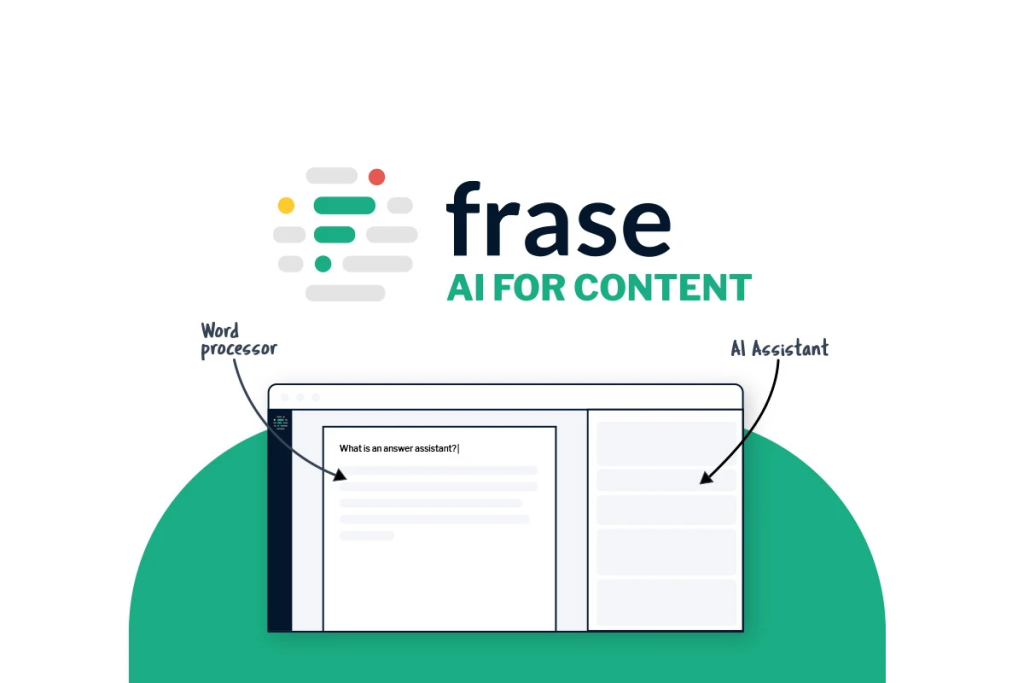
Frase makes more sense when writing is only one part of the job. It is a better fit for people who want AI help, but also want research, structure, and optimization to sit closer to the writing flow. That makes it especially attractive for content-heavy sites that are trying to write smarter, not just faster.
I would not call it the simplest AI writer here, and that is partly the point. It feels less like “click and hope” and more like “build a better page with assistance.” For some users that feels ideal. For others it will feel heavier than necessary.
- Strongest point: balanced workflow
- Use it if: writing and optimization belong together for you
- Skip it if: you only want the lightest article generator
Outranking.io
Best for: a structured brief-to-draft writing workflow.
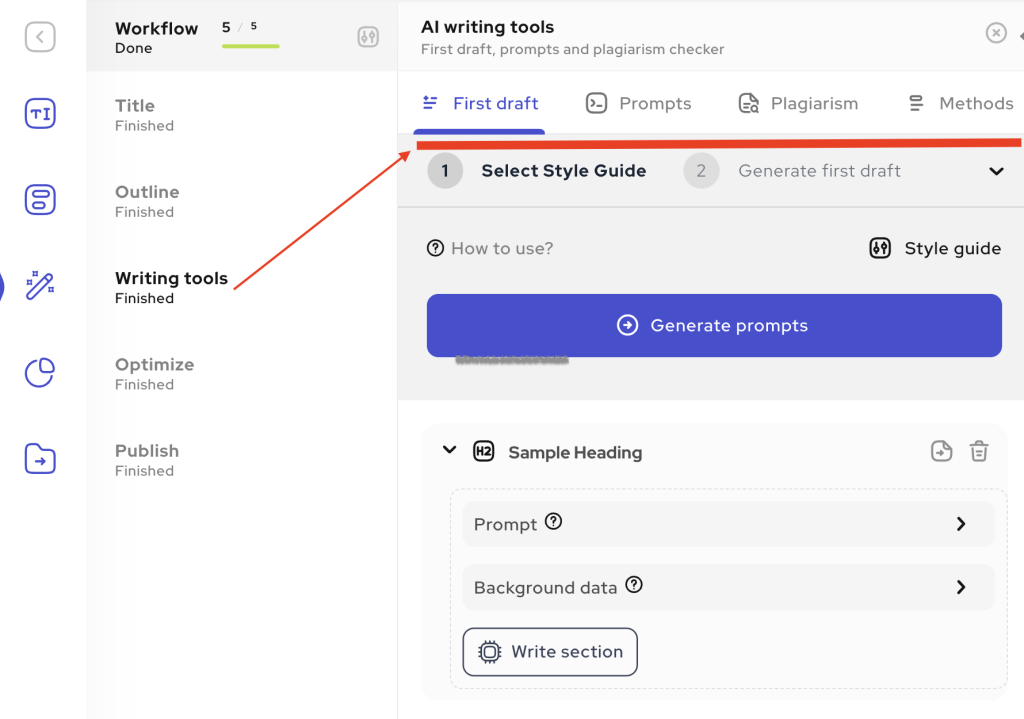
Outranking is one of the better options when you want the writer to live inside a more deliberate SEO process. It makes sense for teams that care about briefs, first drafts, and optimization as one connected chain instead of treating writing like an isolated act.
The trade-off is that it will feel more process-heavy than a pure writer. That is good if your team needs discipline. It is less good if your team just wants a fast, forgiving, low-friction drafting tool and nothing more.
- Strongest point: structured SEO writing flow
- Use it if: briefs and first drafts are part of one repeatable system
- Skip it if: you prefer a lighter tool with fewer moving parts
aiseo.ai
Best for: a broader AI SEO writing layer.

AISEO sits in an interesting middle zone. It still belongs in a writing roundup because it helps generate and improve content, but its current positioning also leans into AI search visibility, GEO, and LLM-oriented optimization. That gives it a wider frame than a plain article writer, which some users will like and others may find a bit too hybrid.
I would look at it if you want one tool that feels closer to modern AI SEO language than classic “blog writer” language. But I would not choose it if your only question is, “What is the quickest route from keyword to draft?”
- Strongest point: broader AI-search-aware positioning
- Use it if: you want writing help that sits inside a wider AI SEO mindset
- Skip it if: you only need a straightforward article generator
SEObot AI
Best for: autonomous SEO publishing.

SEObot is the clear outlier in this list because it leans toward automation much more aggressively. It is not really trying to be just another writer you sit next to and use manually every day. It is selling the idea that the SEO workload itself can be automated far more than most tools allow.
That makes it intriguing for founders, system-minded builders, and operators who hate repetitive SEO work. It also means it is not the safest choice for someone who wants full editorial control over every article before it exists.
- Strongest point: hands-off workflow
- Use it if: automation is the real appeal
- Skip it if: you want to stay close to every draft and edit
Rank Math Content AI
Best for: WordPress users who want AI writing support inside the CMS.
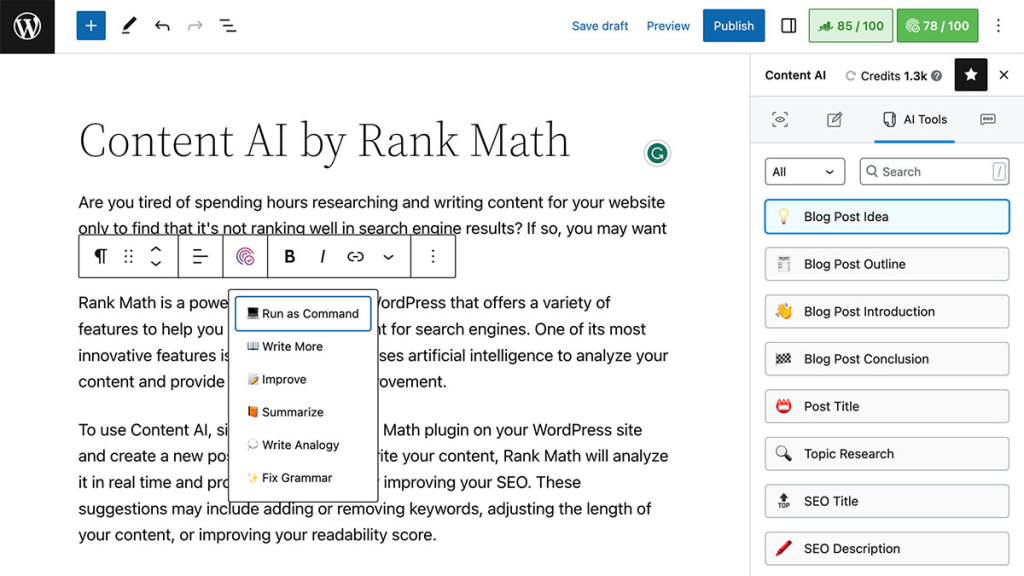
Rank Math Content AI is easiest to appreciate if your content team already lives inside WordPress and wants assistance without constantly switching tabs or juggling separate tools. In that sense, it is less a standalone AI writing platform and more a practical writing layer inside a familiar publishing environment.
I would not choose it as the only AI writing tool for every use case, but I would absolutely consider it if workflow friction inside WordPress is one of the reasons writing feels slower than it should.
- Strongest point: native workflow convenience
- Use it if: your team publishes directly in WordPress
- Skip it if: you want a broader standalone SEO writing system
Who should use what?
Solo bloggers: start with SEOWritingAI if you want simpler speed, or Frase if you want more control over the full writing workflow.
Affiliate sites: SEOWritingAI for velocity, Frase for stronger structure, and Outranking.io if you want briefs and drafting tied together more tightly.
Agencies or content teams: Frase or Outranking.io usually makes more sense than a pure one-click writer if consistency and workflow matter.
WordPress-first operators: Rank Math becomes more interesting when workflow friction inside the CMS is slowing content production down.
Simple AI SEO writing stacks
Lean stack
Best if you want speed and lighter CMS support without building a bigger stack too early.
Growth stack
Best if you care about writing quality and page improvement as much as output speed.
Automation stack
Best if your focus is autonomous publishing plus visibility feedback instead of hand-crafting every article.
What I would watch out for before buying
- Do not confuse fast output with a strong writing workflow.
- Do not buy a pure writer if your actual bottleneck is weak briefs or weak optimization.
- Do not buy an automation-first tool if you still want to approve and shape every draft yourself.
- Do not assume “AI SEO writing” means the product handles visibility, citations, and performance tracking automatically.
- Do not ignore where your team actually writes, especially if WordPress workflow friction is part of the pain.
If I had to reduce the whole category to one sentence, it would be this: the best AI SEO writing tool is usually the one that removes the right kind of friction, not the one that promises the most futuristic-sounding features.
Final verdict
If you want the simplest path to faster SEO articles, start with SEOWritingAI. If you want writing plus a stronger optimization workflow, Frase is the safer all-round pick. If you like process and briefs, Outranking.io deserves a closer look. If you want a broader AI-search-aware writing layer, aiseo.ai is the more modern-feeling hybrid. And if what you really want is less manual SEO work overall, SEObot AI belongs in a different conversation entirely.
The right choice depends less on which marketing page sounds smartest and more on whether the tool fits how you actually create, review, and publish content week after week.
FAQ about AI SEO writing tools
What is an AI SEO writing tool?
An AI SEO writing tool helps create SEO-friendly drafts faster, but the stronger ones also support structure, briefs, optimization, or publishing workflow. The category is broader than “AI writer” and narrower than “all SEO tools.”
Are AI SEO writing tools the same as content optimization tools?
No. There is overlap, but they are not the same job. A writing tool mainly reduces drafting friction. An optimization tool is more focused on making a page better after the writing process has started or finished.
Which AI SEO writing tool is best for beginners?
SEOWritingAI is the easiest beginner-friendly starting point in this set if your main goal is faster draft creation. Frase is a better beginner choice if you want a more balanced writing-plus-optimization workflow from the start.
Should I choose an autonomous SEO tool instead of a writing assistant?
Only if you genuinely want less manual involvement overall. If you still want to shape every brief and article yourself, an automation-first tool can feel misaligned even if it sounds impressive on the sales page.
Is Rank Math Content AI enough as my only AI SEO writing tool?
It can be enough for some WordPress-first workflows, especially if convenience inside the CMS matters most. But many teams will still prefer a broader standalone writing or optimization platform if they need deeper workflow support.
What is the biggest mistake people make with AI SEO writing tools?
The biggest mistake is buying the fastest writer when the real bottleneck is weak briefs, weak optimization, or weak editorial judgment. A tool can remove friction, but it cannot fix a broken workflow by itself.
PromoCodeRadar helps users find cleaner coupon codes, official deals, annual billing savings, free trials, and better ways to save on software, AI tools, and online services.
If you found a broken code or outdated listing, contact us at contact@promocoderadar.com.