
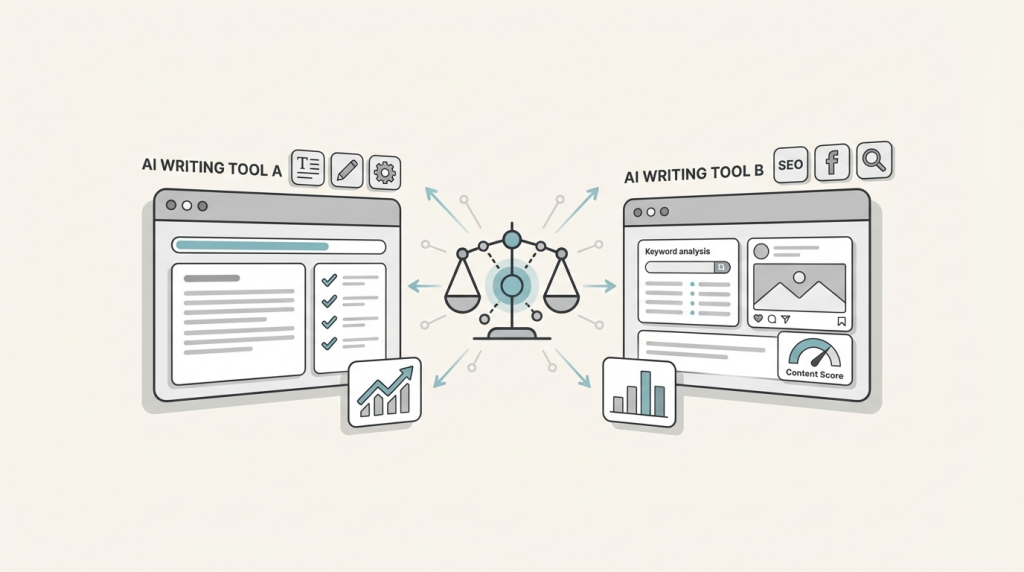
AI Writing Tools vs AI SEO Tools
AI writing tools vs AI SEO tools is one of the most common early buying confusions in this whole category. People see both groups talking about content, rankings, articles, and optimization, then assume they are interchangeable. They are not. One category is mostly about helping you draft, expand, and shape content. The other is mostly about helping you optimize, evaluate, and refine content for search performance.
Table of Contents
I think this confusion happens because both sides touch the same article at different stages. But touching the same article is not the same as solving the same problem. If you buy a drafting tool and expect it to replace optimization, you will feel underwhelmed. If you buy an AI SEO tool when your real bottleneck is just getting from outline to first draft, you may feel like you bought a system before you bought momentum.
This article is here to separate those stages more clearly. On the AI Writing side, I will use Rytr, Writecream, and Jenni AI as reference points. On the AI SEO side, I will keep things category-level and hub-level for now, which is the right scope for this cluster article.
The core difference between AI writing tools and AI SEO tools
The cleanest way to understand this is by workflow stage.
- AI writing tools usually help with generating, expanding, rephrasing, structuring, or refining drafts.
- AI SEO tools usually help with optimization, keyword alignment, topical coverage, on-page improvement, and content performance decisions.
That does not mean there is zero overlap. Some AI writing tools mention SEO-related features, and some AI SEO tools include content editors or AI assistance. But the center of gravity is different. AI writing tools are closer to the drafting stage. AI SEO tools are closer to the optimization stage.
That difference is the whole reason buyers get confused. They see overlap and mistake it for equivalence.
AI writing tools vs AI SEO tools: quick comparison table
| Category | Main job | Best for | Usually not enough for |
|---|---|---|---|
| AI Writing Tools | Draft generation, section expansion, rewriting, structure support | Bloggers, marketers, students, creators who struggle with blank-page friction | Deeper search optimization and content-performance refinement |
| AI SEO Tools | Optimization guidance, content scoring, search alignment, on-page refinement | Publishers, SEO beginners, marketers improving existing content for search | Fast first drafts if the real problem is still getting words onto the page |
What AI writing tools are actually good at
AI writing tools are best understood as drafting support. They help when the slowest part of the process is still the act of writing: turning an idea into a structure, turning notes into paragraphs, turning a rough draft into something more coherent, or producing a first version faster so you have something worth editing.
That is why tools like Rytr, Writecream, and Jenni AI feel different from each other even before you compare them to SEO tools. Rytr is easier to understand as a lighter-use-case writer. Writecream is broader across blog articles, product descriptions, and marketing copy. Jenni AI makes more sense when the workflow is structured, research-aware, and citation-aware.
What they all have in common is this: they help earlier in the content workflow. They are stronger when the problem is momentum, structure, wording, or draft generation.
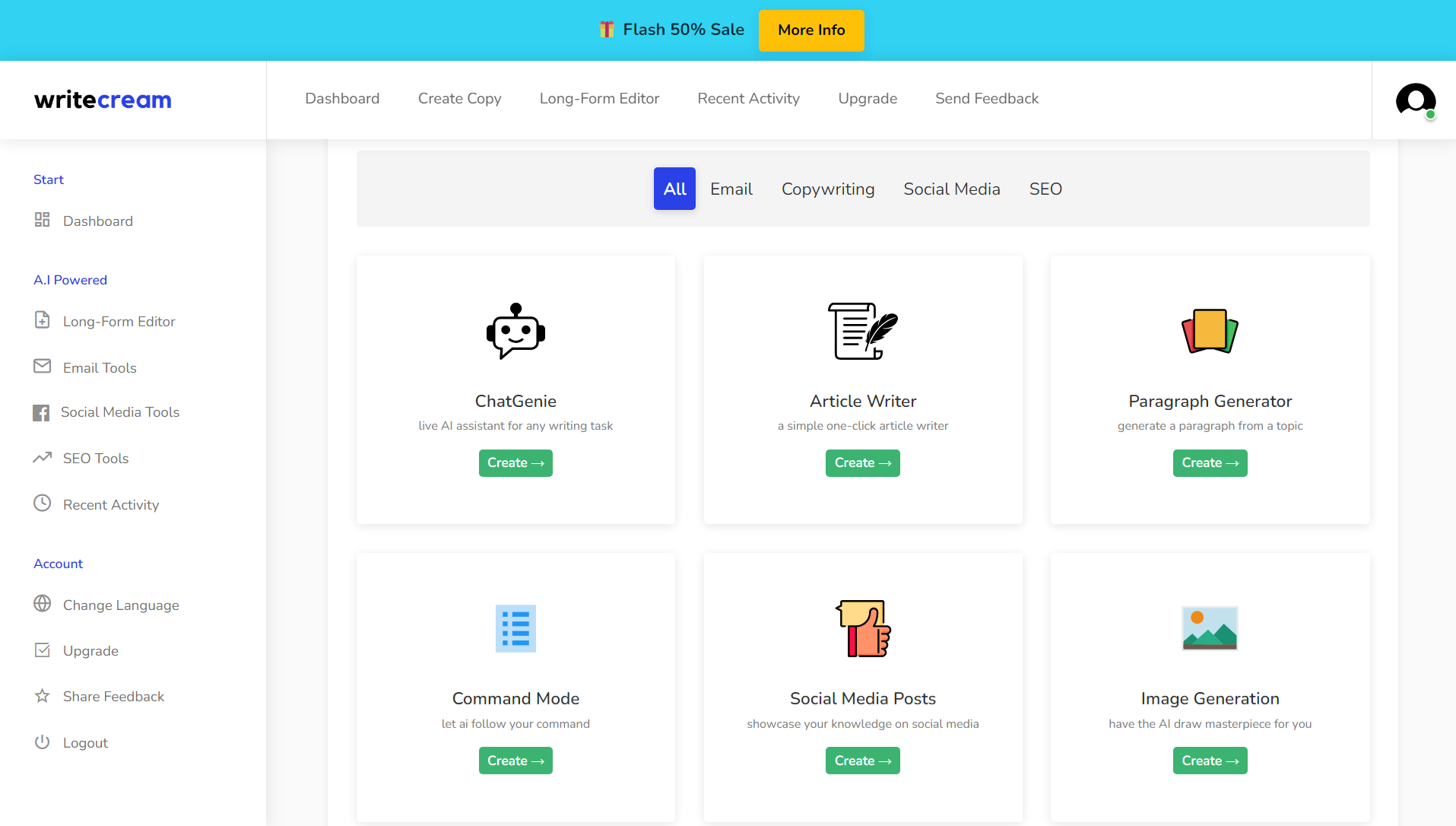
Where AI writing tools help most
- you have ideas but not a usable first draft
- you need section expansion, rewriting, or faster draft cleanup
- you want help with blog drafting, product copy, or content adaptation
- you still need a tool that helps you write before you worry about optimization
If that sounds like your stage, the right next page is usually Best AI Writing Tools or Best AI Writing Tools for Blog Drafting.
What AI SEO tools are actually good at

AI SEO tools usually step in later. They are more useful when you already have content — or at least a working draft — and now you need help making that content more search-aware. That can mean guidance around topic coverage, relevance, search intent fit, content structure, on-page refinement, or other optimization signals that help the article align better with search opportunities.
I am deliberately keeping the AI SEO side category-level here because this article is a bridge page, not a full AI SEO roundup. But the important point is simple: AI SEO tools are not mainly for solving the blank-page problem. They are for helping content move closer to what search performance requires.
Where AI SEO tools help most
- you already have a draft but need better optimization guidance
- you want help aligning content with keyword or topical opportunities
- you care more about refinement and search-fit than raw drafting momentum
- your current bottleneck is not writing the article but improving it for search
If that sounds closer to your real need, the best next step is to open the AI SEO hub rather than forcing an AI writing tool to solve an optimization problem it was never built to solve.
Why people keep confusing these two categories
I think the confusion usually comes from not separating drafting from optimization in the first place. Buyers just think, “I need help with content,” and that sounds reasonable. But “content help” is too vague to buy from.

Do you need help writing the draft? Or do you need help making the draft more search-ready? Those are not the same problem, and they do not point to the same tool category.
This is also why some people say a tool felt disappointing when the tool itself was not really the problem. The deeper issue was that they bought an optimization layer before they had a clean drafting workflow, or they bought a writing layer and expected it to quietly replace SEO refinement.
Choose this if…
Choose an AI writing tool if…
- your real bottleneck is getting from idea to draft
- you need structure, expansion, rewriting, or faster content generation
- you still spend too much time staring at a blank outline
- you want support earlier in the workflow
Choose an AI SEO tool if…
- you already have drafts but they are not as search-ready as they should be
- your problem is optimization, not generation
- you want refinement guidance more than drafting help
- you are already publishing but need stronger search alignment
If you are on the AI Writing side, the practical starting points here are: Rytr, Writecream, and Jenni AI. If you are on the AI SEO side, go straight to the AI SEO hub.
When one category is enough — and when it is not

Sometimes an AI writing tool is enough. If you are early in your process, still building first drafts, and not yet publishing at a scale where search refinement is the main issue, then yes — a good AI writing tool can be enough for a while.
Sometimes an AI SEO tool is enough too. If you already write well, publish consistently, and the real weakness is search-fit or optimization depth, then the drafting layer may not be your first need.
But plenty of users eventually need both categories because the workflow itself has two separate bottlenecks:
- getting the draft written
- getting the draft better aligned for search
The mistake is not using both. The mistake is buying both too early or expecting one to replace the other silently.
One grounded workflow example
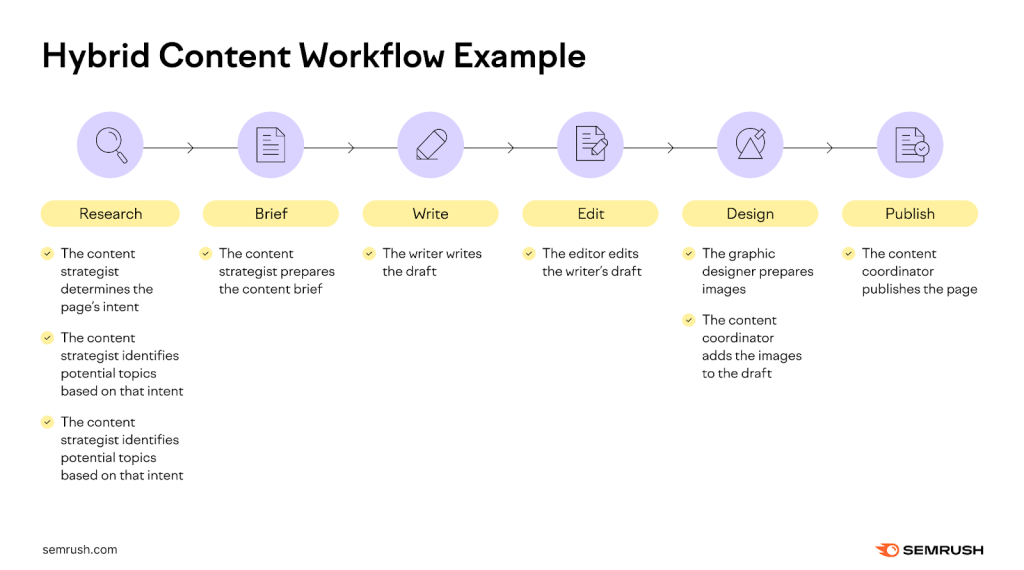
A realistic content workflow often looks like this: use an AI writing tool to move from idea to usable draft, then use an AI SEO tool to refine what needs better search alignment. That sounds less magical than “one tool does everything,” but it is usually much closer to how the work actually happens.
FAQ
What is the difference between AI writing tools and AI SEO tools?
AI writing tools mainly help with drafting, rewriting, and content generation. AI SEO tools mainly help with optimization, search alignment, and on-page refinement.
Do I need an AI writing tool or an AI SEO tool?
It depends on your bottleneck. If you struggle to create a usable draft, start with an AI writing tool. If you already have content but need better optimization, start with an AI SEO tool.
Can an AI writing tool replace an AI SEO tool?
Not usually. There is some overlap, but the categories are still centered on different stages of the workflow.
Can an AI SEO tool help me write from scratch?
Some can help around content creation, but that is usually not the core reason to buy them. Their stronger role is refinement, not blank-page support.
What is the safest next step if I am still unsure?
Ask which stage is actually slow for you right now: drafting or optimization. Then start with the hub that matches that stage instead of trying to solve both problems at once.
Final takeaway
AI writing tools and AI SEO tools are not interchangeable just because they both touch content. One category helps earlier, when the draft still needs to be written. The other helps later, when the draft needs stronger search alignment.
If your bottleneck is drafting, start in AI Writing and look at Rytr, Writecream, or Jenni AI. If your bottleneck is optimization, go to the AI SEO hub. And if you still want the broader context, the best next reads are Best AI Writing Tools and Best AI Writing Tools for Blog Drafting.
PromoCodeRadar helps users find cleaner coupon codes, official deals, annual billing savings, free trials, and better ways to save on software, AI tools, and online services.
If you found a broken code or outdated listing, contact us at contact@promocoderadar.com.