
Best AI writing tools for blog drafting are not necessarily the tools that promise to generate a full article in one click. For most bloggers, niche site owners, and content marketers, the real bottleneck is simpler than that. You already have a topic. Sometimes you even have an outline. What you need is a tool that helps turn that outline into a usable first draft faster, without making the cleanup harder than writing it yourself.

I think this is where a lot of AI writing roundups quietly go off track. They compare “blog writers” like every buyer wants the same thing. But blog drafting is not one job. Some people need help expanding a clean outline. Some need stronger structure for long-form writing. Some need help moving from rough notes to readable paragraphs. And some really just need a lighter assistant for article sections, not a giant platform.
This guide compares five mapped tools through that narrower lens: Jenni AI, SamWell AI, Writecream, GravityWrite, and Rytr. If you want the broader category first, start with Best AI Writing Tools.
Table of Contents
What blog drafting actually needs
Good blog drafting tools help with structure, momentum, and expansion. They do not just spit out paragraphs. The better ones help you move through a workflow like this:
- turn a topic into a workable outline
- expand headings into sections without losing the thread
- keep the draft readable enough that editing feels productive
- make cleanup easier before the final human pass
That is why this article is different from a general AI writing roundup. I am not asking which tool does the most. I am asking which tool reduces the most friction between outline and usable first draft.
If your main problem is not drafting but optimization, that is a different buying path entirely. In that case, read AI Writing Tools vs AI SEO Tools before you buy the wrong kind of software.
Quick picks for blog drafting
Best for structured long-form drafting: Jenni AI
Jenni AI an AI writing tools for blog drafting is the strongest fit here when the draft starts with research, notes, structure, and source-heavy thinking instead of simple copy generation.
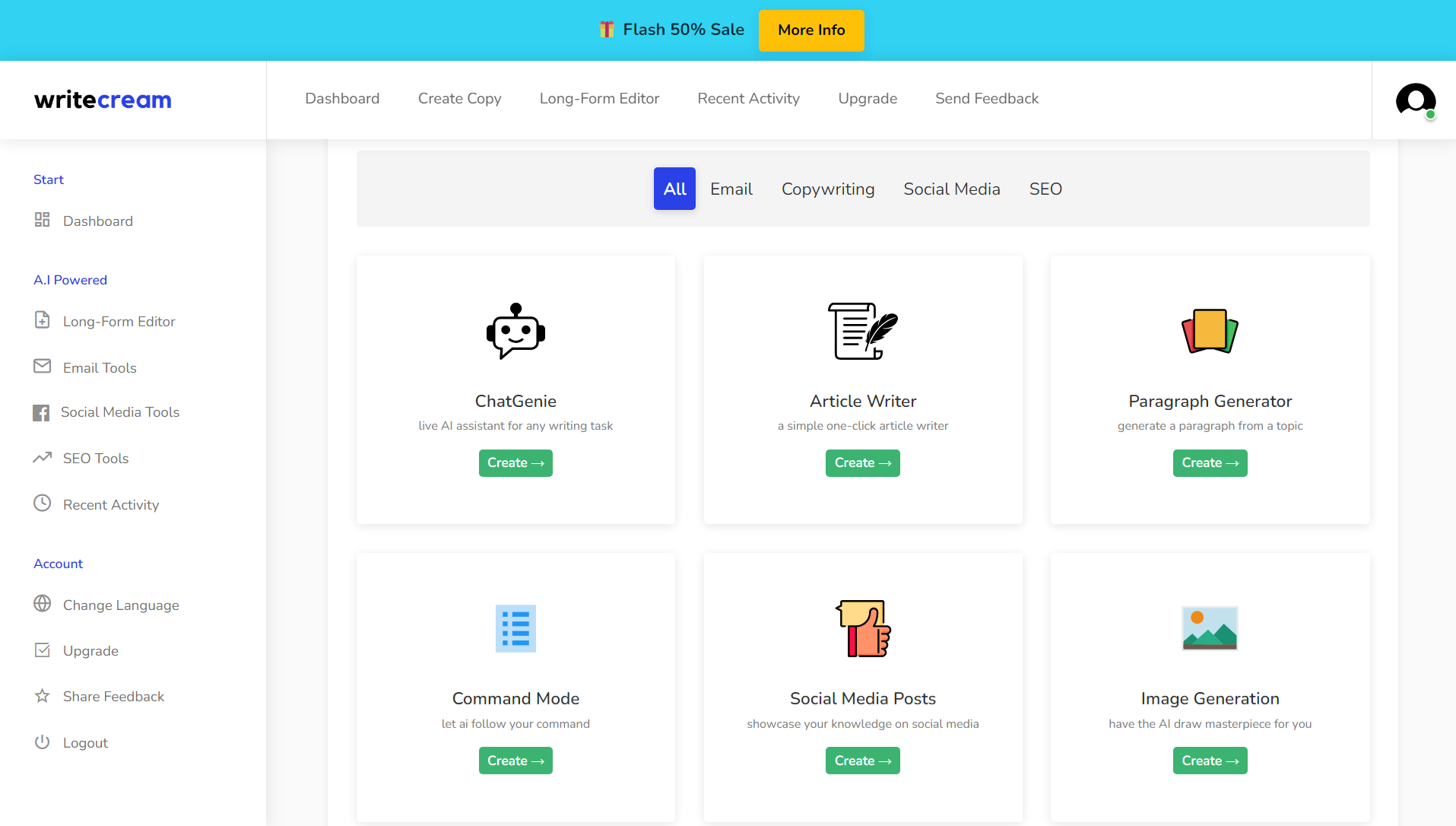
Best for idea-to-draft workflow: Writecream
Writecream makes sense when you want a broader article-writing workflow that can move from idea to article draft without feeling too academic or too narrow.
Best for broader blog workflow coverage: GravityWrite
GravityWrite becomes more attractive when blog drafting sits inside a larger content workflow and not just a single article-writing task.
Best for lighter article workflows: Rytr
Rytr is easier to justify if you mostly need help expanding sections, paragraphs, or lighter blog content without a heavier platform around it.
Best for note-to-draft structure support: SamWell AI
SamWell AI fits better when the drafting process is structure-first and closer to research-style organization, even if that is not the typical commercial blogging workflow.
Quick comparison table
| Tool | Best for | Main drafting strength | Main caution |
|---|---|---|---|
| Jenni AI | Structured long-form drafting | Strong for research-aware and citation-aware drafting flow | Less ideal if you only want quick blog sections or lighter copy |
| Writecream | Idea-to-draft workflow | Broad article-writing support across mixed content needs | Can be broader than necessary for a very simple workflow |
| GravityWrite | Broader blog systems | Useful when blog drafting is part of a wider content process | Can feel like too much tool for basic section expansion |
| Rytr | Lighter article workflows | Fast help for sections, paragraph drafting, and continuing text | May feel limited for heavier long-form workflows |
| SamWell AI | Note-to-draft structure | Helpful when organization and structured drafting matter most | Not the first pick for a standard commercial blog workflow |
Best AI writing tools for blog drafting, explained
1) Jenni AI
Jenni AI is the best fit in this list for people whose blog drafting process starts with research, scattered notes, references, or a more structured writing rhythm. That does not mean it is only for academic use. It means it feels more comfortable when your article needs a clearer argument, better structure, and a writing environment that supports thought organization instead of just fast generation.
If your biggest problem is moving from outline to a real long-form draft without losing structure, Jenni AI is the strongest option here. It feels less like a quick template machine and more like a drafting workspace. That is why I would put it first for structured long-form blog drafting. It is especially useful when you are writing educational, research-backed, or explanation-heavy posts. ([jenni.ai](https://jenni.ai/?utm_source=chatgpt.com))
- Best for: structure-first bloggers, research-backed content, long-form article drafting
- Main strength: helps preserve momentum in longer drafts without making everything feel template-driven
- Skip it if: your real need is just fast blog sections or lightweight short-form copy
2) Writecream
Writecream is the best AI writing tools for blog drafting middle-ground pick if your blog drafting workflow is practical, mixed, and commercial. You may need titles, outlines, article sections, intros, summaries, and supporting marketing content around the blog post. That is where a broader writing platform starts to make more sense than a narrower drafting environment.
I would place Writecream first for idea-to-draft workflow because it feels broad enough to help with several stages of article production, but it still remains understandable for content marketers, bloggers, and solo publishers who do not want a highly academic writing setup. If your blog process is messy in a normal business way, Writecream is one of the safer fits here. ([writecream.com](https://www.writecream.com/ai-blog-writer/?utm_source=chatgpt.com))
- Best for: content marketers, niche site owners, mixed article workflows
- Main strength: broad support from ideation to article draft
- Skip it if: you want either the lightest tool possible or a more research-first drafting environment
Open the Writecream store page.
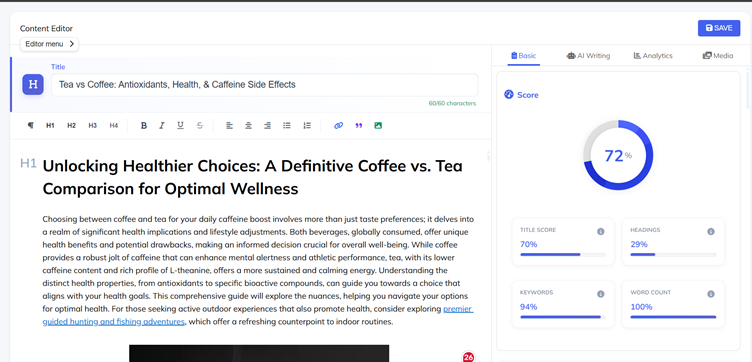
3) GravityWrite
GravityWrite is the most attractive option here when blog drafting is part of a wider content machine. If you are not just drafting articles but thinking about SEO blogs, content production speed, related assets, and a broader publishing system, GravityWrite starts to look more compelling than a simpler writing assistant.
I would not put it first for someone who only wants help expanding an outline into a clean draft. But if you are building a more system-like blog workflow, GravityWrite gives you more room to grow. That makes it a better fit for solo publishers and content teams thinking beyond a single draft. ([gravitywrite.com](https://gravitywrite.com/ai-blog-writer?utm_source=chatgpt.com))
- Best for: bloggers building a wider content workflow
- Main strength: broader blog-writing and content-system coverage
- Skip it if: you only need simple section expansion or light article help
Open the GravityWrite store page.
4) Rytr
Rytr is still a useful pick for blog drafting when the workflow is light enough. Some people do not need a full blog-writing system. They need help with a headline, an intro, a paragraph, a transition, or a section that is not coming together. In those cases, Rytr can be enough.
I would choose Rytr when the goal is speed and simplicity, not depth. It is not the strongest option here for heavier long-form drafting, but it is still a smart fit for lighter article workflows where you want quick assistance without committing to a larger platform. ([rytr.me](https://rytr.me/use-cases/blog-writing?utm_source=chatgpt.com))
- Best for: lighter blog workflows, quick section help, paragraph continuation
- Main strength: lower friction for simple drafting tasks
- Skip it if: you want stronger structure for bigger article workflows
5) SamWell AI
SamWell AI is a more specialized fit in this article. I would not rank it highly for the average commercial blogging workflow. But I would include it because some blog drafting workflows start from heavy notes, structured research, or educational content where organization matters more than speed.
If your drafts begin as messy notes and you need structure-first expansion, SamWell AI becomes more understandable. It is not the tool I would hand to every blogger. It is the tool I would consider when the blog draft is closer to a structured essay or research-backed explainer than a standard marketing post. ([samwell.ai](https://www.samwell.ai/?utm_source=chatgpt.com))
- Best for: structured note-to-draft workflows, educational explainers, research-heavy blog formats
- Main strength: organized drafting support for structure-heavy writing
- Skip it if: your blog process is fast, commercial, and mostly marketing-driven
Open the SamWell AI store page.
Why editorial cleanup still matters
This is the part people do not always want to hear: even the better blog drafting tools still need editing. A good drafting tool reduces friction. It does not remove judgment. You still need to tighten transitions, remove repetition, fix weak claims, improve examples, and make sure the article actually sounds like it belongs on your site.
That is why I would never buy these tools mainly for “publish untouched” output. That is the wrong benchmark. A better benchmark is whether the tool gives you a usable first draft faster than your current process, while keeping cleanup manageable.
If that distinction sounds obvious, good. It should. But it is still one of the easiest mistakes to make when buying AI writing software. The cleaner reality-check version is in When an AI Writing Tool Is Enough — and When It Isn’t.
Watch one real blog-writing example
You do not need ten demos. One decent walkthrough is enough to see whether a tool helps with blog structure, section building, and draft flow in a way that matches your process.
How to choose the right blog drafting tool
- If you need stronger structure for long-form drafts, start with Jenni AI.
- If you want a broader idea-to-article workflow, compare Writecream and GravityWrite.
- If your workflow is light and section-based, start with Rytr.
- If your blog drafting is closer to structured educational writing, consider SamWell AI.
And if you are still unsure whether your real problem is drafting or optimization, go next to AI Writing Tools vs AI SEO Tools.
FAQ
What is the best AI writing tool for blog drafting?
For structured long-form drafting, Jenni AI is the strongest fit in this list. For a broader commercial article workflow, Writecream is the safer middle-ground choice.
Can AI tools write a full blog post without editing?
They can generate a full draft, but editing still matters. The smarter standard is whether the tool gives you a usable draft faster, not whether it replaces the final editorial pass.
Which tool is best for lighter blog workflows?
Rytr is the easiest fit when you mainly need help with sections, paragraphs, intros, and lighter article tasks.
When does GravityWrite make more sense?
GravityWrite makes more sense when blog drafting is part of a broader content workflow and not just a single writing task.
Is SamWell AI really a blogging tool?
Not in the usual commercial sense. It fits better when blog drafting starts from structured notes, research, or educational writing that needs stronger organization.
Final takeaway
The best AI writing tools for blog drafting are the ones that reduce friction between outline and first draft without making revision harder. For structured long-form work, I would start with Jenni AI. For broader article workflows, I would compare Writecream and GravityWrite. For lighter drafting help, Rytr is still the easiest tool to justify.
Before you buy, it also helps to read the broader support pages in this cluster: AI Writing hub, Best AI Writing Tools, When an AI Writing Tool Is Enough, and AI Writing Tools vs AI SEO Tools.
PromoCodeRadar helps users find cleaner coupon codes, official deals, annual billing savings, free trials, and better ways to save on software, AI tools, and online services.
If you found a broken code or outdated listing, contact us at contact@promocoderadar.com.