
Best AI Tools for Meeting Notes and Async Updates
AI & Software → AI Productivity
The best AI tools for meeting notes and async updates are not always the ones that produce the prettiest transcript. The tools that actually help are the ones that reduce manual follow-up, make status sharing easier, and turn updates into something your team can use without another meeting.
Table of Contents
If you are searching for tools in this category, the real problem is usually not “we need more AI.” It is one of these: meetings create too many loose ends, standups interrupt deep work, updates get buried in chat, or notes never turn into clear action.
This page is intentionally narrower than a generic AI meeting-notes roundup. I am focusing on the mapped tools in this AI Productivity cluster that can help with async standups, shared follow-up, note-to-action cleanup, and update clarity. That means some picks are direct fits, and a couple are more specialized or adjacent. I would rather make that distinction clear than pretend every tool here does the same job.
If you want the broader category view first, open the AI Productivity hub. If you want the wider shortlist before narrowing into team workflows, go to Best AI Productivity Tools.
What this category is really for
Meeting notes and async updates sound like one category, but they usually break in three different places:
- Collection: getting updates without forcing everyone into the same live slot
- Clarity: making notes, standups, and check-ins easy to scan later
- Follow-through: turning updates into next steps instead of letting them die in chat
That distinction matters. A standup bot is not the same as a collaborative AI workspace. A note-organizing assistant is not the same as a team reporting tool. And a personal task-and-focus app is not a meeting-notes system, even if it helps after the meeting ends.
The better question is not “which tool has AI meeting notes?” It is “where does our update process actually break?” That is where the shortlist gets useful.
How to choose an AI tool for meeting notes and async updates
Use this faster framework before you choose:
- You need async standups, check-ins, retros, or surveys inside Slack or Teams: start with Geekbot.
- You need a shared AI conversation where people, documents, and multiple bots can work together asynchronously: start with BoodleBox.
- You need notes and updates to turn into tasks, reminders, and cleaner follow-through: start with Saner AI.
- You mainly need personal execution after the meeting ends: Blitzit is the more honest fit.
- Your “updates” are really structured research insights or usability findings: Fable is the specialist pick, not a general meeting-notes tool.
This sounds obvious, but this is where buyers usually go wrong. They pick a tool that sounds broad and then try to force it into the wrong step of the workflow. The result is more friction, not less.
If you want the broader decision logic first, read How to Choose an AI Productivity Tool.
Best AI tools for meeting notes and async updates by workflow fit
These are the mapped tools I would consider first, with the real fit kept as clear as possible.
1) Geekbot — best overall for async standups and routine updates
Geekbot is the cleanest fit on this page when your team needs standups, check-ins, polls, retros, or surveys without another live meeting. It works inside Slack and Microsoft Teams, which is part of the appeal. The tool meets the team where they already communicate instead of forcing another app into the stack.
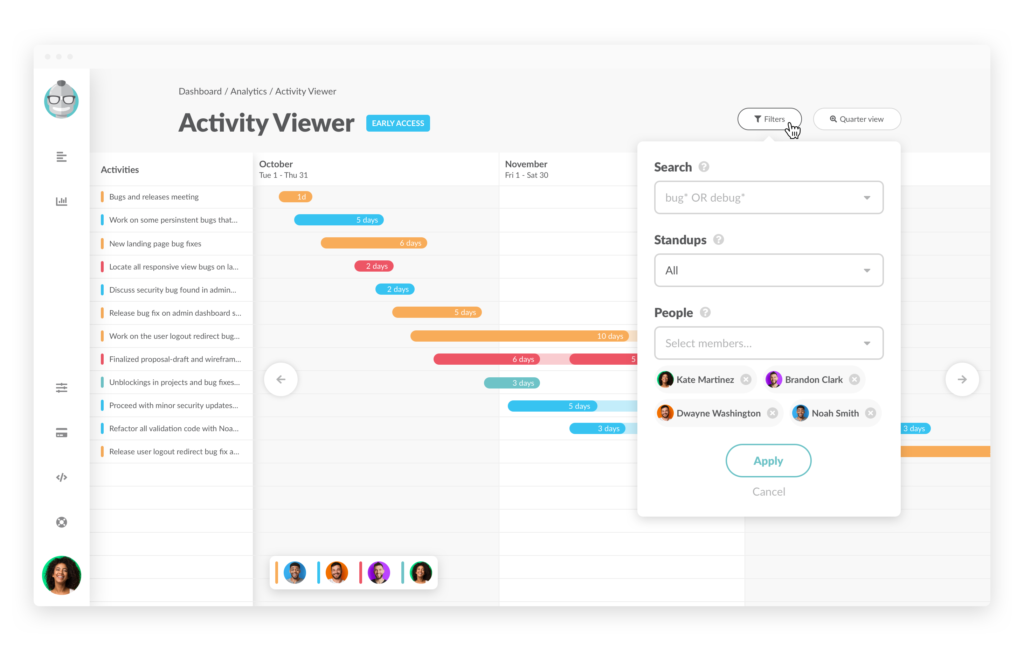
Best for: remote teams, hybrid teams, engineering groups, ops teams, and managers who want status collection to happen asynchronously and predictably.
Why it stands out: it solves the most obvious pain in this category directly. You can automate recurring updates, reduce meeting fatigue, and get a cleaner view of progress without chasing people manually.
Who should skip it: solo operators, very small teams that already communicate cleanly, or anyone looking for deep meeting transcription rather than async reporting. Geekbot is strong because it is narrow.
2) BoodleBox — best for shared async AI collaboration around notes and context
BoodleBox is not a classic standup bot, and that is worth saying early. Its value is different. BoodleBox is stronger when your team needs a shared async workspace where multiple people, multiple bots, and attached documents can work inside the same conversation. That makes it more useful for collaborative follow-up, shared interpretation, and context-heavy update threads than for simple daily standups.
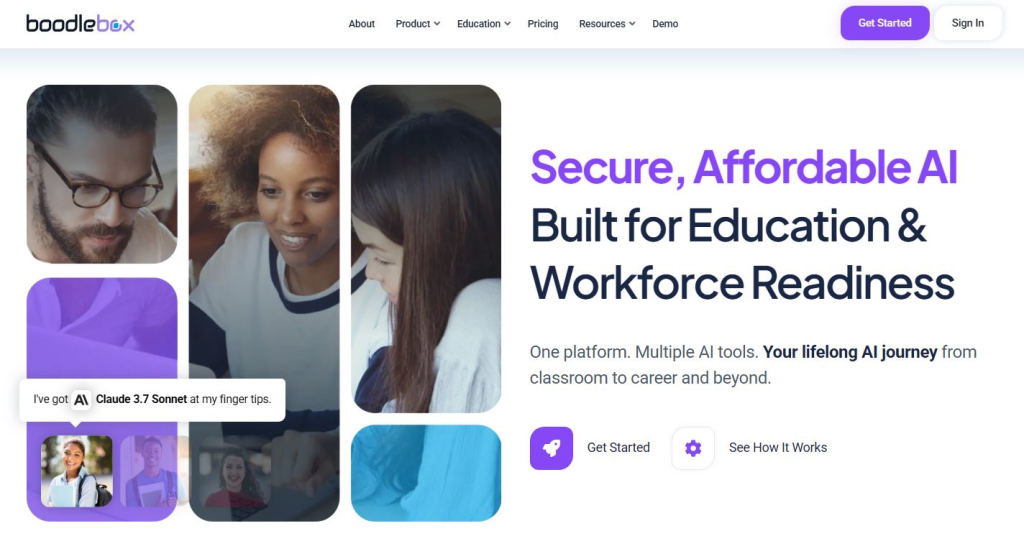
Best for: teams that want async AI collaboration around documents, notes, and shared discussion instead of just a fixed standup format.
Why it stands out: the group-chat plus knowledge model is more flexible than a standard recap tool. When updates need context, source files, and multiple perspectives, that structure starts to make sense.
Who should skip it: teams that simply want a lightweight standup bot. BoodleBox can do more, but that also means it is not the lowest-friction tool on this page.
3) Saner AI — best for turning scattered notes and updates into action
Saner AI sits a little differently again. It is less about collecting updates from a team and more about helping one person make sense of notes, tasks, email, and calendar in one place. That makes it useful when the meeting problem is not “we need better standups.” It is “my updates, notes, and follow-ups keep fragmenting into too many places.”
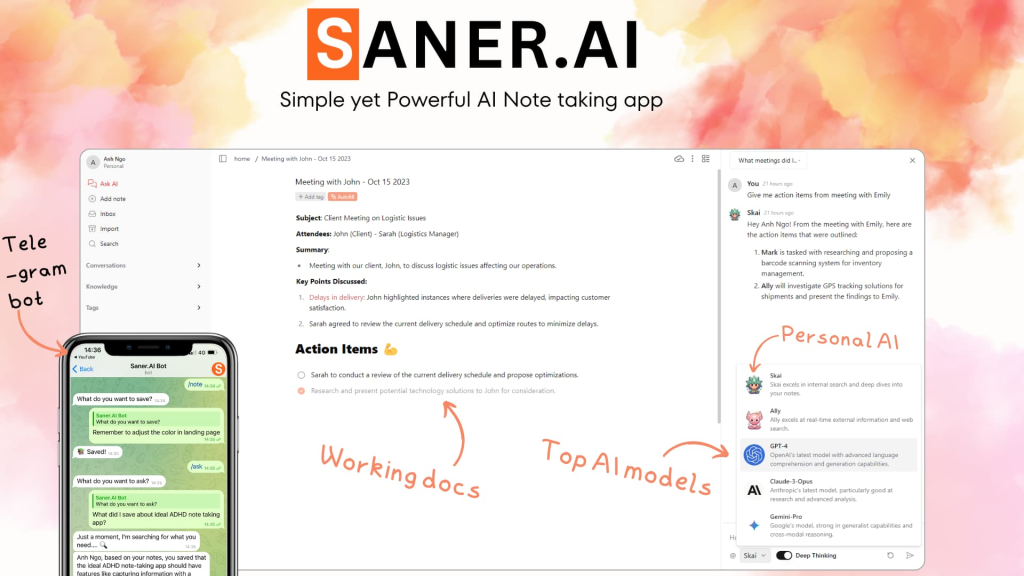
Best for: founders, managers, operators, and knowledge workers who need meeting notes and async updates to convert into next steps, reminders, and organized follow-through.
Why it stands out: it is one of the better fits when the hidden pain is not the meeting itself, but the messy layer after the meeting.
Who should skip it: teams looking for a shared standup workflow. Saner AI is more personal command center than team update system.
4) Blitzit — best adjacent pick for personal follow-through after meetings
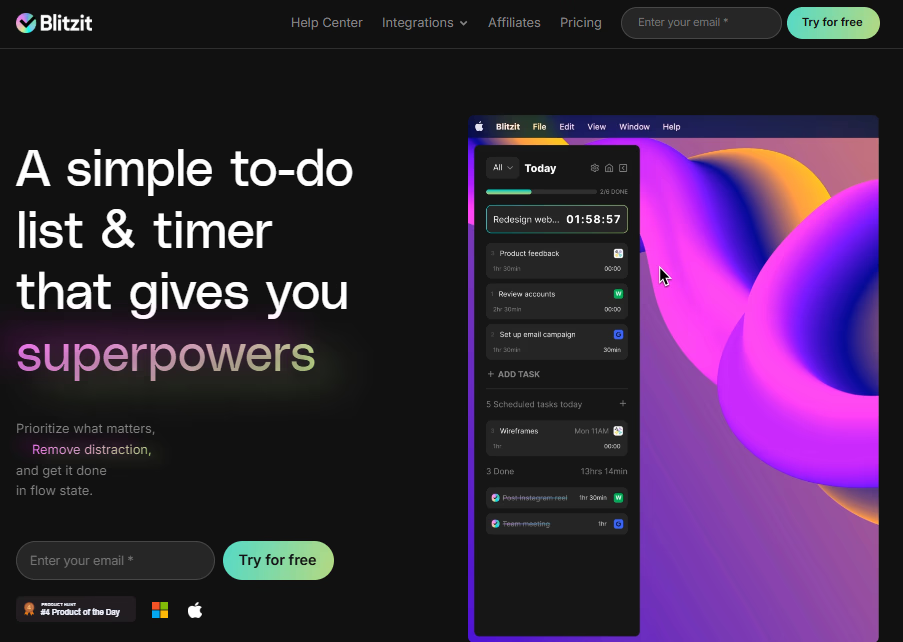
Blitzit is not a meeting-notes tool in the normal sense. It is a simple to-do list and timer app with integrations like Google Calendar and Notion, so I would only include it here with a caveat. But the caveat matters: sometimes the real cost of meetings is not note capture. It is the personal execution drag that follows. If that is the issue, a lightweight task-and-focus tool can be more useful than another recap assistant.
Best for: people who already have notes somewhere and mostly need help executing what comes next.
Why it stands out: it solves a different part of the workflow. That makes it a good “good but not for everyone” pick.
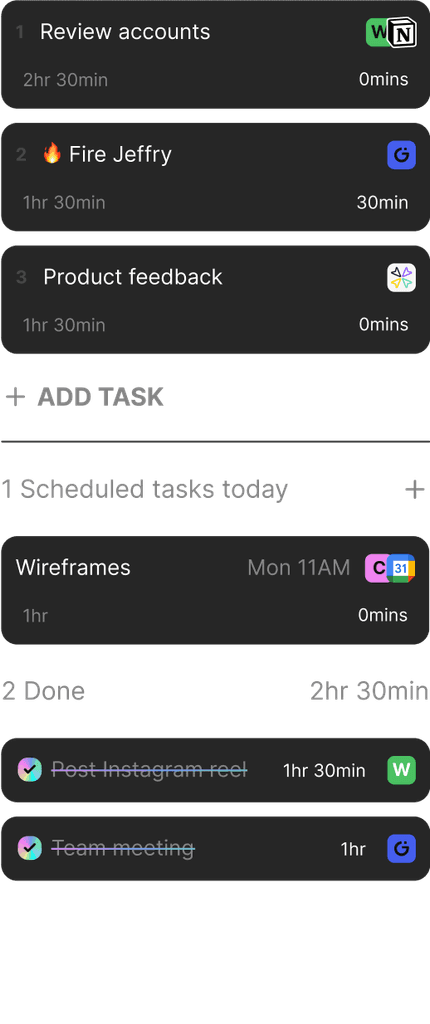
Who should skip it: teams searching for async standups, shared summaries, or AI-generated meeting recaps. Blitzit is downstream from that problem, not a direct fix for it.
When these tools actually save time
The category saves time when it removes one of these repeated burdens:
- asking everyone for the same update manually,
- running low-value standups just to stay aligned,
- losing context between notes, docs, chat, and follow-up,
- letting meeting notes pile up without becoming action.
What usually fails is the opposite pattern: teams buy a tool because “AI meeting notes” sounds useful, then discover that the real bottleneck was coordination design, not note generation. That is why this category is less about clever summaries and more about workflow shape.
If you want the deeper version of that question, this is the right follow-up read: When an AI Productivity Tool Actually Saves Time.
Who should skip these tools, or at least buy more slowly
- Skip or slow down if your team barely has async work in the first place. A standup bot will not create a healthy async culture by itself.
- Skip or slow down if your real problem is inbox overload, not meeting updates.
- Skip or slow down if you want one tool to do standups, transcripts, task management, project planning, and research ops equally well.
- Skip or slow down if your workflow is still simple enough that another layer will create more process than value.
I would not call that a reason to avoid the category. It is a reason to be more precise. The best tool here is usually the one that solves one expensive recurring annoyance, not the one with the broadest surface area.
Fit summary: where I would start
- Start with Geekbot if your issue is async standups and recurring team updates.
- Start with BoodleBox if your issue is shared AI collaboration around documents and context-heavy follow-up.
- Start with Saner AI if your issue is turning your own meeting notes into organized action.
- Start with Blitzit if your issue is personal execution after meetings, not note capture.
- Start with Fable only if your issue is specialized research insight-sharing rather than general meeting recaps.
Best next step
If your team mostly needs async standups, start with Geekbot. If the problem is broader shared follow-up with AI and documents, BoodleBox is the more interesting lane. And if you are still not sure where this fits, the next useful page is Best AI Productivity Tools for Teams.
FAQ
What is the best AI tool for async standups?
Geekbot is the clearest fit in this mapped group for async standups, check-ins, polls, and recurring team updates inside Slack or Microsoft Teams.
Do I need a meeting notes tool or an async update tool?
That depends on the bottleneck. If the pain is collecting status and reducing meetings, you need an async update tool. If the pain is turning notes into next actions, you may need a note-to-action or follow-through tool instead.
Is BoodleBox a meeting notes tool?
Not in the simple transcript sense. BoodleBox is closer to a collaborative AI workspace for shared async discussion, attached context, and multi-bot collaboration.
Why is Blitzit included in this list?
Because the real problem after meetings is sometimes execution, not note capture. Blitzit is an adjacent pick for people who already have notes but need better personal follow-through.