

Best AI Writing Tools for Students
Best AI writing tools for students should help with structure, momentum, and draft organization more than empty speed. Most students do not actually need a machine to “do the thinking” for them. What they often need is help turning messy notes into a clearer outline, expanding rough sections into a usable draft, and cleaning up awkward wording so the final paper feels more coherent.
I think this distinction matters a lot. A student who is stuck is not always stuck because they have no ideas. Sometimes they are stuck because their notes are scattered, their structure is weak, or the first draft feels too clumsy to keep going. That is where the right AI writing tool can be useful — as drafting support, not as a substitute for learning or judgment.
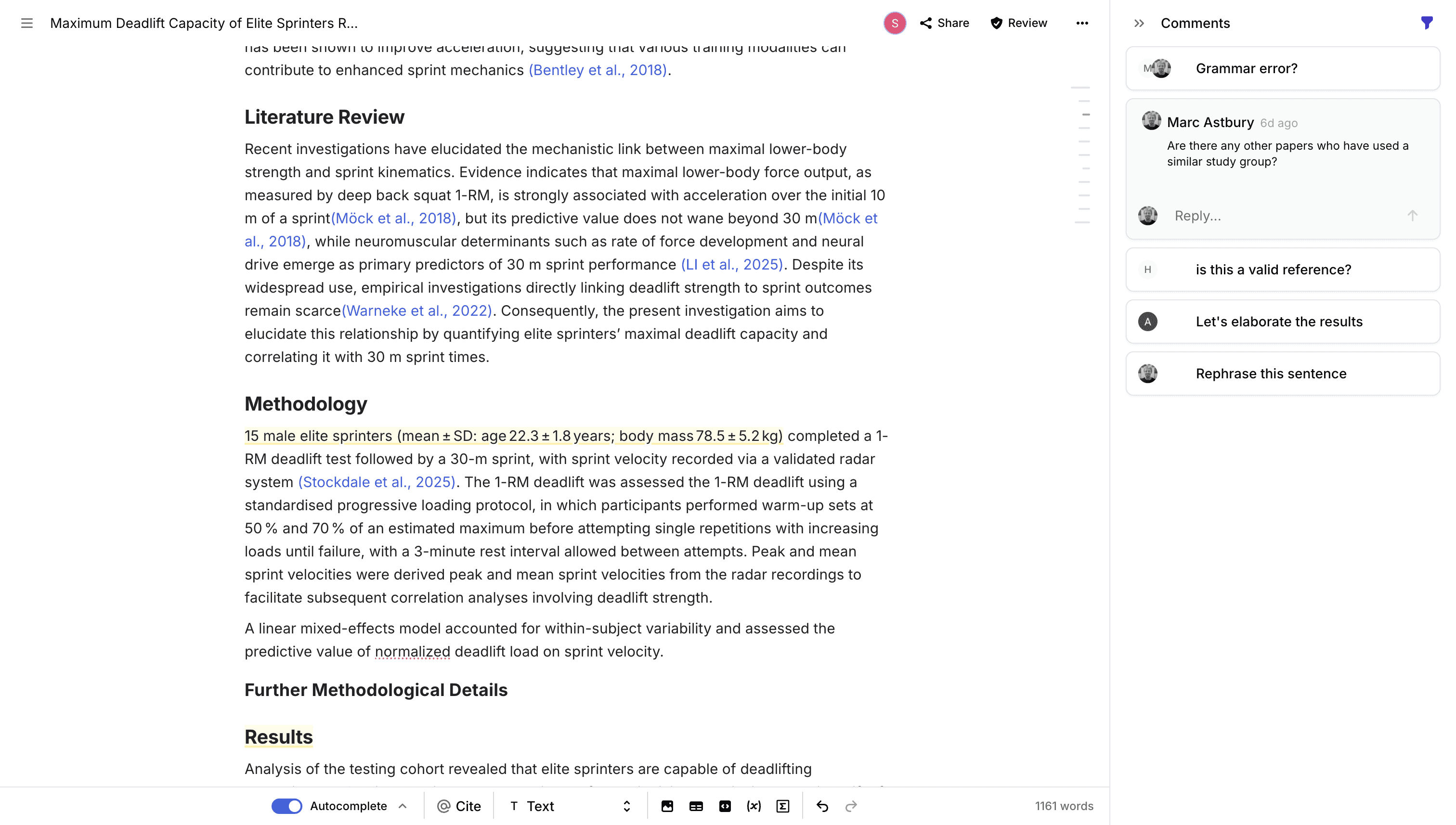
This guide compares three mapped tools through that lens: Jenni AI, SamWell AI, and Writecream. If you want the broader cluster first, start with AI Writing. If you want the more general buying framework, go to How to Choose an AI Writing Tool.
Jump to Contents
What students actually need from an AI writing tool
For student workflows, the useful question is not “Which tool writes the fastest?” It is closer to this: “Which tool helps me organize ideas, build a cleaner structure, and move from messy notes to a readable first draft without making the revision stage worse?”

That usually means the best-fit tools for students do one or more of these jobs well:
- turn notes into a logical outline
- help expand bullet points into readable paragraphs
- support structure-heavy drafting for essays or reports
- reduce awkward phrasing in rough first drafts
- make citation-aware writing more manageable
This is why I would not judge student tools the same way I would judge short-form copy tools or social-post generators. Student writing is usually slower, more structured, and more sensitive to clarity and integrity. That changes what “best” should mean.
Quick picks for students
Best for structure-first drafting: Jenni AI
Jenni AI is the strongest fit when the writing process depends on research, citations, and a cleaner long-form drafting environment.
Best for note-to-draft organization: SamWell AI
SamWell AI makes the most sense when the real problem is turning rough material into a more structured draft and keeping academic organization intact.
Best for broader writing support: Writecream
Writecream is the better fit when the student wants flexible drafting help across essays, articles, and more general long-form writing tasks.
Quick comparison table
| Tool | Best for | Main strength | Main caution |
|---|---|---|---|
| Jenni AI | Structure-first academic drafting | Research-aware writing, in-text citations, longer drafting flow | Less ideal if you only want very simple generic writing help |
| SamWell AI | Note-to-draft and essay organization | Academic integrity angle, citations, outline and paragraph support | More specialized than some students actually need |
| Writecream | Broader writing support | Flexible article and long-form assistance across several formats | Not as specifically student-focused as the other two |
Best AI writing tools for students, explained
1) Jenni AI
Jenni AI is the clearest fit in this list for students whose work depends on structure, sources, and a more research-aware writing flow. That is the main reason I would rank it first here. It feels less like a generic text generator and more like a drafting workspace where citations, source handling, and longer academic-style writing matter from the start.
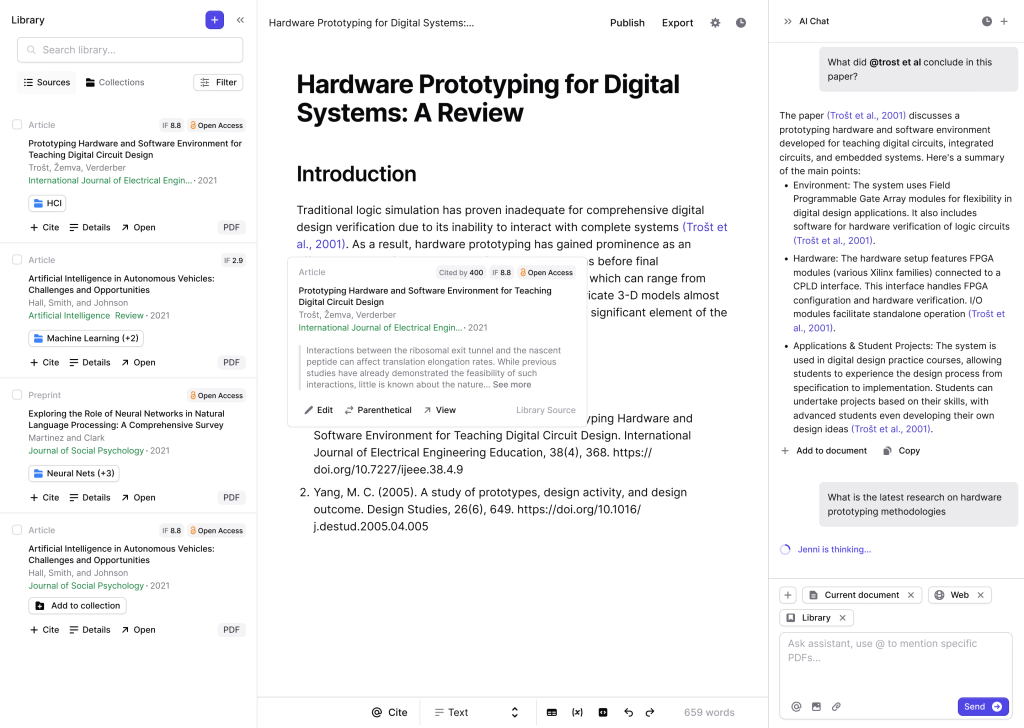
If your assignments usually involve papers, proposals, reports, literature-heavy sections, or anything that needs clearer argument structure, Jenni AI is easier to justify than a general-purpose copy tool. The attraction is not just speed. It is that the environment is better aligned with the kind of writing students often struggle to organize.
- Best for: students writing structured essays, papers, and research-backed drafts
- Main strength: citation-aware, structure-friendly drafting support
- Skip it if: you only want the lightest possible generic writing helper
2) SamWell AI
SamWell AI makes the most sense when the problem is not just “write faster,” but “organize this properly.” That is why I would place it strongly for note-to-draft workflows, structured essays, and students who need help expanding rough material into something more readable and coherent.

I would not call it the best fit for every student. But if the assignment is long-form, citation-sensitive, and structurally demanding, SamWell becomes easier to understand. It is more specialized than a broad AI writer, and that specialization can be an advantage when the student workflow is already structured and academic from the beginning.
- Best for: essays, structured papers, note expansion, paragraph organization
- Main strength: academic integrity positioning with long-form drafting support
- Skip it if: your writing needs are broad and not especially academic
Open the SamWell AI store page.
3) Writecream
Writecream is the broader option in this article. I would not rank it first for citation-heavy or research-heavy student work, but I would still include it because many students are not only writing formal papers. Some are drafting general essays, summaries, articles, applications, presentations, or simpler long-form assignments where a more flexible writing assistant is enough.
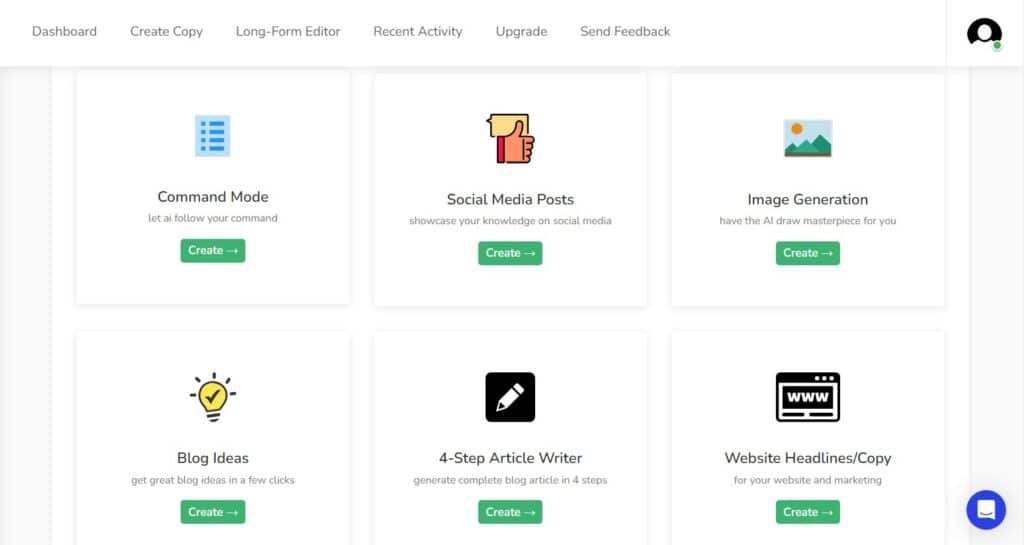
That broader flexibility is the main reason it belongs in this list. If the student wants support across several writing formats rather than a more academic-first workspace, Writecream can be a practical middle-ground option. It is not as specifically student-shaped as Jenni AI or SamWell AI, but it can still be useful for getting unstuck and cleaning up rough drafts.
- Best for: general essay support, broader writing help, multi-format student workflows
- Main strength: flexible long-form and article assistance
- Skip it if: your biggest problem is citation-aware academic structure
Open the Writecream store page.
One useful distinction students should not ignore
There is a real difference between a tool that helps you organize and improve your draft, and a mindset that expects the tool to quietly replace your thinking. I would be careful about that distinction because it changes how useful the product becomes. Used well, these tools can help you clarify structure, keep momentum, and improve rough drafts. Used badly, they can encourage the false idea that speed is the same thing as understanding.
That is why I think student workflows should stay anchored to outlining, note organization, revision, and citation handling. Those are the areas where support tools are most defensible and most useful.
How to use these tools well as a student
- Use them to turn notes into a clearer outline.
- Use them to expand weak sections into a more workable first draft.
- Use them to rephrase clumsy sentences and improve flow.
- Use them to support citation-aware drafting where the tool is built for that.
- Still review claims, structure, tone, and source use with your own judgment.
If you want a good adjacent read after this, go to Best AI Writing Tools for Blog Drafting to see how the drafting logic changes outside academic-style writing. And if you want a more grounded buyer correction page, read Common Mistakes When Choosing AI Writing Tools.
Watch one ethical workflow example
A short walkthrough like this is useful because it frames AI as a support layer for research writing rather than a shortcut around the work itself.
How to choose the right tool for your student workflow
- If you need stronger structure, citations, and long-form support, start with Jenni AI.
- If your notes are messy and you need help organizing them into a coherent draft, compare SamWell AI.
- If you want broader writing support across general essays and longer content, check Writecream.
If you still are not sure, the best next page is How to Choose an AI Writing Tool, because it helps separate drafting workflows from broader content-tool decisions.
FAQ
What is the best AI writing tool for students?
For structure-first academic drafting, Jenni AI is the strongest fit here. For note-to-draft organization, SamWell AI is more specialized. For broader general writing support, Writecream is the more flexible option.
Are AI writing tools useful for students?
They can be useful when they help with outlining, organization, wording, and draft cleanup. They are more helpful as support tools than as replacements for thinking or revision.
Which AI writing tool is best for essays and structured papers?
Jenni AI and SamWell AI are the clearest fits in this list for structured, citation-aware, or essay-style workflows.
Is Writecream a good option for students?
Yes, especially for students who want broader writing support across different formats and not only research-style drafting.
What should students avoid when using AI writing tools?
They should avoid treating speed as proof of quality. The better use case is support with structure, clarity, and momentum.
Final takeaway
The best AI writing tools for students are the ones that help transform messy notes into clearer structure and more workable drafts. For research-aware structure and citations, I would start with Jenni AI. For note-to-draft organization, I would compare SamWell AI. For broader writing help across formats, Writecream is the more flexible option.
And if you want the wider cluster context after this, keep going with: AI Writing, How to Choose an AI Writing Tool, Best AI Writing Tools for Blog Drafting, and Common Mistakes When Choosing AI Writing Tools.
PromoCodeRadar helps users find cleaner coupon codes, official deals, annual billing savings, free trials, and better ways to save on software, AI tools, and online services.
If you found a broken code or outdated listing, contact us at contact@promocoderadar.com.