

AI & Software → AI Productivity
The best AI productivity tools for customer support workflows are the ones that reduce repetition, improve routing clarity, and help teams respond faster without turning support into a maze of half-automated conversations.
Table of Contents
If you are searching for best AI productivity tools for customer support workflows, the real question is not just which tool has AI. It is which tool makes support work lighter for the humans behind it.
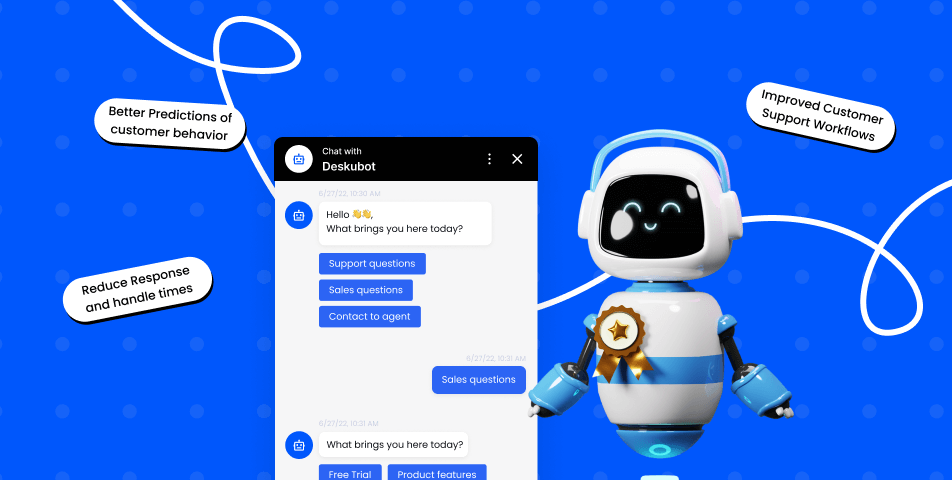
That distinction matters because support productivity is not one thing. Sometimes the problem is repetitive questions. Sometimes it is weak routing and messy handoff. Sometimes it is agent overload caused by too many channels. And sometimes the issue is not answering faster, but giving agents enough context to stop rewriting the same answers all day.
This page keeps those differences clear. Freshchat is the strongest fit when support productivity depends on omnichannel messaging and agent workspace clarity. Landbot makes more sense when the team needs structured conversational flows with human takeover. Dante AI is stronger when support, lead capture, bookings, and handoff live close together. My AskAI is the sharper fit when the goal is deflection plus agent productivity inside an existing helpdesk.
If you want the broader cluster view first, go to Best AI Productivity Tools. If your question is really about chatbot boundaries, read AI Productivity Tools vs AI Chatbots. And if your support workflow overlaps with team operations more broadly, go next to Best AI Productivity Tools for Teams.
Quick picks
- Best overall for customer support workflow productivity: Freshchat
- Best for no-code support flows with human takeover: Landbot
- Best for support plus lead capture and handoff: Dante AI
- Best for helpdesk-side AI support and copilot workflows: My AskAI
The short version: choose Freshchat when the support load is channel-heavy and agent collaboration matters most, choose Landbot when conversation design and human handoff are the real bottlenecks, choose Dante AI when support is tightly mixed with qualification or bookings, and choose My AskAI when you want a tighter AI layer inside the helpdesk you already use.
What customer support productivity tools are actually for
This category sounds straightforward, but the workflow usually breaks in four different places:
- Repetition friction: the same questions keep showing up and agents keep rewriting the same answers.
- Routing friction: conversations are not getting to the right person, or the right channel, quickly enough.
- Handoff friction: automation helps at first, then creates confusion when a human needs to step in.
- Context friction: agents do not have enough customer or conversation history to respond cleanly.
The mistake is assuming every “AI support tool” solves all four equally well. Usually it does not. A bot builder is not automatically the best agent workspace. A helpdesk-side copilot is not automatically the best customer-facing flow builder. A support agent that can book calls is not automatically the best internal productivity layer for a busy support team.
The better question is not “which support AI is smartest?” It is “where does the support workflow keep wasting human attention?” That is the question that makes the shortlist useful.
How to choose by support bottleneck first
Use this simpler filter before you choose:
- You need a cleaner omnichannel support workspace with bots and agent collaboration: start with Freshchat.
- You need structured no-code support conversations with human takeover: start with Landbot.
- You need one AI layer to answer support questions, capture leads, and handle bookings or escalations: start with Dante AI.
- You need AI support inside the helpdesk you already use, with deflection and agent-assist value: start with My AskAI.
This sounds narrower than a generic support-software roundup. Good. It should. Support productivity improves when the tool sits at the right part of the workflow, not when the feature list is longest.
If the pain is channel complexity, Freshchat is the more natural fit. If the pain is building the right flow and deciding when humans step in, Landbot becomes more interesting. If the workflow mixes support with conversion moments, Dante AI makes more sense. If the issue is agent time spent repeating helpdesk answers, My AskAI is the sharper route.
Best AI productivity tools for customer support workflows by fit
These are the mapped tools I would shortlist first, with the fit kept practical rather than flattened.
1) Freshchat — best overall for support workflow productivity
Freshchat is the strongest overall fit here because it improves support productivity through the whole messaging layer rather than through one narrow trick. The product is built around omnichannel conversations, AI-driven bots, a unified agent workspace, and analytics. That makes it a cleaner fit when the team is dealing with support across multiple channels and needs more than a simple chatbot.
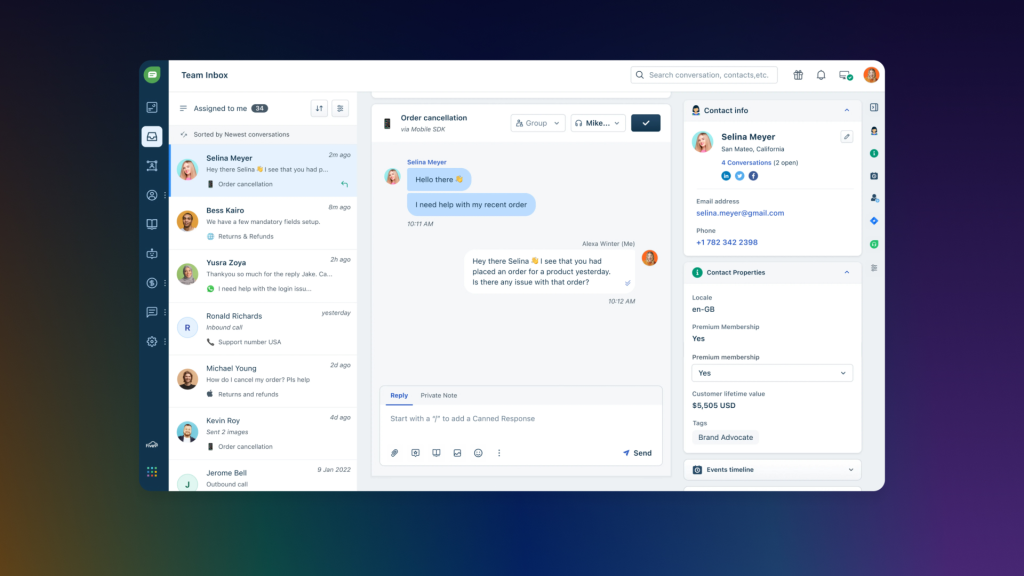
Best for: support teams that handle customer conversations across live chat, messaging, and adjacent service channels and need cleaner collaboration, visibility, and routing.
Why it stands out: it improves support productivity where a lot of teams actually struggle: not just in first-response automation, but in giving agents the context and workspace to keep conversations moving without losing the thread. That is a more believable productivity win than “AI answers tickets” on its own.
Who should skip it: smaller teams that do not have much channel complexity yet, or teams whose main issue is purely building a conversational flow rather than managing a broader support workspace.
This is the kind of tool that becomes more valuable as support operations become messier. For the right team, that is exactly the point.
2) Landbot — best for support flows, routing logic, and human takeover
Landbot makes more sense when support productivity depends on designing the right conversational path. It is a no-code platform built around AI agents, workflows, and team inbox handling with human takeover. That makes it more useful when the support problem is not just “we need AI replies,” but “we need a better front door that knows when to automate and when to escalate.”
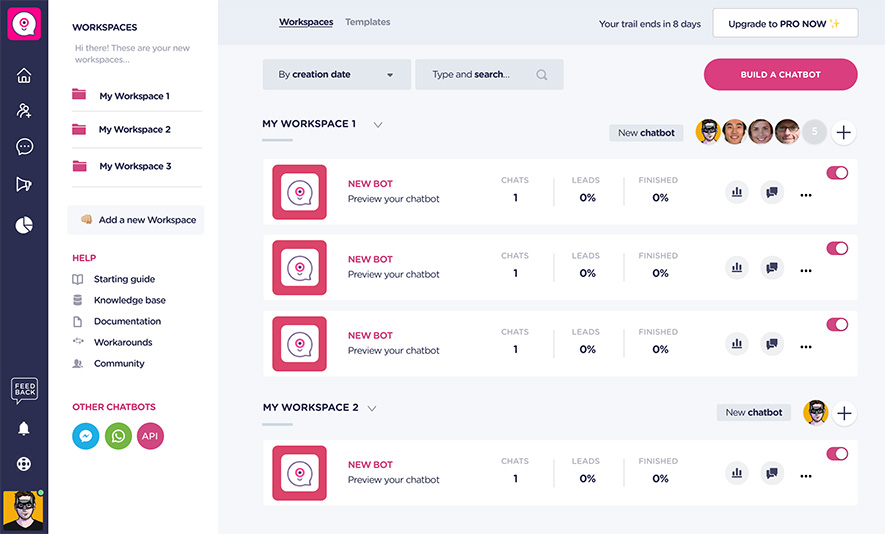
Best for: teams that want to design structured support journeys across website or WhatsApp conversations and control the handoff between automation and people more deliberately.
Why it stands out: it is one of the clearer tools for reducing support repetition without hiding the routing logic. Some teams do not need a broader helpdesk layer first. They need a better support conversation system with enough control to guide customers to the right place and enough flexibility to let humans step in cleanly.
Who should skip it: teams that mainly need a tighter helpdesk-side AI layer rather than a flow-builder. Landbot is stronger when the support workflow itself needs design and control, not just answers.
This is also where Landbot feels different from the rest of the shortlist. It is less about “agent assist” and more about “conversation architecture.” That is exactly why it fits some support teams better.
3) Dante AI — best for support teams that also need qualification, bookings, or handoff
Dante AI sits a little differently again. It is stronger when support is not a pure ticketing problem. Dante is built around answering support questions, capturing leads, booking appointments, and handling handoffs across chat and voice. That makes it a better fit when the support workflow overlaps with commercial or operational next steps.
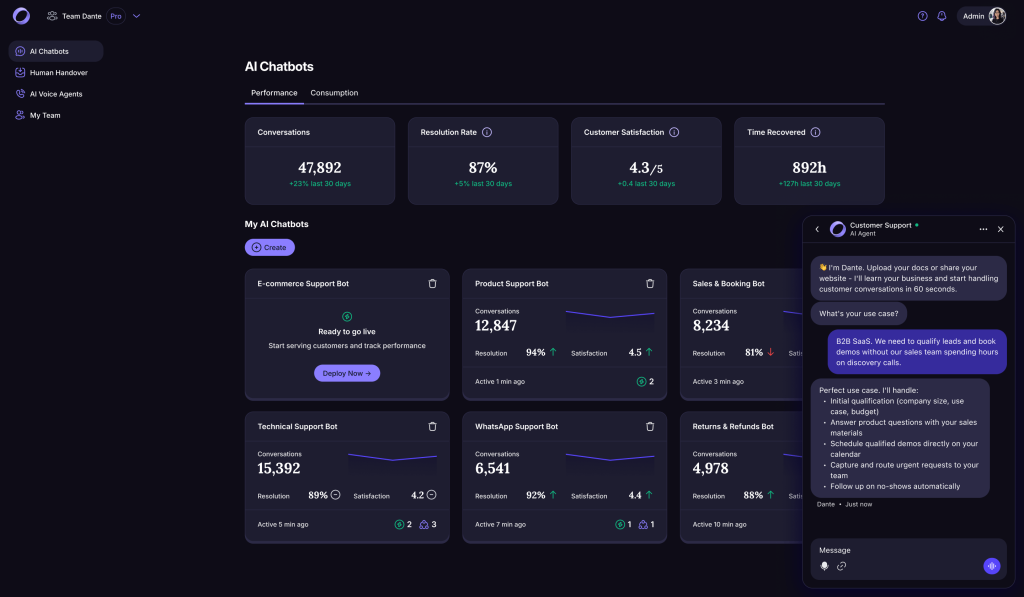
Best for: businesses where support conversations regularly blend into lead qualification, scheduling, or other operational actions rather than ending at a simple answer.
Why it stands out: it treats support more like a live customer conversation system than a narrow FAQ tool. That is useful when the workflow needs to keep moving instead of just resolving a question and stopping there.
Who should skip it: teams that primarily want a helpdesk-side copilot or a more structured omnichannel workspace. Dante is stronger when support productivity and conversation outcomes are tightly connected.
This is a good example of a tool that sounds broader than “support,” but still belongs here because support teams often do not just answer questions. They qualify, route, book, and escalate too.
4) My AskAI — best for helpdesk-side AI support and copilot workflows

My AskAI is the sharper fit when the team already has a helpdesk and wants AI to work inside that environment rather than beside it. It is built as an AI customer support agent that integrates into existing platforms, can answer from uploaded help docs and internal content, and can hand over to humans when needed. It also has internal reply and copilot-style modes, which makes it useful on the agent side as well as on the customer side.
Best for: support teams that want AI deflection plus faster human replies inside the helpdesk stack they already use.
Why it stands out: it solves a support productivity problem that many teams feel very directly: not just answering customers automatically, but reducing the amount of repetitive writing agents still do when the AI does not fully resolve the issue. That helpdesk-side productivity angle is what makes it different from a more front-door chatbot builder.
Who should skip it: teams that mainly need broader omnichannel workspace control or no-code conversation design. My AskAI is strongest as an AI layer on top of existing support operations.
This is also one of the clearest examples in the cluster of a tool that improves support productivity by reducing repeated agent effort, not just by greeting customers faster.
When support productivity tools actually save time
These tools save time when they remove one repeated burden from the support workflow:
- answering the same support questions over and over,
- routing conversations manually to the right person,
- switching channels and losing conversation context,
- rewriting replies that should already have a reusable base.
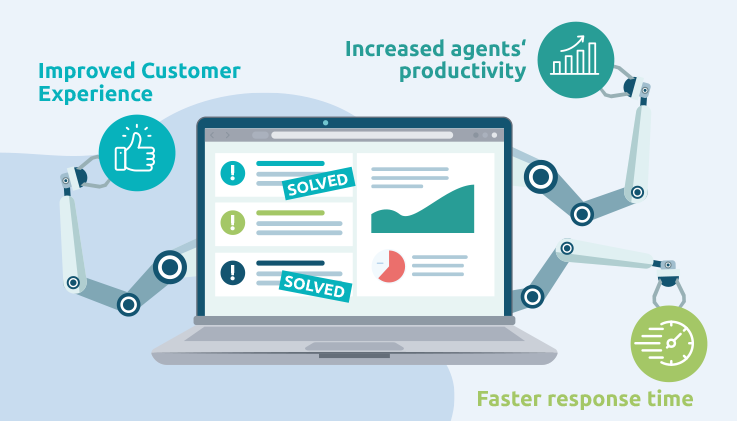
What usually fails is the opposite pattern. Teams buy a flashy chatbot when the real issue is agent workspace clarity. Or they buy a broader messaging platform when the real issue is controlled handoff and flow logic. Or they buy a helpdesk-side AI layer when the real issue is the front-door support experience itself.
The anti-hype version is simple: support AI saves time when it reduces repeated human effort without making the workflow harder to supervise. That is the real standard.
Who should skip these tools, or at least buy more slowly
- Skip or slow down if the team still cannot name whether the main issue is repetition, routing, handoff, or context.
- Skip or slow down if support volume is still light enough that simple manual handling works fine.
- Skip or slow down if you want one tool to be helpdesk, chatbot builder, copilot, CRM, and team workflow system all at once.
- Skip or slow down if the real issue is missing documentation or weak process rather than AI capability.
I would not call that a reason to avoid the category. I would call it a reason to buy with more precision. Support productivity tools usually work best when the workflow weakness is already visible and repeated.
Practical limitations to keep in mind
- Freshchat is strongest when channel complexity is real. Smaller support teams may not need that much surface area yet.
- Landbot needs a clear conversation design mindset. It is not just a plug-it-in-and-forget-it tool if you want strong outcomes.
- Dante AI is broader than pure support. That is a strength in blended workflows and a mismatch in narrower ones.
- My AskAI works best when the helpdesk layer is already central. It is less compelling if the team still lacks a stable support base to plug into.
The better question is not “which one uses AI best?” It is “which one removes the most repeated support friction while keeping humans in control where it matters?” That is where the answer usually gets much cleaner.
Fit summary: where I would start
- Start with Freshchat if the expensive job is handling support across multiple channels with better agent context.
- Start with Landbot if the expensive job is building cleaner support flows and handoffs.
- Start with Dante AI if the expensive job is mixed support, qualification, and conversational follow-through.
- Start with My AskAI if the expensive job is reducing repetitive helpdesk answers and speeding up agent replies.
That is the honest shape of the decision. There is no universal winner here. There is only the best fit for the part of support work that keeps repeating.
Best next step
If your support workflow is channel-heavy, Freshchat is the strongest first click. If your team needs better human takeover and flow control, Landbot is the cleaner route. If your helpdesk already exists and the real pain is repetitive agent work, My AskAI is the sharper fit.
FAQ
What is the best AI productivity tool for customer support workflows?
There is not one universal answer. Freshchat is the strongest overall fit when support productivity depends on omnichannel handling and agent workspace clarity. Landbot is stronger for structured support flows. My AskAI is better for helpdesk-side deflection and agent assist. Dante AI is better for blended support and handoff workflows.
Is Freshchat a support productivity tool or just a chatbot platform?
It is broader than a simple chatbot platform. Freshchat fits better as a support productivity tool when the team needs omnichannel messaging, AI bots, agent collaboration, and a unified workspace rather than only front-end automation.
When should I choose Landbot over Freshchat?
Choose Landbot when the main problem is building the right support flow, deciding how conversations should branch, and controlling human takeover. Choose Freshchat when the bigger issue is channel handling and agent-side support operations.
Is My AskAI better for agents than for customers?
It can be better described as both, but its strongest angle is often inside the helpdesk. It helps reduce repetitive support answers and can assist agents with internal reply or copilot-style workflows while also handling customer-facing questions.
When does Dante AI make more sense than a traditional support tool?
Dante AI makes more sense when support conversations regularly overlap with lead capture, bookings, or other operational next steps. It is a stronger fit when the conversation needs to keep moving instead of ending at a basic support answer.
When do customer support productivity tools actually save time?
They save time when they cut repeated human effort, improve routing, reduce handoff confusion, and give agents enough context to stop rebuilding the same answers from scratch.