
Best AI Image Generators for Marketing Visuals
If you are looking for the best AI image generators for marketing visuals, the first thing to fix is the category itself. Most roundups blur together AI art tools, social content tools, editors, and all-in-one platforms as if they solve the same problem. They do not.
Table of Contents
This page is narrower than that. It is about image generators that make sense for marketing visuals: hero graphics, ad concepts, campaign images, thumbnails, lightweight brand assets, landing page visuals, and quick creative exploration. Not full UI prototyping. Not pure ecommerce photo cleanup. Not every social media tool with an AI button somewhere in the menu.
The practical question is not “which generator makes the prettiest image?” It is “which tool helps me get usable marketing visuals faster?” That is a different decision. If you want the wider cluster first, start with the AI Design hub. If you want the broader shortlist, go to Best AI Design Tools.
Quick verdict: the best AI image generators for marketing visuals
- Best overall for polished marketing visuals: neural.love
- Best for free-heavy experimentation: Aitubo
- Best for marketing teams that need more than images: Simplified
- Best for one-click image tools: ArtSpace.ai
- Best for beginner-friendly prompt-to-visual output: DrawThis.ai
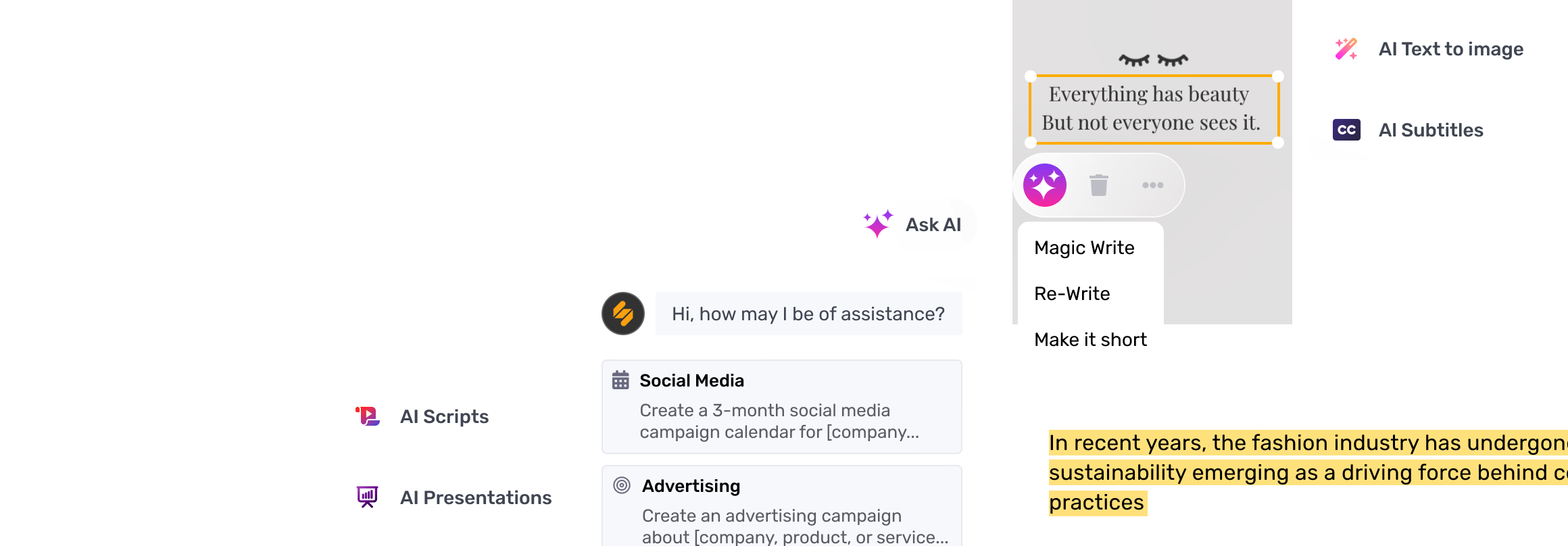
If I had to simplify the decision, I would start here: choose neural.love if you want a stronger mix of generation and post-generation enhancement, Aitubo if you want room to test ideas with less friction, Simplified if visuals are part of a broader campaign workflow, ArtSpace.ai if convenience matters more than creative control, and DrawThis if you want simple prompt-to-graphic output without much setup.
What counts as a marketing visual in this category?
For this article, “marketing visuals” means images that support promotion, communication, or campaign production. That includes things like:
- hero images for landing pages
- ad concept images and creative tests
- social graphics and promotional assets
- thumbnail-style marketing images
- concept-led visuals for brand campaigns
- lightweight web and email creative assets
That sounds broad, but there is still a line here. This page is not mainly about white-background product photos. It is not mainly about UI screens either. And it is not just another “best AI art generator” list wearing a marketing title.
A common mistake here is assuming that because a tool can generate images, it is automatically useful for marketing. That is not how it works in practice. Marketing visuals usually need more than visual novelty. They need speed, repeatability, reasonable control, and enough polish to move into real campaign work.
How I picked the tools in this roundup
- Marketing fit: the tool had to make sense for real promotional or campaign visuals, not just generic art generation.
- Current positioning: the official site still had to support that use case clearly.
- Workflow usefulness: I prioritized tools that help turn prompts into assets that feel usable, not just impressive.
- Category separation: I avoided pushing ecommerce-photo or UI-prototyping tools into a page where they do not belong.
- Commercial realism: the pricing model or free entry had to make sense for testing, iteration, or everyday use.
This is also why the list is tighter than a generic roundup. Padding helps a page look bigger. It usually does not help the reader decide better.
1) neural.love — best overall for polished marketing visuals
neural.love is the strongest overall pick here because it sits in a useful middle ground. It is not just a generator, and it is not just an enhancer. It works better as a flexible image workflow for marketers who want to create visuals, then improve them without jumping to a different tool immediately.
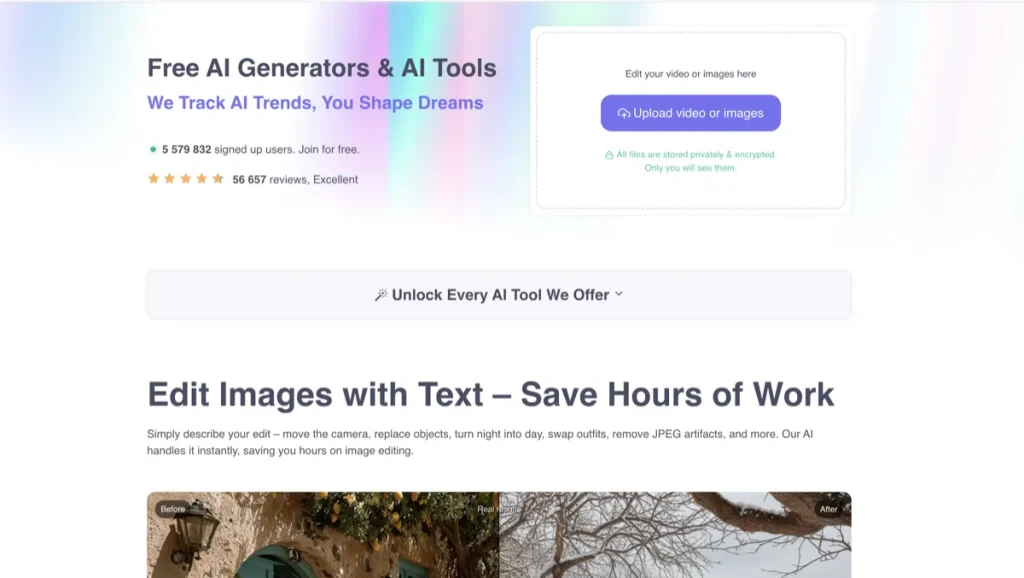
That matters more than it first appears. A lot of image generators are fun at the prompt stage and weaker once you actually need to polish the output. neural.love is more interesting because the enhancement side stays relevant: upscale, artifact cleanup, image refinement, and broader image-tool coverage make it more practical for campaign work than a generator-only product.
- Best for: marketers, creators, and solo operators who want both image generation and post-generation cleanup in one place
- Why it stands out: it is one of the cleaner bridges between concept creation and usable asset polish
- What it does especially well: polished image generation, enhancement, and a more flexible workflow than a pure one-click generator
- What to watch: broader tools can still feel less opinionated than a narrower campaign-specific workflow
- Who should skip it: buyers who want the easiest beginner path with the fewest decisions and the most guided shortcuts
The real difference shows up when you do not want to stop at “good enough prompt result.” You want to push the image into something cleaner and more usable. For neutral context, see neural.love. If that mix of generation plus refinement is the main appeal, See neural.love.
Why neural.love ranks first here
The soft verdict is simple: for marketing visuals, the job usually does not end when the image appears. It ends when the image is usable. neural.love feels closer to that reality than most generator-only tools.
2) Aitubo — best for free-heavy experimentation and fast creative testing
Aitubo makes the most sense when you are still exploring what kind of marketing visuals you even want. That sounds less decisive than a “best overall” label, but it is actually a strong use case.
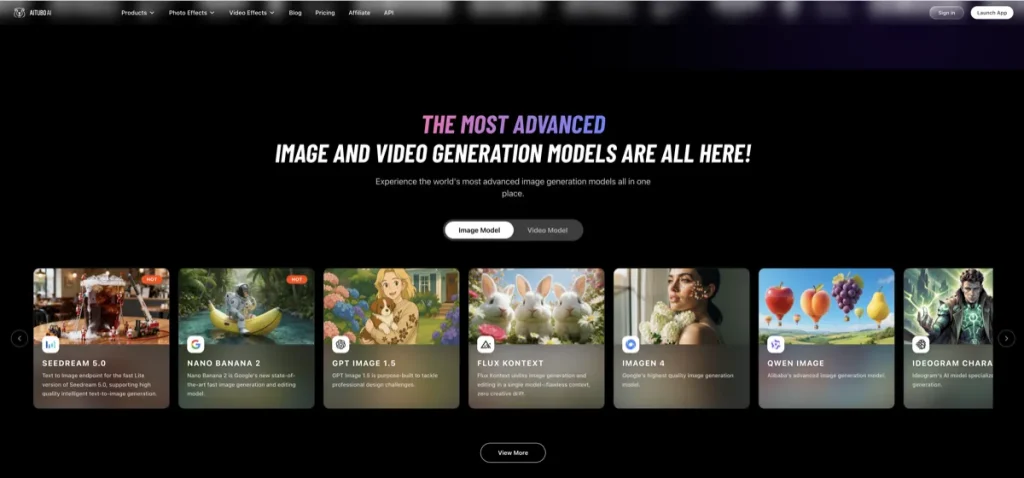
Aitubo gives you a lot of room to experiment across image generation, editing, background removal, upscaling, and even video-adjacent creative features. It is not the most polished-feeling specialist on the page, but it is one of the easier tools to justify early because the barrier to trying things is lower.
- Best for: early-stage marketers, solo creators, and teams that want quick creative exploration without much commitment
- Why it stands out: wide tool coverage, low-friction starting point, and enough breadth to test different styles of marketing visuals
- What it does especially well: ideation, prompt experimentation, image-plus-editing workflows, and lightweight concept generation
- What to watch: broad creative platforms can feel less disciplined when you already know exactly what output standard you need
- Who should skip it: teams that want a more obviously polished output path or a stronger campaign workflow around the generated visuals
The expectation-vs-reality turn here is useful. Aitubo can look a little like a playground tool at first glance. In practice, that breadth can be helpful when your real problem is creative testing speed. For neutral brand context, see Aitubo. If experimentation is the priority, Check Aitubo.
3) Simplified — best for campaign teams that need images inside a bigger workflow
Simplified belongs here for a different reason. It is not the strongest pure image generator on the page. It is the strongest fit here when image generation is only one part of a broader marketing workflow.
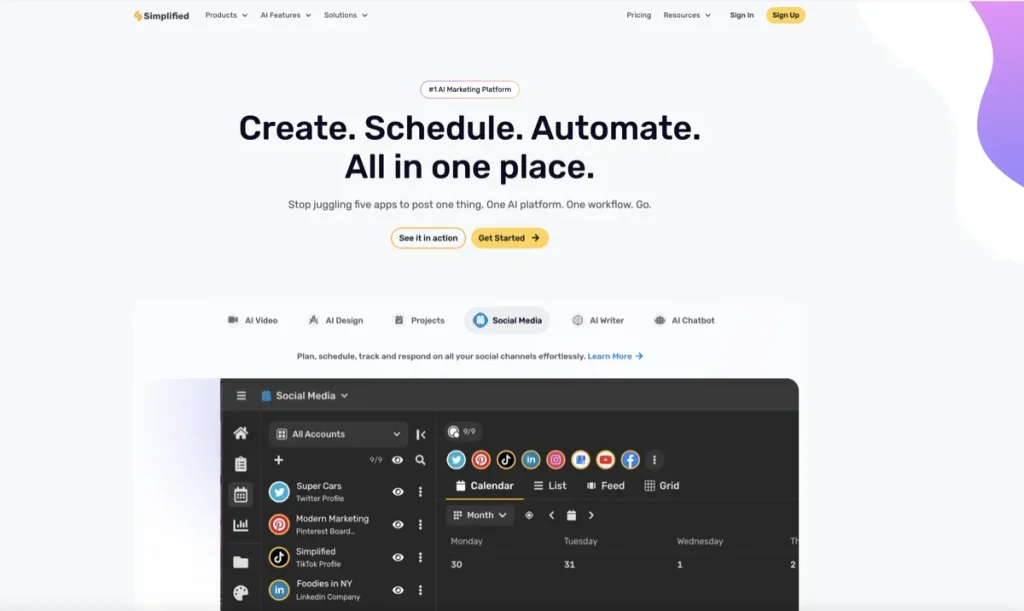
If your team generates campaign visuals, then turns those into ad variants, post graphics, copy, social schedules, and lightweight video assets, Simplified becomes easier to justify than a narrower tool. What makes me cautious with all-in-one platforms is that they often look broader than they really are. Simplified still earns a place because the workflow logic is clear: design, write, create, publish, collaborate.
That is where this starts to make sense. The strongest case for Simplified is not “best image generation.” It is “best when marketing visuals sit inside a larger content machine.”
- Best for: marketing teams that need images plus ad creation, content production, and publishing support
- Why it stands out: it reduces tool switching more than any other option in this roundup
- What it does especially well: broader content workflow support, cross-format campaign production, and team-friendly consolidation
- What to watch: specialists may still prefer a more focused generator for pure image work
- Who should skip it: users who only need one job done well and do not benefit from platform breadth
I would not call Simplified the best generator here. I would call it the best workflow pick for a team that wants fewer moving parts. For neutral context, see Simplified. If marketing workflow sprawl is the bigger problem, Explore Simplified.
4) ArtSpace.ai — best for one-click image tools and quick creative shortcuts
ArtSpace.ai is one of the easier tools to explain. It leans into convenience. Text-to-image, editing, upscaling, and a large set of one-click tools make it attractive for users who value speed and simplicity more than deeper art direction.
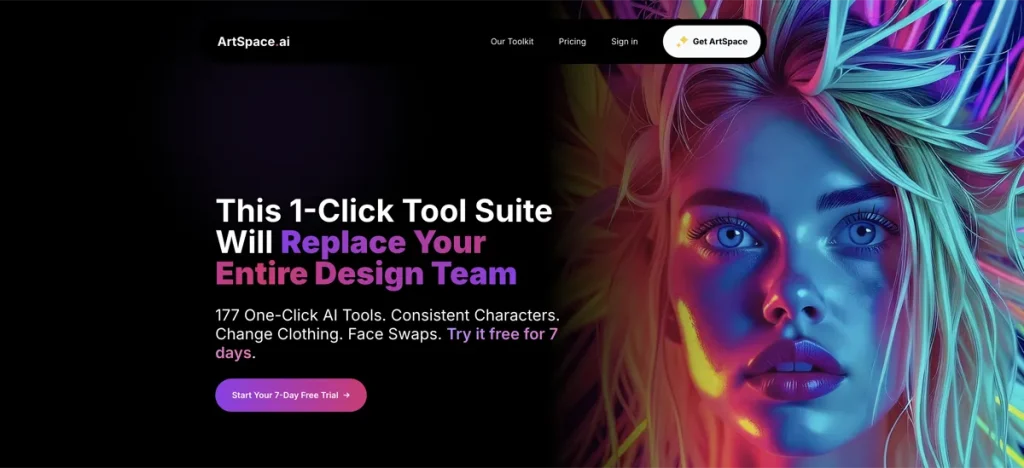
A lot of buyers do not actually want a sophisticated prompting workflow. They want a fast route to visual ideas that are usable enough to test. That is where ArtSpace can make sense. It is less about building a refined creative process and more about reducing the number of decisions between “idea” and “image.”
- Best for: users who want quick variations, one-click tools, and a simpler front end for marketing images
- Why it stands out: convenience-first toolset and a lighter learning curve than more process-heavy generators
- What it does especially well: fast ideation, one-click transformations, and quick image utility work around the generation step
- What to watch: convenience-first workflows can feel less controlled once your creative standards get stricter
- Who should skip it: teams that need stronger refinement, clearer campaign workflows, or more polished post-generation improvement
ArtSpace.ai fits best when you value speed and ease more than nuance. For neutral context, see ArtSpace.ai.
5) DrawThis.ai — best for simple prompt-to-visual output for marketers
DrawThis.ai is the most straightforward inclusion here. Its pitch is unusually clean: marketers, creators, and entrepreneurs can turn prompts into visuals without needing design software fluency. That kind of clarity counts for something.
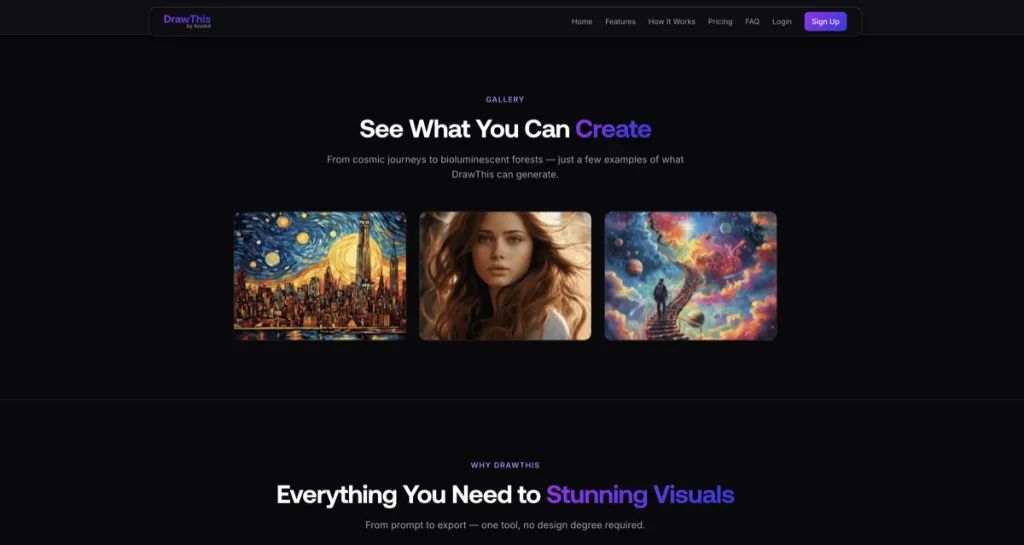
DrawThis also makes sense for this page because its use cases lean directly into marketing-friendly outputs: viral images, product visuals, and easy prompt-to-graphic creation. Add a prompt improver, integrated editor, commercial-use framing, and a low-skill learning curve, and you get a tool that is not the deepest here, but is easy to map to an actual use case.
- Best for: marketers and business owners who want quick visual ideas without much setup friction
- Why it stands out: simple positioning, beginner-friendly flow, and direct relevance to marketing graphics
- What it does especially well: prompt-to-visual generation, easy refinement, and low-friction image creation
- What to watch: it is not the strongest pick if your team needs heavier editing or more advanced polish
- Who should skip it: users who want deeper enhancement workflows or broader campaign operations in the same tool
DrawThis is not trying to be everything. That is part of why it works. For neutral context, see DrawThis.ai.
How to choose between these tools
- Choose neural.love if you want the strongest balance of generation and post-generation image polish.
- Choose Aitubo if you want broad experimentation and lower-friction creative testing.
- Choose Simplified if marketing visuals are only one part of a larger content workflow.
- Choose ArtSpace.ai if one-click convenience matters more than creative depth.
- Choose DrawThis.ai if you want beginner-friendly prompt-to-visual output for marketing use.

If I were trimming the noise, that is the framework I would keep in front of me. The tool you keep is usually not the one with the most exciting gallery. It is the one that fits the bottleneck you hit most often.
What most buyers get wrong with AI image generators for marketing
The mistake many people make is choosing based on image drama instead of workflow usefulness.
A generator may produce something eye-catching and still be the wrong purchase if your team cannot reliably turn those images into campaign assets, ad tests, landing visuals, or repeatable creative output. That is why this page favors fit over spectacle.
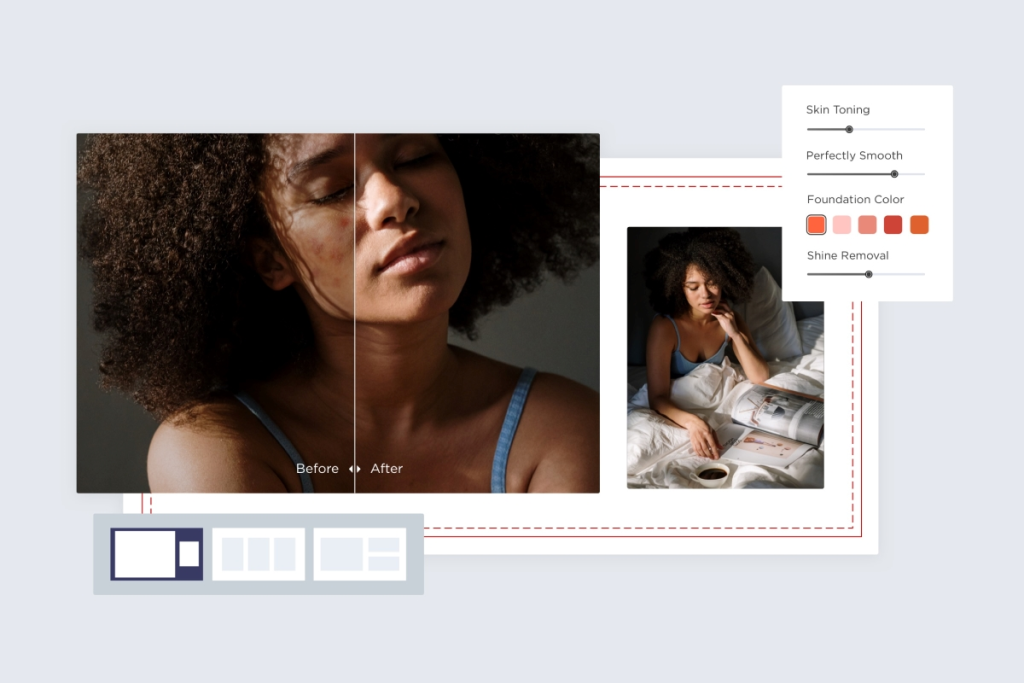
This sounds good on paper, but daily marketing work is rarely about one perfect image. It is about volume, iteration, and moving from concept to usable asset without too much friction. That is where the better tools separate themselves.
Who should skip this category?
You should probably skip this category for now if your real need is product-photo cleanup, white-background ecommerce imagery, or UI mockups. Those are different jobs, and they usually need different tools. For ecommerce visuals, the better next read is Best AI Design Tools for Ecommerce Product Images. For design-lite content output, the better next read is Best AI Design Tools for Social Media Creatives.
You should also skip this category if your workflow is still so light that image generation would mostly become novelty rather than production support. AI visuals are useful, but they are easy to overbuy when the real issue is strategy, messaging, or creative direction upstream.
Best-fit summary
- Best overall for polished marketing visuals: neural.love
- Best for free-heavy experimentation: Aitubo
- Best for wider campaign workflow: Simplified
- Best for quick one-click visual shortcuts: ArtSpace.ai
- Best for simple prompt-to-marketing-graphic output: DrawThis.ai
The softer human verdict is this: neural.love is the most balanced choice when you care about both creation and polish. Aitubo is easier to justify when you are still exploring. Simplified wins when image generation is not the whole job, just one part of a bigger marketing machine.
If you want the cleaner next step for polished generation plus refinement, See neural.love. If you want low-friction creative testing, See Aitubo. If you need broader campaign workflow support, See current options for Simplified.
FAQ
What is the best AI image generator for marketing visuals?
For a balanced mix of image generation and post-generation polish, neural.love is the strongest overall fit in this roundup. Aitubo is often the better pick for experimentation, while Simplified is stronger when visuals sit inside a broader campaign workflow.
Are AI image generators good for ads and landing pages?
Yes, but the fit depends on what you need. Some tools are better for quick concept generation, while others are better at helping you polish images into usable campaign assets.
Should marketers use a pure generator or an all-in-one tool?
Use a pure generator when your main need is image ideation or visual creation. Use an all-in-one tool when the image is only one part of a wider workflow that includes copy, publishing, scheduling, or lightweight video.
What is the difference between this page and social media creative tools?
This page focuses more on generation for hero images, ad concepts, campaign visuals, and creative exploration. A social media creative page should lean more toward repeatable content output, resizing, and day-to-day post production.
What should I read next after this page?
Read Best AI Design Tools for the wider shortlist, or Best AI Design Tools for Social Media Creatives if your next step is more about repeatable content production than image generation itself.
Still narrowing the workflow? Go back to Best AI Design Tools for the wider shortlist, or move to When an AI Design Tool Is Enough — and When It Isn’t if you are trying to decide how much of the creative process AI should actually handle.
PromoCodeRadar helps users find cleaner coupon codes, official deals, annual billing savings, free trials, and better ways to save on software, AI tools, and online services.
If you found a broken code or outdated listing, contact us at contact@promocoderadar.com.